Like Urban Research on Facebook

Showing posts with label Bicycle Planning. Show all posts

Monday, October 20, 2025

The transformation of Chinese cities (2000-2025): The rise of China’s megacities

In just 25 years, China has pulled off the most dramatic urban transformation in human history. Cities that were once filled with low-rise buildings and bicycles are now home to glittering skyscrapers, high-speed rail networks, and some of the largest urban populations on the planet. But how did this happen? How did China’s cities go from sprawling factory hubs to some of the most advanced urban centers in the world? Today, we’ll take a deep dive into the numbers, the stories, and the forces that have shaped modern China’s urban revolution.


The Foundations of China’s Urban Evolution

To understand the rapid transformation of Chinese cities in the 21st century, we must first look back at their historical roots. For centuries, Chinese civilization was centered around agrarian societies, with cities functioning primarily as administrative and trade hubs. Ancient capitals like Chang’an (now Xi’an), Luoyang, and Beijing were meticulously planned, featuring rigid grid layouts, towering walls, and imperial palaces. These cities symbolized centralized power, with commerce and daily life revolving around the imperial court and bureaucracy.

During the late 19th and early 20th centuries, China’s cities began to modernize under foreign influence, especially in treaty ports like Shanghai, Guangzhou, and Tianjin, where European colonial powers introduced industrial infrastructure and Western-style urban planning. However, the true urban transformation began after 1949, when the Communist Party took control. The government prioritized heavy industry, turning cities into centers of state-owned factories, while rural-urban migration was tightly restricted. By 1978, only about 18% of China’s population lived in cities.

Everything changed with Deng Xiaoping’s economic reforms in 1978, which dismantled the planned economy, encouraged foreign investment, and ignited urbanization on an unprecedented scale. Cities like Shenzhen, once a fishing village, became megacities within decades. From 1990 onwards, urban growth exploded, laying the foundation for the dramatic transformation that would define China in the 21st century.


The Unstoppable Rise of Chinese Megacities

At the turn of the 21st century, China’s urban population stood at 36% of the total population—just over 450 million people. Fast forward to 2025, and over 65% of China’s 1.4 billion people now live in cities. That’s a staggering 920 million urban residents—an increase of nearly 500 million in just two and a half decades. To put that into perspective, that’s like building two United States worth of urban population in just 25 years.

China’s largest cities—Shanghai, Beijing, Shenzhen, Guangzhou, and Chengdu—have exploded in population and economic power. In 2000, Shanghai had a population of 16 million. By 2025, that number has soared to nearly 29 million, making it one of the world’s most populous cities.


The Changing Urban Form: From Sprawl to Density

In 2000, many Chinese cities were still heavily industrial, with vast factory complexes and mid-rise buildings dominating the landscape. But today, cities have been reshaped into high-density, mixed-use urban environments, with towering skyscrapers and master-planned central business districts.

One of the best examples is Shenzhen—a city that had only 8 million residents in 2000, now home to over 17 million. Shenzhen has transformed into China’s Silicon Valley, housing major tech giants like Huawei and Tencent. The city’s skyline, once filled with old factory buildings, now boasts some of the world’s tallest skyscrapers, including the 599-meter Ping An Finance Centre.

Land use has also shifted dramatically. In 2000, Chinese cities had vast industrial zones, often polluting and inefficient. But by 2025, many of these zones have been converted into high-tech districts, green spaces, and commercial hubs. The city of Suzhou, for example, transformed its industrial park into a global financial and tech hub, attracting over 5,000 foreign enterprises.


The Explosion of China’s CBDs (Central Business Districts)

Perhaps the most visible change in Chinese cities has been the rapid rise of CBDs. Twenty-five years ago, most cities had a traditional downtown area but lacked the towering financial districts that define global metropolises like New York or London. Today, China has dozens of futuristic CBDs, home to massive office towers, shopping malls, and luxury apartments.

Take Guangzhou’s Zhujiang New Town—once an underdeveloped area, now home to the iconic Guangzhou IFC Tower, a vast network of underground shopping centers, and thousands of multinational corporations. Similarly, Beijing’s Chaoyang District has evolved into a financial powerhouse, home to the CITIC Tower, the tallest building in Beijing at 528 meters.


Employment and Economic Growth: From Manufacturing to Services

Back in 2000, China’s economy was primarily manufacturing-driven, producing goods for export. But by 2025, China’s cities have shifted towards high-tech industries, finance, and innovation. Employment in tech, finance, and service sectors has skyrocketed.

In 2000, only 30% of China’s workforce was employed in services—by 2025, that number has surpassed 55%. This shift has dramatically changed income levels and living standards. For example, in 2000, the average urban salary in China was around $3,000 per year. By 2025, this has grown to over $15,000 per year, with top-tier cities like Shanghai and Beijing exceeding $25,000 per year.

China’s urban middle class has expanded dramatically. In 2000, only 4% of Chinese households were considered middle class. Today, over 60% of urban residents fall into this category, fueling an unprecedented boom in consumer spending, real estate, and domestic tourism.


Commuting and Public Transport: From Bicycles to High-Speed Trains

In the early 2000s, most Chinese cities were still dominated by bicycles and outdated bus systems. But today, China’s cities boast some of the most advanced public transportation networks in the world.

Metro systems have expanded massively. In 2000, China had only three metro systems (Beijing, Shanghai, and Guangzhou). By 2025, over 50 cities have metro networks, with combined track length exceeding 10,000 kilometers—the longest in the world. Shanghai’s metro alone spans 831 km, making it the largest urban transit system on the planet.

Beyond metros, China’s high-speed rail system has reshaped urban commuting. In 2000, high-speed rail didn’t even exist in China. By 2025, China has built over 42,000 kilometers of high-speed rail, connecting cities in record time. The Beijing-Shanghai route, covering 1,318 km, now takes just 4.5 hours instead of 12-15 hours by conventional trains.


Quality of Life: Cleaner, Greener, Smarter Cities

The early 2000s saw Chinese cities struggle with severe pollution, traffic congestion, and poor air quality. But over the past 25 years, China has launched massive efforts to improve urban livability.

Air pollution has significantly decreased. Cities like Beijing, notorious for their smog, have cut PM2.5 pollution levels by over 50% thanks to clean energy initiatives, electric vehicle adoption, and coal reduction policies.

Green spaces have also expanded. In 2000, Chinese cities had limited parks. But by 2025, China has built over 50,000 new urban parks, adding millions of square meters of green space. Shenzhen, for example, now has over 1,000 parks, making it one of the greenest megacities in the world.

Smart city initiatives have also played a role in improving urban life. Shanghai and Hangzhou have implemented AI-driven traffic management systems, reducing congestion by 30%. Digital payments, facial recognition ticketing in public transport, and AI-powered waste management systems have made everyday life more seamless and efficient.


Conclusion: The Future of Chinese Cities

Between 2000 and 2025, Chinese cities have undergone a once-in-a-century transformation. Urban populations have doubled, skylines have soared, industries have evolved, and public transport has reached levels unseen anywhere else in the world. But what comes next?

By 2030, China aims to be carbon-neutral, pushing for even more green cities, smarter infrastructure, and a fully electric public transport system. The expansion of second-tier cities like Chengdu, Wuhan, and Hangzhou will continue, reducing reliance on megacities like Shanghai and Beijing.

China’s urban miracle is far from over—if anything, the most exciting phase is yet to come. The next time you step onto a high-speed train in China or look up at its ever-growing skyline, just remember: this transformation happened in just 25 years. What will the next 25 bring?


More about urban planning and sustainable mobility in China:

The top 10 largest cities of the 19th century based on population

Measurement and Monitoring of Urban Sprawl in a Rapidly Growing Region Using Entropy

Saturday, April 19, 2025

Which city built the first bike lane? A Tale of Bicycles, Cars, and Urban Revolution

 Where and when was the first bike lane built? Maybe this is the question you’ve asked yourself and thought there should be a straightforward answer. Here are some of the facts about the first city in which the first bike lane was built.

Imagine a time when streets buzzed not with honking horns but with the soothing whir of bicycle wheels. Then, the industrial roar of cars took over, transforming cities forever. But as traffic jams grew unbearable, the bicycle staged a quiet comeback, demanding its rightful place on the asphalt. This is the story of the first urban bike lanes—or rather, the mystery of where they truly began.


The Invention of the Bicycle and the Car

The bicycle’s journey began in 1817, when Karl von Drais, a German inventor, created the “Draisine,” a precursor to the modern bike. This two-wheeled contraption revolutionized personal transport, offering an alternative to horse-drawn carriages. By the late 19th century, with innovations like the pedal-powered “Boneshaker” and later the Penny Farthing, bicycles became a staple of urban mobility.

At the same time, industrial revolutions across Europe and the United States were reshaping cities. Factories boomed, and the need for faster, mechanized transport spurred the invention of the automobile. In 1886, Karl Benz introduced the world’s first motorcar. By the 1920s, Henry Ford’s assembly line had made cars affordable, flooding cities with motorized traffic. The automobile wasn’t just a vehicle—it was a status symbol, a marker of modernity.

The Rise of Cars and the Downfall of Bicycles

As cars became ubiquitous, bicycles were pushed to the margins. In America and Europe, streets were redesigned to prioritize automobiles. By the mid-20th century, cities like Los Angeles epitomized car-centric planning, with sprawling freeways and scant attention to cyclists. Traffic congestion soared, but the love affair with cars persisted.

In the wake of World War II, urban planners increasingly realized the cost of car dependency: clogged streets, smog-filled skies, and diminished quality of life. Cycling advocates began pushing back, arguing for dedicated spaces for bicycles in cities overwhelmed by automobiles. This resistance laid the foundation for the bike lanes we see today.

The Mystery of the First Urban Bike Lane

The story of the first urban bike lane is far from straightforward. Multiple cities across the globe claim the title, each offering a compelling narrative.

Davis, California, 1967: A Pioneer of Bike Infrastructure

In the 1960s, Davis, California—a small university town—faced rising car traffic and growing concerns about cyclist safety. In 1967, the city implemented one of the first bike lanes in the United States, complete with dedicated paths separated from motorized traffic. Davis’s efforts were groundbreaking, earning it the title of “Bike Capital of America.” Today, Davis boasts over 100 miles of bike paths, a testament to its early commitment to cycling infrastructure.

Copenhagen, Denmark: A Legacy from the 1920s

Long before Davis, Copenhagen had begun experimenting with dedicated bike paths. By the 1920s, the Danish capital had created some of the earliest cycling lanes in Europe. These paths were rudimentary by today’s standards, but they marked a significant shift in urban planning. Copenhagen’s cycling culture only grew stronger over the decades, and today, over 62% of residents commute by bike.

London, UK: The Forgotten Victorian Paths

Surprisingly, some of the earliest bike lanes might date back to Victorian-era London. In the late 19th century, cycling clubs lobbied for smoother roads and safe spaces for their members. While these were not formal “lanes,” they laid the groundwork for later developments. By the early 20th century, London had begun experimenting with designated bike paths, though these efforts were overshadowed by the city’s rapid motorization.

Amsterdam, Netherlands: A Grassroots Revolution

In the 1970s, Amsterdam faced a crisis. Rising car traffic had led to a spike in road fatalities, including many children. Outrage sparked the Stop de Kindermoord (Stop the Child Murder) movement, which pressured the government to prioritize cycling. By the end of the decade, Amsterdam had established a vast network of bike lanes, transforming it into a cyclist’s paradise. While not the “first” bike lanes, Amsterdam’s infrastructure became a model for cities worldwide.

The Debate: Who Deserves the Title?

The question of the “first” bike lane is tricky. Davis, California, was undoubtedly a pioneer in the modern sense, with well-delineated paths and citywide planning. Yet Copenhagen and Amsterdam had laid the groundwork decades earlier, fostering a cycling culture that would later inspire global movements.

In contrast, Victorian-era London reminds us that the concept of bike lanes isn’t new—it’s a rediscovery of older ideas adapted for modern cities. Each claim to the “first bike lane” reveals how different cities approached cycling at various points in history, reflecting their unique urban challenges.

The Legacy of Early Bike Lanes

Regardless of where they began, early bike lanes sparked a revolution in urban planning. Today, cities like Berlin are experimenting with bicycle-priority streets, while Bogotá’s Ciclovía closes entire roads to cars on Sundays, allowing cyclists to take over. The early pioneers showed that cycling isn’t just a mode of transport—it’s a way to reclaim cities for people, not machines.

Conclusion: A Shared Triumph

The search for the “first bike lane” may never yield a definitive answer. But perhaps the debate misses the point. What matters isn’t who came first—it’s the collective shift toward making cities more livable, sustainable, and inclusive. From Davis’s 1967 experiment to Copenhagen’s cycling utopia, each city contributes a piece to the puzzle, proving that bikes belong in urban landscapes.

Who knows? Maybe the next breakthrough in cycling infrastructure is happening right now, in a city yet to make headlines.

 More about bicycle planning:

Active Transport in Egypt: The Cairo Bike Project

Bikes vs. Cars: The Urban Battle


Tuesday, March 18, 2025

Active Transport in Egypt: The Cairo Bike Project

Cairo, the sprawling capital of Egypt, is home to over 20 million residents and a city that pulses with life, history, and modern-day challenges. Among these challenges, traffic congestion and air pollution rank as some of the most pressing. In a bold move to address these issues, Cairo is embracing a sustainable future with the Cairo Bike Project, an ambitious initiative aimed at integrating cycling into the city's daily life. As one of the first large-scale bike-sharing programs in Egypt, Cairo Bike represents a critical step toward reimagining urban mobility.


A City of Challenges and Opportunities

Cairo's urban fabric is shaped by its millennia-old history, where ancient markets blend with modern skyscrapers. However, the city's rapid population growth has outpaced its infrastructure, creating significant transport bottlenecks. By 2023, Cairo's streets hosted more than 4 million vehicles daily, contributing to a traffic index score ranking it among the most congested cities in the world. The World Health Organization estimates that air pollution in Cairo accounts for over 20,000 premature deaths annually, with vehicle emissions playing a significant role.
In this context, Cairo Bike is more than a transport solution; it's a necessity. It is part of a larger urban revitalization strategy, which seeks to encourage low-carbon commuting, reduce environmental damage, and improve public health.
The Vision Behind Cairo Bike
The Cairo Bike Project was launched in July 2022 as a collaboration between Cairo Governorate, UN-Habitat, and the Swiss development agency Drosos Foundation. The pilot phase introduced 250 bicycles across 26 docking stations concentrated in downtown Cairo. With a catchy slogan, “Bike for Change,” the project aims to provide an affordable, eco-friendly transport option for residents and tourists alike.
The project draws inspiration from global success stories, such as Paris’s Vélib’, New York City’s Citi Bike, and Amsterdam’s bike-friendly urban design. However, implementing such a system in Cairo required a tailored approach to address the city's unique socioeconomic and infrastructural challenges.
The Mechanics of the System
The Cairo Bike program operates through an app-based platform and a smart card system, enabling users to rent bicycles conveniently. The pricing is designed to be affordable: a 1-hour ride costs just 1 EGP (approximately $0.03), while a full day of use is capped at 8 EGP (around $0.25). This low cost ensures accessibility for a broad demographic, including low-income residents who often rely on overcrowded buses or costly ride-hailing services.
Bikes are stationed at key nodes in the city, including metro stations, tourist sites, and busy commercial zones, fostering intermodal transportation. The bicycles themselves are built for durability, featuring puncture-resistant tires and adjustable seats to cater to Cairo’s diverse riders. Notably, the bikes are equipped with GPS trackers for security and data collection, providing insights into user patterns and demand.
Infrastructure and the Need for Safe Streets
One of the project's primary hurdles has been Cairo’s limited cycling infrastructure. Historically, the city has catered almost exclusively to motorized traffic, leaving cyclists to compete for space on busy roads. To address this, the project includes the development of dedicated bike lanes, starting with areas like Qasr El Nile Street, one of Cairo’s busiest arteries. These lanes not only ensure safety for cyclists but also encourage more residents to take up cycling.
The initiative aligns with Cairo’s broader urban planning strategies, which emphasize sustainable development. By 2025, the city aims to extend bike lanes across major neighborhoods, further integrating cycling into Cairo’s urban fabric.
Environmental and Health Impacts
Cycling offers undeniable environmental benefits. For every kilometer traveled by bicycle instead of a car, 150 grams of CO2 emissions are avoided. Cairo Bike's modest fleet of 250 bicycles already offsets several tons of carbon emissions annually. If scaled to the planned 1,000 bikes, the program could reduce emissions by thousands of tons each year, contributing to Egypt’s commitments under the Paris Agreement.
The health benefits are equally compelling. Cairo suffers from high rates of sedentary lifestyle-related illnesses, including obesity, diabetes, and cardiovascular diseases. Cycling provides an opportunity for daily exercise, potentially reducing healthcare costs in the long term.

Read more about sustainable transportation:

Sunday, November 24, 2024

Bikes vs. Cars: The Urban Battle

 Cities around the world have long been defined by how we choose to get around. For decades, cars have been the dominant force shaping urban landscapes, with highways, wide roads, and sprawling parking lots. But as we face growing concerns about climate change, pollution, and traffic congestion, there's been a push to rethink our reliance on cars. This has led to a battle between bikes and cars for the future of our cities. Let’s explore how two iconic cities, Amsterdam and Los Angeles, represent opposite sides of this urban struggle.


The Rise of Bike Culture: Amsterdam’s Success Story

Amsterdam is often seen as the gold standard for bike-friendly cities. But it wasn’t always this way. In the 1950s and 60s, Amsterdam, like many other cities, was moving towards a car-centric future. Cars flooded the streets, and cycling was in decline. However, a dramatic shift happened in the 1970s.

  • The Turning Point: The 1970s Oil Crisis and Protests
    By the early 1970s, the number of cars in the Netherlands had skyrocketed, and road safety was a major issue. In 1971 alone, over 3,000 people died in traffic accidents, including 400 children. This sparked widespread protests, with groups like “Stop de Kindermoord” (Stop the Child Murder) leading the charge for safer streets. The oil crisis of 1973 further fueled the shift, as fuel prices surged, prompting the government to promote cycling as a cost-effective alternative.
  • Biking Takes Over
    Thanks to grassroots activism and government support, Amsterdam invested heavily in cycling infrastructure. Today, 38% of all trips in Amsterdam are made by bike, and there are over 515 kilometers (320 miles) of bike lanes throughout the city. The city also boasts 881,000 bicycles, outnumbering its 821,000 residents. Cyclists are given priority on many roads, and car traffic is often restricted or slowed to accommodate them.
  • Economic and Environmental Impact
    Cycling in Amsterdam saves the city €19 million annually in health costs, thanks to reduced pollution and increased physical activity. Additionally, cycling has significantly lowered the city’s carbon footprint. In 2019, cycling in the Netherlands was estimated to prevent the emission of around 1.41 million tons of CO2 each year.
    That's the equivalent of taking 250,000 cars off the road.

Los Angeles: A Car-Dependent City’s Struggle to Embrace Bikes

While Amsterdam is a success story, Los Angeles represents the other side of the spectrum. Built with the car in mind, LA is known for its sprawling freeways and car culture. But as traffic congestion worsens and environmental concerns rise, the city is trying to make room for bikes.

  • A City Built for Cars
    Los Angeles has the highest car ownership rate in the U.S., with nearly 2.5 million cars registered in the city. The average Angeleno spends around 119 hours per year stuck in traffic, costing the city $9.3 billion in lost productivity annually. This car-centric infrastructure leaves little room for bikes, and as of 2023, only 1% of all trips in Los Angeles are made by bicycle.
  • Attempts at Change: The LA Bike Plan
    In recent years, Los Angeles has tried to reverse its dependence on cars. The 2010 LA Bike Plan aimed to add 1,684 miles of bikeways by 2035. However, progress has been slow. As of 2023, the city had built only 700 miles of bike lanes, often facing resistance from drivers and local businesses. For example, when the city installed bike lanes on Westwood Boulevard, it faced backlash from motorists concerned about losing parking spaces.
  • Mixed Results
    The push for more bike-friendly infrastructure in Los Angeles has led to some successes, such as the Expo Line Bike Path, which spans 12 miles and connects key neighborhoods. However, the city still struggles to match the bike infrastructure of cities like Amsterdam or even Portland, where 7% of all trips are made by bike.
  • Health and Environmental Benefits
    Despite the challenges, increasing bike use in LA could have huge benefits. If just 5% of all car trips were replaced with bike trips, the city could reduce CO2 emissions by over 2,000 tons annually. It would also help improve air quality in a city that often ranks among the worst in the U.S. for pollution.

Bikes vs. Cars: The Global Perspective

The battle between bikes and cars isn’t just limited to Amsterdam and Los Angeles. Cities around the world are grappling with this challenge.

  • Copenhagen, Denmark
    Often cited alongside Amsterdam as one of the world’s most bike-friendly cities, Copenhagen aims to be carbon-neutral by 2025. Currently, 62% of residents commute by bike daily, and the city has invested over €200 million in cycling infrastructure since 2005. The “Cycle Superhighways” project connects the city center with the suburbs, encouraging even more residents to cycle instead of drive.
  • Bogotá, Colombia
    Bogotá has implemented Ciclovía, where 120 kilometers of streets are closed to cars every Sunday, allowing cyclists, pedestrians, and skaters to take over. This initiative has inspired cities like New York and Mexico City to adopt similar programs. Bogotá also boasts over 550 kilometers of dedicated bike lanes, showing that bike culture can thrive even in car-dominated regions.
  • China
    In China, bike-sharing programs have exploded in popularity. Companies like Mobike and Ofo flooded cities with millions of bikes, resulting in 70 million daily bike trips at the peak of the trend. While the bike-sharing boom has since cooled, cities like Beijing and Shanghai are investing heavily in dedicated bike lanes to reduce car congestion.

Conclusion: The Road Ahead

The battle between bikes and cars is far from over. Cities around the world are recognizing the need to shift away from car dependency to more sustainable, healthier modes of transportation. Amsterdam shows us that with the right policies and infrastructure, a city can transform itself into a bike paradise. Meanwhile, Los Angeles demonstrates the challenges of retrofitting a car-centric city for bikes.

As we face the pressing issues of climate change, pollution, and urban congestion, the choice between bikes and cars becomes more than just a matter of preference—it’s a question of survival for our cities. The future of urban transportation may well depend on finding the right balance between these two modes, prioritizing sustainability, and designing cities that are not only efficient but also livable.

More about biking:

Logit and probit models explaining perceived cycling motives, barriers, and biking trip generation in Lahore, Pakistan

Saturday, January 1, 2022

Logit and probit models explaining perceived cycling motives, barriers, and biking trip generation in Lahore, Pakistan

 By Izza Anwer, Houshmand Masoumi, Atif Bilal Aslamd, and Muhammad Asim


Cycling as an attractive mode of transport is a challenge, especially in developing countries like Pakistan. Previous research on cycling in developing countries is insufficient to answer that how people can be encouraged to bike in different regions and cultures. This research, therefore, directs two research questions based on the perceptions of the people of Lahore. The first research question addresses the perceived motives of every-day biking trip generation and the second question addresses the perceived barriers in biking in the city of Lahore. The data sample of 379 subjects was collected through self-reported questionnaire across different socioeconomic groups. The questionnaire was designed to discuss the motives for biking such as affordability, reliability, and accessibility as well as to identify the barriers such as cultural issues, gender problems and non-availability of infrastructure for biking. Along with descriptive statistics, Multinomial Logistic was used to analyze perceived motives, Binary Logistic for perceived barriers and Ordinal Probit for biking trip generation. The obtained results are very interesting and provide various insights about the perceptions of people regarding biking trip generation, motives, and barriers with various factors involved. The results are beneficial to urban developers, city planners, transport planners, policymakers and other stakeholders.


Man Pushing Bicycle in Dark Alley, Lahore Pakistan

More about urban issues in Pakistan:

Saturday, January 2, 2021

Logistic models explaining the determinants of biking for commute and non-commute trips in Lahore, Pakistan

  • By Houshmand Masoumi, 
  • Muhammad Asim, 
  • Izza Anwer, and 
  • Sheikh Atif Bilal Aslam

  • The determinants of biking behavior are less studied in a wide range of developing countries including South Asia. This study takes Lahore, Pakistan as a case-study city to explore the factors defining commute and non-commute bike trips as well as commuting by bike. These issues were analyzed by collecting data from 379 subjects accommodating in three socio-economic statuses (lower, medium, and higher) in Lahore in spring 2018. The data were analyzed by applying multinomial logistic regression for investigating biking frequency and binomial logistic regression for examining commuting by bike. The results show that gender, age, education, income, purpose of the majority of trips, preferred distance to travel using cycle, preferred time to travel using cycle, and preferred bike trip purpose are significantly correlated with biking frequency. The significant determinants of bicycle commuting included categories of education, the purpose of the majority of trips, using bike in combination with other modes, preferred distance to bike, preferred biking time, and preferred bike trip purpose are associated with bicycle commuting. Commuting by bike is a more popular in socio-economically weaker neighborhoods. The discussion of this study shows that the determinants of biking in the sample in Lahore are different from those that have already been addressed by studies undertaken in high-income countries.


    displaced doors

    More about bicycle planning:

    Monday, September 9, 2019

    Urban travel characteristics in relation with jobs-housing balance and accessibility: results of a survey in Lahore, Pakistan

    By Sheikh Atif Bilal Aslam, Houshmand E. Masoumi, and Syed Arif Hussain

    The circumstances of the relations of jobs-housing balance and urban travel behavior are not clear in emerging and developing countries. There are limited reliable data suitable for testing the hypotheses regarding the associations of the neighborhood-level number of employment opportunities in these countries. This manuscript summarizes the results of an explorative survey undertaken in Lahore, Pakistan to support empirical analyses testing these hypotheses. The survey was undertaken in spring 2018 in six neighborhoods of Lahore and collected the data of 417 respondents. The short questionnaire applied in the survey facilitated generation of 15 individual and household, socioeconomic, and mobility-related variables of different types. Moreover, 9 land use variables as well as jobs-housing ratios were estimated for each respondent within his/her 600-meter street-network pedestrian shed. The produced dataset reveals preliminary descriptive statistics about the relations of employment and travel behavior, particularly commuting, in a less-studied context of Pakistan. It is found that a decent job-housing balance at neighborhood scale alone cannot affect the travel pattern much in the Pakistani context. It needs to be supplemented with other planning interventions, mainly the accessibility to an integrated and efficient mass public transportation system, discouraging private car based policies and promotion of sustainable non-motorized travel modes. In the future, production of disaggregate mobility and land use data will add value to urban transportation research in the Global South.
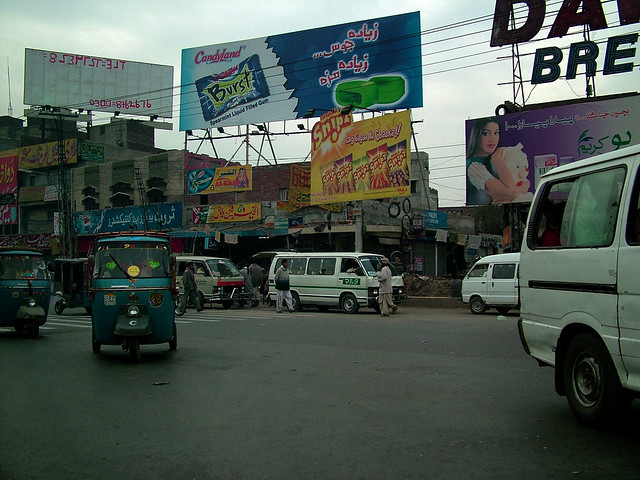
    Street of Lahore
    More papers about urban transportation in Asian cities:

    Thursday, September 5, 2019

    Active Mobility: Bringing Together Transport Planning, Urban Planning, and Public Health

    By Caroline Koszowski, Regine Gerike, Stefan Hubrich, Thomas Götschi, Maria Pohle1, Rico Wittwer

    Active mobility is related to various positive effects and is promoted in urban planning, transport planning, and in public health. The goals of these three disciplines differ in many respects but have a strong overlap in the ambition to foster active mobility. Until now, efforts for strengthening active mobility have typically not been combined, but rather promoted separately within each discipline. This paper presents a review of research on determinants and impacts of active mobility and of policy measures for supporting active mobility, including the three disciplines of transport planning, urban planning, and public health. The paper further shows the different perspectives and ambitions of the three disciplines and, simultaneously, the substantial synergies that can be gained from an interdisciplinary collaboration in research and practice. 


    Wednesday, September 4, 2019

    Cyclability in Lahore, Pakistan: Looking into Potential for Greener Urban Traveling


  • By 
  • Sheikh Atif Bilal Aslam, 
  • Houshmand E. Masoumi, 
  • Muhammad Asim, 
  • Izza Anwer


  • Measuring perceived or objective cyclability or bikeability has drawn less attention compared to walkability, particularly in developing countries like those in South Asia and the Middle East. This paper presents the results of a survey about cyclability in Lahore, Pakistan, focusing on human perceptions rather than the built environment. The overall sample included a total of 379 respondents from three socio-economic classes: those from lower socio-economic backgrounds accessing traditional/older bazaars, respondents from the middle socio-economic class accessing uptown bazaars, and respondents of higher socio-economic status accessing pedestrian shopping malls. The exploratory data collection was conducted in spring 2018 in Lahore by means of a short standard questionnaire with 19 questions, resulting in 17 categorical/dummy variables, two open-ended variables, and two continuous variables targeting socio-economics, bike trip characteristics, biking barriers, and preferred travel specifications. The results showed that the middle socio-economic group was more inclined, flexible, and willing to bike compared to the lower and higher socio-economic-groups. The lower socio-economic group used the bicycle more frequently than the middle socio-economic group. Around half of the middle socio-economic group commutes via bike compared to the lower socio-economic group. There was little to no representation of 55-64 and 65+ age groups in the data. The descriptive findings of this survey indicate some preliminary signs of differences of decisions and perceptions about biking compared to high-income and European countries. These differences need to be tested in future statistical analyses.


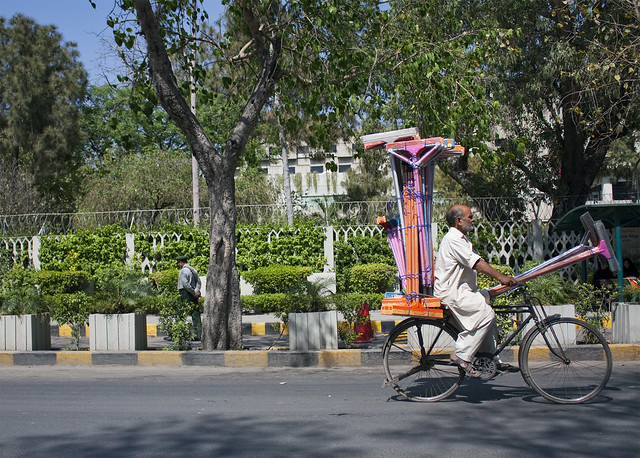
  • Squeegies for sale

    More about Asian cities:

    Facilitating Urban Management Through Local SDI Case Study: The Municipality of Tehran