Like Urban Research on Facebook

Showing posts with label Gentrification. Show all posts

Saturday, July 25, 2026

What is Urban Blight, and what causes it?

Urban blight, also known as urban decay, refers to the deterioration and decline of city areas, usually due to neglect, economic downturn, or poor urban planning. This phenomenon often leads to vacant buildings, rundown infrastructure, and declining property values. The result is a negative impact on the quality of life, reduced economic activity, and increased social challenges such as crime and unemployment. Let's explore what causes urban blight, its effects, and examples of cities that have faced this issue.


Causes of Urban Blight

1. Economic Decline: When industries or businesses shut down, cities can lose a significant portion of their economic base. This was seen in places like Detroit, where the decline of the auto industry left vast areas of the city abandoned.

2. Suburbanization: As people move to the suburbs for better housing, schools, and safety, inner-city areas can experience depopulation and neglect. This “flight” to the suburbs can drain cities of their middle-class residents and tax revenue.

3. Neglect of Infrastructure: Lack of investment in public infrastructure like roads, public transport, and utilities can lead to the decay of entire neighborhoods. Over time, the area becomes less attractive for residents and businesses.

4. Poor Urban Planning: Bad zoning laws and lack of long-term planning can create environments where buildings and public spaces deteriorate faster. For example, areas with mixed-use zoning (residential, commercial, and industrial) without proper planning can suffer from blight due to incompatible land use.

5. Political and Social Factors: Corruption, mismanagement, and lack of governance can accelerate the decline of urban areas. Social factors like crime and poverty can also contribute to the decline, creating a cycle that’s difficult to break.

Effects of Urban Blight

Vacant and Abandoned Properties: Empty homes and commercial buildings become common, leading to a decline in property values. In the U.S., it is estimated that there are over 17 million vacant properties nationwide, with many in blighted urban areas.

Increased Crime: Blighted areas often see a rise in crime due to a lack of social cohesion and economic opportunities. Studies show that abandoned properties are linked to higher rates of vandalism, drug use, and other illegal activities.

Economic Decline: The decline in property values and loss of businesses can result in a reduced tax base, making it difficult for cities to fund public services like education, police, and fire departments.

Health and Environmental Issues: Urban blight can lead to public health problems, including higher rates of asthma and lead poisoning due to poor housing conditions. Abandoned buildings and lots can also become dumping grounds for hazardous waste.

Strategies to Combat Urban Blight

1. Urban Renewal Projects: Some cities have launched large-scale urban renewal initiatives to revitalize blighted areas. For example, New York City successfully transformed Times Square from a crime-ridden neighborhood in the 1980s to a major tourist attraction today.

2. Community Involvement: Grassroots efforts, such as community gardens, neighborhood clean-ups, and local arts projects, have proven effective in revitalizing neighborhoods. Philadelphia’s “Mural Arts Program” turned abandoned walls into vibrant public art, which helped to reduce blight and foster community pride.

3. Adaptive Reuse of Buildings: Converting old, vacant buildings into new uses can breathe new life into blighted areas. In Pittsburgh, old warehouses have been transformed into trendy lofts, offices, and art spaces, attracting new residents and businesses.

4. Economic Incentives: Offering tax breaks and incentives for businesses and developers to invest in blighted areas can encourage redevelopment. New Orleans, after Hurricane Katrina, used tax incentives to attract investors to rebuild the city.

5. Land Banks: Many cities use land banks to acquire, manage, and repurpose vacant properties. This strategy helps to stabilize property values and reduce the negative effects of blight. As of 2021, over 250 land banks operate in the United States, targeting cities like Flint, Michigan, and Buffalo, New York.

Conclusion

Urban blight is a complex problem with deep economic, social, and political roots. However, with targeted strategies like urban renewal, community engagement, and adaptive reuse, cities can transform decaying areas into thriving neighborhoods. The key to reversing urban blight lies in strategic planning, investment, and a commitment to building sustainable, vibrant communities.

As cities continue to grow and evolve, addressing urban blight will remain crucial for ensuring that urban spaces are livable and prosperous for future generations.

More about urban planning:

Complexity Theory and Urban Planning

The 3 Most Successful Examples of Urban Planning in Modern India


Tuesday, December 17, 2024

Gentrification: Why Cities Keep Changing

Gentrification. It’s a term that stirs up mixed emotions. Some see it as urban revitalization, while others view it as a force of displacement. But why do cities keep changing, and who benefits from this transformation? Let’s dive into two iconic case studies: Brooklyn, New York, and 19th-century Paris.


Brooklyn, New York: The Hipster Takeover

In the last two decades, Brooklyn has become a prime example of gentrification in action. Neighborhoods like Williamsburg and Bushwick have transformed from industrial areas to trendy hotspots. Once a gritty, working-class borough, Brooklyn saw an influx of young professionals, artists, and tech-savvy entrepreneurs in the early 2000s. But this shift came at a price.

Rising Property Prices:
From 2000 to 2020, property values in Williamsburg skyrocketed by nearly 200%, pushing out long-time residents who could no longer afford the rising rents. The median rent for a one-bedroom apartment jumped from $1,100 in 2010 to over $3,000 in 2023. This trend isn’t limited to Williamsburg; the entire borough saw property values increase by 65% between 2010 and 2020.

Demographic Shifts:
Brooklyn’s transformation also changed its demographic makeup. According to the U.S. Census Bureau, the white population in Williamsburg increased by 44% between 2000 and 2010, while the Latino population decreased by 27% in the same period. The cultural diversity that once defined these neighborhoods is slowly fading, replaced by upscale cafes, art galleries, and high-end boutiques.

Economic Impact:
However, it’s not all bad news. The influx of wealthier residents has revitalized local businesses, leading to new job opportunities. The New York City Economic Development Corporation reported that Brooklyn added over 90,000 jobs between 2010 and 2019, mainly in tech, healthcare, and hospitality. But critics argue that these jobs don’t always benefit the original residents, many of whom are priced out before they can reap the rewards.


Paris and Haussmannization: The Original Gentrification?

While gentrification might seem like a modern phenomenon, it actually dates back to the 19th century with one of the most ambitious urban renewal projects in history—Haussmannization in Paris. In the 1850s, under the direction of Baron Georges-Eugène Haussmann, the French government undertook a massive project to modernize Paris. The narrow medieval streets were replaced with wide boulevards, parks, and grand buildings.

Transforming Paris:
Haussmann’s renovation wasn’t just about aesthetics. It was a deliberate move to make Paris more navigable and healthier, reducing the spread of diseases like cholera. Over 12,000 buildings were demolished, and 80 miles of new roads were constructed. This gave birth to the iconic Paris we know today, with its grand avenues and uniform architectural style.

Social Displacement:
But this transformation came at a significant social cost. Haussmann’s project displaced nearly 350,000 residents, primarily the working-class poor. Many were forced to move to the outskirts of the city, giving rise to the suburbs or “banlieues.” This form of displacement created a clear divide between the affluent city center and the poorer periphery, a pattern that still exists today.

Legacy and Criticism:
While Haussmannization is often celebrated for turning Paris into the “City of Light,” it also sparked criticism. The project faced backlash for prioritizing aesthetics and infrastructure over the needs of the existing residents. Many historians argue that Haussmannization was an early form of gentrification, where modernization served the wealthy at the expense of the poor.


The Double-Edged Sword of Gentrification

Gentrification isn’t inherently good or bad—it’s a double-edged sword. On one hand, it can breathe new life into decaying neighborhoods, increase property values, and attract investment. On the other hand, it often results in the displacement of long-time residents, erases cultural heritage, and creates social divides.

For example, in cities like San Francisco, the tech boom led to a surge in gentrification, particularly in areas like the Mission District. From 2011 to 2021, median home prices in San Francisco rose by over 80%, forcing many low-income residents to leave. Meanwhile, in Berlin, where rent controls are stricter, gentrification has been slower but not entirely avoidable. The city introduced a rent cap in 2020, which temporarily froze rent prices for five years, although it was later overturned.


Conclusion: The Future of Urban Change

So, why do cities keep changing? The answer lies in the constant push and pull between growth and preservation. Gentrification is a byproduct of cities evolving to meet the demands of a new generation. But as we’ve seen, this transformation comes with a cost. The challenge for urban planners is to find a balance that revitalizes neighborhoods without displacing the people who call them home.

Cities like Copenhagen and Portland are experimenting with inclusive urban policies to mitigate the negative effects of gentrification. Whether these efforts will succeed remains to be seen, but one thing is clear: as long as cities evolve, the debate over gentrification will continue.


More about gentrification:

Measuring Gentrification in the Interstate Corridor Urban Renewal Area

Saturday, August 31, 2019

Measuring Gentrification in the Interstate Corridor Urban Renewal Area

By Indrani Boyle

This study seeks to evaluate and reflect upon attempts to measure gentrification in the Interstate Corridor Urban Renewal Area (ICURA) of Portland, Oregon. Established in 2000 by the Portland City Council, and managed by the Portland Development Commission (PDC), the urban renewal area relies on the use of Tax Increment Financing (TIF) to fund capital improvements in a defined area of North/Northeast Portland. Although twenty urban renewal areas have been instituted within the City of Portland since the late 1950’s, few in recent history have included substantial residential areas (B. Durston, personal communication, October 1, 2008). For example, the River District Urban Renewal Area targeted a largely abandoned industrial area beginning in 1998, resulting in the creation of “The Pearl,” a vibrant multi-use district with a significant amount of housing. Although the growth of The Pearl has inspired concerns about gentrification and housing affordability, the prospect of urban renewal in the heavily residential areas of North/Northeast Portland prompted stronger reactions. In a largely homogenous city, the ICURA contains sections of 10 neighborhoods, including historically African American neighborhoods. History makes the racial composition of neighborhoods relevant. Previous actions of PDC led to the relocation of hundreds of African American households to make way for large-scale redevelopment projects. In addition, persistent patterns of legal and illegal discrimination contributed to income and housing instability. Homeownership rates for African Americans in Portland remain well below population averages. However, the neighborhoods within the ICURA were characterized by a deteriorating housing stock, declining employment opportunities, and criminal activity. To many, urban renewal represented both a threat and an opportunity. By necessity, the implementation of urban renewal causes change. In both fact and perception, these changes are likely to be simultaneously positive and negative.


Portland

More articles about urban renewal and revitalization:

Planning and Urban Design for a Liveable High-Density City

Tuesday, August 8, 2017

Urban Design and the Changing Context of Urban Regeneration in the Netherlands

By Paul STOUTEN,

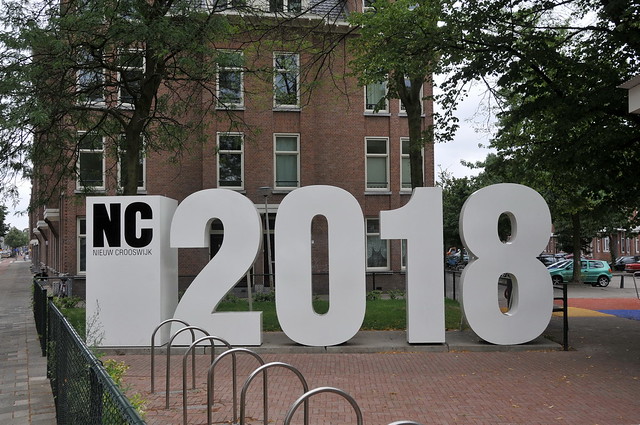
Urban design schemes accompanied by avant-garde design of space have been an outcome of economic growth of cities and countries in many periods of time. At the beginning of the 21st century, Nieuw Crooswijk in Rotterdam was the largest area involved in nationally launched policies. Many times the conflicts surrounding the plan were in the news, particularly concerning the aim to attract higher incomes. Gentrification, with displacement of present and original residents forms a central issue and the discussions in Nieuw Crooswijk fit within the more general urban landscape and language of urban regeneration in Europe.


'Nieuw Crooswijk 2018' Rotterdam

More about the Netherlands:

Photos of bike lanes in Amsterdam, Netherlands (1)

Residential self-selection and travel: The relationship between travel-related attitudes, built environment characteristics and travel behaviour

The World's 7 Most Bike-friendly Cities

Graffiti photos of Rotterdam, Netherlands

BEST PRACTICE IN FACILITATING AND PROMOTING ACTIVE TRAVEL

Monday, March 14, 2011

What Role Should Stadiums Play in Urban Revitalization?

by Jay Corbalis

In a recent Star-Ledger op-ed article, Jeff Vanderbeek and Michael Gilfillan (Chairman and Vice Chairman of Devils Arena Entertainment, respectively) tout the success of the Prudential Center in helping to breathe new life into downtown Newark. By all accounts, the arena has been an integral part of a larger renaissance underway in New Jersey’s largest city, and has helped attract millions of new visitors (along with some of their disposable income) to Newark.
But we should be careful not to oversell the benefits that sports venues can bring to urban areas, or see them as a quick substitute for a comprehensive urban revitalization strategy.


more posts about urban revitalization:

Denver has increased 10 to 15 percent in public transit use in the downtown

What’s Wrong With Gentrification? The displacement myth

Urban Revitalization: Best Practices to Prevent Residential Displacement Due to Gentrification

Wednesday, January 5, 2011

Gentrification in Hamburg: Can Ikea Save a Run-Down Neighborhood?

By Sven Böll and Ole Reissmann

Plans to build a new Ikea store in the Hamburg district of Altona have divided local residents. Supporters of the project, which would be the first of its kind in a downtown area, claim that it will bring much-needed investment to the area. But local artists and activists say it will just speed up the gentrification of the neighborhood.
It once had the distinction of being Germany's first pedestrian zone. In recent years, however, Grosse Bergstrasse in Hamburg's Altona district has been in decline. Now the shopping street is back in the headlines: as the scene of a battle between local residents over whether Swedish furniture giant should be allowed to build a new inner-city store there.
Ikea's plan to build its first inner-city outlet on Grosse Bergstrasse is the area's last hope, say supporters. The proposed site currently contains the Frappant building, a 1970s concrete behemoth left over from the shopping street's heyday. Proponents claim the new plan, which Ikea says will bring Altona €70 million ($100 million) in investment and 250 jobs, will give the whole neighborhood a new lease on life.
 

GroĂźe BergstraĂźe STAMP Hamburg, image by Mark Max Henckel

GroĂźe BergstraĂźe, Altona-Altstadt, image by Mark Max Henckel


read more articles about German planning:

Implications of an Urban Renewal Based State-Led Gentrification Process in a Roma Neighborhood in Istanbul

by Tolga Islam

Abstract
 
Sulukule, now a ruined and deserted land (as a result of the demolitions of the municipality), was a residential inner city neighborhood situated along the historic city walls in the Historic Peninsula. It was characterized by being a host to Roma population that had been living there for several decades. Sulukule was a highly stigmatized neighborhood, associated with crime and illegal activities in the minds of the general public, mainly with drug trade and usage. The local authorities have decided to implement a renewal project in Sulukule in 2005, the beginning of an era that is characterized by the declaration of a series of renewal projects in different parts of the city that will replace the existing houses of low quality and poor standards with new and high quality houses. The project is being implemented in the name of increasing the quality of life of the original residents. What is really happening, however, is the dispersal of the local residents, especially the Roma people, throughout the city and making their land available for the use of more affluent users by using state power (namely gentrifying their land). The paper aims to reflect this gap/irony between the policy rhetoric of the local authority and the reality taking place in the neighborhood.


Rainy Istanbul, photo by jasab
Istanbul again, photo by tcp909

More posts about urban planning in Turkey:

APPLICATION OF THE URBAN REALMS MODEL TO ISTANBUL

Polycentric Urban Development and Istanbul

THE PLANNING HISTORY OF TURKEY: POLICIES, PRACTICES, BREAKDOWNS

Sunday, June 6, 2010

Gentrification and Its Discontents


By Benjamin Schwarz
Michael Sorkin, an architect and critic, and Sharon Zukin, an urban sociologist, have each written what they describe as books about contemporary New York City—but that’s putting things far too broadly. Zukin’s Naked City does make forays into the white-hot center of hipness, Brooklyn’s Williamsburg, and to rapidly gentrifying Harlem. But the bulk of her book, and all of Sorkin’s Twenty Minutes in Manhattan, is confined to fine-grained observations of the streets and neighborhoods within roughly 20 blocks of their apartments in Greenwich Village—that is, west to the Village’s Meatpacking District and new Gold Coast along West Street, east to the fringes of Alphabet City, north to Union Square, and south to SoHo and Tribeca. This area today is in every sense rarefied, and for most of its history was in crucial ways set apart from the rest of Manhattan, which to some extent leaped beyond it. Still, the precedent for using the Village to draw lessons and issue prescriptions about New York generally, and indeed urban life writ large, was of course sanctified in 1961 by that doughty urban observer and community activist, Jane Jacobs. She largely formed her conclusions in The Death and Life of Great American Cities—the ur-text for contemporary writing about urban life and the most influential American book ever written about cities—by closely reading the neighborhood life around her house on Hudson Street (about six blocks from Sorkin’s apartment and, by my reckoning, about 10 from Zukin’s; it’s all a bit clubby).
read more

Thursday, May 27, 2010

Gentrification and Resistance in New York City

Last spring, USA Today ran a story with the headline “Gentrification: A Boost for Everyone.” A little more than a week after the story appeared, it showed up on the web sites of a variety of organizations and media, including Smart Growth America, the Urban Land Institute, Nation’s Building News and The Real Deal (a web site about New York real estate). Here at last, the headline suggested, was evidence that gentrification could be the rising tide that lifts all boats.

The widespread press coverage of the new wave of displacement studies is part of a broader effort to rescue the word “gentrification.” In the 1970s and 1980s, “gentrification” became familiar because it seemed to summarize all of the market failures, polarization and injustice that shaped life in America’s inner-city communities.
read more

East Village, New York, photo by jglsongs/Flickr

Monday, May 24, 2010

Between Sprawl, Slum and Hope: Urban Studies @ NYPL

The United Nations' Department of Economic and Social Affairs, Population Division estimated that by the end of 2008, for the first time in human history, the Earth's population was more than half concentrated into urban areas.

Whether we prefer it or not, the near future certainly involves city living, apartments, mass transportation, and all the other pros and cons of high density urban life. While gentrification is certainly discussed to no end in the media, less mainstream attention has focused on its counterpart, the death of suburbia.
read more

What’s Wrong With Gentrification? The displacement myth

By Adam Sternbergh
Dec 11, 2009

At least there was one upside to the downturn: It brought gentrification to a thudding halt. Because gentrification, as we all know, is a dirty word, and one that never tastes more sour than in the mouths of the people who practice it. n+1, the literary journal of the Brooklyn renaissance, headquartered in the rigorously revitalized Dumbo, just published two tut-tutting pieces on the subject: a book review titled “Gentrified Fiction” (en garde, Jonathan Lethem!) and an essay, “Gentrify, Gentrify,” which decries the annexation of Brooklyn into “Ikea-hoods” and calls on gentrifiers to (somehow) “ally with the displaced.” 

Wednesday, May 12, 2010

From Urban Wastelands to New-Build Gentrification: The Case of Swiss Cities

Patrick Rérat, Ola Söderström, Etienne Piguet and Roger Besson
Institute of Geography, University of Neuchâtel, Neuchâtel, Switzerland
POPULATION, SPACE AND PLACE
Popul. Space Place (2009)
Published online in Wiley InterScience

ABSTRACT
Gentrification represents an important aspect of the transformation of socio-demographic structures in many cities around the world. The definition of this concept has been extended in recent years to cover different processes of social upgrading and to incorporate a plurality of forms, protagonists, and spaces. The notion of ‘new-build gentrification’ is part of this process of redefinition. Because of its strong connections with global socioeconomic trends, the adoption of regeneration and densification policies along with the emergence of numerous new urban districts, Switzerland offers a particularly interesting case in which to study this specifi c form of gentrification. In this paper, we first provide an assessment of the residential attractiveness of Swiss core cities for the middle to upper class. We then study new housing projects in Zurich and Neuchâtel. Our focus on the actors involved in these projects brings original results to the debates surrounding the driving forces behind new-build gentrification. Empirical material is drawn from official statistics, questionnaires relating to inhabitant profiles, interviews concerned with the strategies of actors in the real-estate market, and planning policy documents.

Rural gentrification and the production of nature: a case study from Middle England

Dr Martin Phillips,
Department of Geography,
University of Leicester,
Leicester LE1 7RH,
United Kingdom

4th International Conference of Critical Geographers, Mexico City

In a series of previous work I have sought to "make space for the study of rural gentrification" (Phillips 2005a) by highlighting parallels which exist between observed urban transformations and changes occurring in the countryside, or at least within the British countryside, and also how rural researchers might draw upon and contribute to wide ranging theoretical debates concerning the significance and constitution of gentrification (see
Phillips 1993; 2001b; 2002b; 2004; 2005a). The term gentrification is often interpreted as a largely urban phenomena, with urban gentrification being a widely acknowledged research subject – even research frontier (Van Weesep 1994) - and having become a heterogeneous and contested discursive space, with highly divergent interpretations of gentrification being advanced and debated. In contrast, rural gentrification appears as a small, restricted and rather unremarkable discursive space. A relatively small number of people use the term rural gentrification, and when it is used is often accompanied with little or no justifying commentary: rural gentrification is either largely ignored or presented as a commonplace referent to some changes in contemporary rural life.
...

GENTRIFICATION: CULTURE AND CAPITAL IN THE URBAN CORE

Sharon Zukin
Annual Review of Sociology, Vol. 13, 1987

Department of Sociology, Brooklyn College, City University of New York, Brooklyn, New York 11210, and City University Graduate Center, New York, New York 10036

Abstract
Gentrification, the conversion of socially marginal and working-class areas of the central city to middle-class residential use, reflects a movement that began in the 1960s, of private-market investment capital into downtown districts of major urban centers. Related to a shift in corporate investment and a corresponding expansion of the urban service economy, gentrification was seen more immediately in architectural restoration of deteriorating housing and the clustering of new cultural amenities in the urban core. Research on gentrification initially concentrated on documenting its extent, tracing it as a process of neighborhood change, and speculating on its consequences for reversing trends of suburbanization and inner-city decline. But a cumulation of 10 years of research findings suggests, instead, that it results in a geographical reshuffling, among neighborhoods and metropolitan areas, of professional, managerial, and technical employees who work in corporate, government, and business services. Having verified the extent of the phenomenon, empirical research on gentrification has reached a stalemate. Theoretically interesting problems concern the use of historic preservation to constitute a new urban middle class, gentrification and displacement, the economic rationality of the gentrifier’s behavior, and the economic restructuring of the central city in which gentrification plays a part. Broadening the analytic framework beyond demographic factors and neoclassical land use theory is problematic because of serious conceptual and methodological disagreements among neo-Marxist, neo-Weberian, and main-stream analysts. Yet efforts to understand gentrification benefit from the use of economic paradigms by considering such issues as production, consumption, and social reproduction of the urban middle class, as well as the factors that create a supply of gentrifiable housing and demand for it on the part of potential gentrifiers. An emerging synthesis in the field integrates economic and cultural analysis. The mutual validation and valorization of urban art and real estate markets indicates the importance of the cultural constitution of the higher social strata in an advanced service economy. It also underlines how space and time are used in the social and material constitution of an urban middle class.