Like Urban Research on Facebook

Showing posts with label Urban Revitalization. Show all posts

Saturday, July 25, 2026

What is Urban Blight, and what causes it?

Urban blight, also known as urban decay, refers to the deterioration and decline of city areas, usually due to neglect, economic downturn, or poor urban planning. This phenomenon often leads to vacant buildings, rundown infrastructure, and declining property values. The result is a negative impact on the quality of life, reduced economic activity, and increased social challenges such as crime and unemployment. Let's explore what causes urban blight, its effects, and examples of cities that have faced this issue.


Causes of Urban Blight

1. Economic Decline: When industries or businesses shut down, cities can lose a significant portion of their economic base. This was seen in places like Detroit, where the decline of the auto industry left vast areas of the city abandoned.

2. Suburbanization: As people move to the suburbs for better housing, schools, and safety, inner-city areas can experience depopulation and neglect. This “flight” to the suburbs can drain cities of their middle-class residents and tax revenue.

3. Neglect of Infrastructure: Lack of investment in public infrastructure like roads, public transport, and utilities can lead to the decay of entire neighborhoods. Over time, the area becomes less attractive for residents and businesses.

4. Poor Urban Planning: Bad zoning laws and lack of long-term planning can create environments where buildings and public spaces deteriorate faster. For example, areas with mixed-use zoning (residential, commercial, and industrial) without proper planning can suffer from blight due to incompatible land use.

5. Political and Social Factors: Corruption, mismanagement, and lack of governance can accelerate the decline of urban areas. Social factors like crime and poverty can also contribute to the decline, creating a cycle that’s difficult to break.

Effects of Urban Blight

Vacant and Abandoned Properties: Empty homes and commercial buildings become common, leading to a decline in property values. In the U.S., it is estimated that there are over 17 million vacant properties nationwide, with many in blighted urban areas.

Increased Crime: Blighted areas often see a rise in crime due to a lack of social cohesion and economic opportunities. Studies show that abandoned properties are linked to higher rates of vandalism, drug use, and other illegal activities.

Economic Decline: The decline in property values and loss of businesses can result in a reduced tax base, making it difficult for cities to fund public services like education, police, and fire departments.

Health and Environmental Issues: Urban blight can lead to public health problems, including higher rates of asthma and lead poisoning due to poor housing conditions. Abandoned buildings and lots can also become dumping grounds for hazardous waste.

Strategies to Combat Urban Blight

1. Urban Renewal Projects: Some cities have launched large-scale urban renewal initiatives to revitalize blighted areas. For example, New York City successfully transformed Times Square from a crime-ridden neighborhood in the 1980s to a major tourist attraction today.

2. Community Involvement: Grassroots efforts, such as community gardens, neighborhood clean-ups, and local arts projects, have proven effective in revitalizing neighborhoods. Philadelphia’s “Mural Arts Program” turned abandoned walls into vibrant public art, which helped to reduce blight and foster community pride.

3. Adaptive Reuse of Buildings: Converting old, vacant buildings into new uses can breathe new life into blighted areas. In Pittsburgh, old warehouses have been transformed into trendy lofts, offices, and art spaces, attracting new residents and businesses.

4. Economic Incentives: Offering tax breaks and incentives for businesses and developers to invest in blighted areas can encourage redevelopment. New Orleans, after Hurricane Katrina, used tax incentives to attract investors to rebuild the city.

5. Land Banks: Many cities use land banks to acquire, manage, and repurpose vacant properties. This strategy helps to stabilize property values and reduce the negative effects of blight. As of 2021, over 250 land banks operate in the United States, targeting cities like Flint, Michigan, and Buffalo, New York.

Conclusion

Urban blight is a complex problem with deep economic, social, and political roots. However, with targeted strategies like urban renewal, community engagement, and adaptive reuse, cities can transform decaying areas into thriving neighborhoods. The key to reversing urban blight lies in strategic planning, investment, and a commitment to building sustainable, vibrant communities.

As cities continue to grow and evolve, addressing urban blight will remain crucial for ensuring that urban spaces are livable and prosperous for future generations.

More about urban planning:

Complexity Theory and Urban Planning

The 3 Most Successful Examples of Urban Planning in Modern India


Saturday, August 31, 2019

Measuring Gentrification in the Interstate Corridor Urban Renewal Area

By Indrani Boyle

This study seeks to evaluate and reflect upon attempts to measure gentrification in the Interstate Corridor Urban Renewal Area (ICURA) of Portland, Oregon. Established in 2000 by the Portland City Council, and managed by the Portland Development Commission (PDC), the urban renewal area relies on the use of Tax Increment Financing (TIF) to fund capital improvements in a defined area of North/Northeast Portland. Although twenty urban renewal areas have been instituted within the City of Portland since the late 1950’s, few in recent history have included substantial residential areas (B. Durston, personal communication, October 1, 2008). For example, the River District Urban Renewal Area targeted a largely abandoned industrial area beginning in 1998, resulting in the creation of “The Pearl,” a vibrant multi-use district with a significant amount of housing. Although the growth of The Pearl has inspired concerns about gentrification and housing affordability, the prospect of urban renewal in the heavily residential areas of North/Northeast Portland prompted stronger reactions. In a largely homogenous city, the ICURA contains sections of 10 neighborhoods, including historically African American neighborhoods. History makes the racial composition of neighborhoods relevant. Previous actions of PDC led to the relocation of hundreds of African American households to make way for large-scale redevelopment projects. In addition, persistent patterns of legal and illegal discrimination contributed to income and housing instability. Homeownership rates for African Americans in Portland remain well below population averages. However, the neighborhoods within the ICURA were characterized by a deteriorating housing stock, declining employment opportunities, and criminal activity. To many, urban renewal represented both a threat and an opportunity. By necessity, the implementation of urban renewal causes change. In both fact and perception, these changes are likely to be simultaneously positive and negative.


Portland

More articles about urban renewal and revitalization:

Planning and Urban Design for a Liveable High-Density City

Tuesday, August 8, 2017

Urban Design and the Changing Context of Urban Regeneration in the Netherlands

By Paul STOUTEN,

Urban design schemes accompanied by avant-garde design of space have been an outcome of economic growth of cities and countries in many periods of time. At the beginning of the 21st century, Nieuw Crooswijk in Rotterdam was the largest area involved in nationally launched policies. Many times the conflicts surrounding the plan were in the news, particularly concerning the aim to attract higher incomes. Gentrification, with displacement of present and original residents forms a central issue and the discussions in Nieuw Crooswijk fit within the more general urban landscape and language of urban regeneration in Europe.


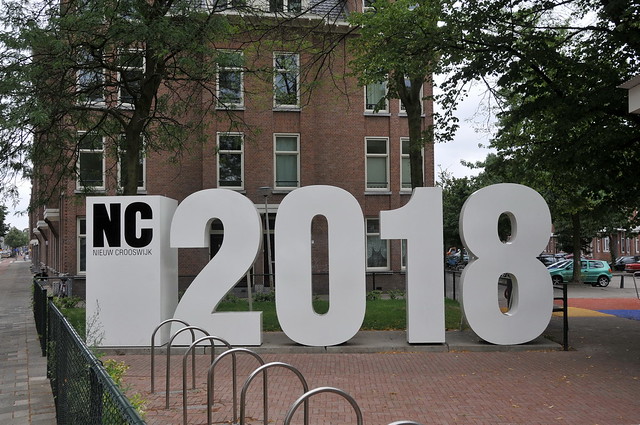
'Nieuw Crooswijk 2018' Rotterdam

More about the Netherlands:

Photos of bike lanes in Amsterdam, Netherlands (1)

Residential self-selection and travel: The relationship between travel-related attitudes, built environment characteristics and travel behaviour

The World's 7 Most Bike-friendly Cities

Graffiti photos of Rotterdam, Netherlands

BEST PRACTICE IN FACILITATING AND PROMOTING ACTIVE TRAVEL

Friday, July 29, 2016

Planning and Partnerships for the Renewal of Urban Neighborhoods

By Stephen A. Sterrett,

Urban universities are a key resource for municipal government, businesses, community organizations, and citizens to foster partnerships for successful renewal of distressed urban neighborhoods. From its experience over the past decade, the Ohio State University has created a successful model for engagement with its neighborhoods and the City of Columbus. This model is grounded in market-based revitalization and includes community-based planning, a shared vision for renewal, multiple sources of funding, and a focus on long-term results. In turn, this engagement has invigorated the university’s mission as a land-grant institution in the twenty-first century.


Ready for tonight @ Colombus, OH


More about regeneration and revitalization plans:

Measuring Socially Sustainable Urban Regeneration in Europe 

Measuring neighborhood distress: a tool for place-based urban revitalization strategies

Culture and Urban Revitalization: A Harvest Document

Detroit’s Renewal from a Funder’s Perspective

Manhattan’s Master Plan: Why NYC Looks the Way it Does

Hopeful Footsteps in Mexico City’s Centro Histórico

Tuesday, April 30, 2013

Measuring Socially Sustainable Urban Regeneration in Europe

by Andrea Colantonio and Tim Dixon

Previous research on sustainability has been mainly limited to environmental and economic concerns. However in recent years social sustainability has gained increased recognition as a fundamental component of sustainable development, beginning to receive political and institutional endorsement within the sustainable development agenda, and the sustainable urban regeneration discourse. Indeed, in the 1980s, regeneration projects focused mainly on the physical and economic renewal of degraded inner-city areas. However, since the 1990s across the EU, this approach to urban regeneration emphasising the environmental and economic spheres of regeneration has been replaced by a more integrated approach to urban redevelopment, which linked the stimulation of economic activities and environmental improvements with social and cultural elements.
The delivery of sustainable urban development has moved to the heart of European urban policy through the development of several policy documents and agreements, including the 1998 document “Urban Sustainable Development in the EU: A Framework for Action”, the 2005 “Bristol Accord” and the 2007 “Leipzig Charter on Sustainable European Cities”. Although a growing recognition of social sustainability has spurred an emerging body of research and policy literature, our understanding of this concept is still fuzzy and limited by theoretical and methodological constraints stemming from its context and disciplinary-dependent interpretations. Furthermore, at a practice level, tools, instruments and metrics to foster sustainable urban development currently available are biased toward environmental and economic sustainability. As a result, there is a clear need for further research on both social sustainability and its measurement in the context of sustainable urban regeneration.

Street market in Porta Palazzo, Torino
Porto Palazzo, Torino


more about urban sustainability:

Green Alley Programs: Planning for a sustainable urban infrastructure?

Sustainable Urban Development and the Chinese Eco-City: Concepts, Strategies, Policies and Assessments

THE IDENTITY OF OPEN SPACE: ADAPTING FROM THE MODEL OF TRADITIONAL NEIGHBORHOOD CENTER

A new approach to the Iranian urban planning, using neo-traditional development

MESSAGE FROM TRADITIONAL SETTLEMENTS FOR FUTURE CITIES

Tackling eco-urbanity: Housing and placemaking at the urban edge

Seven Rules for Sustainable Communities: Design Strategies for the Post-Carbon World

Monday, March 12, 2012

Measuring neighborhood distress: a tool for place-based urban revitalization strategies

by James Jennings

The United States federal administration’s recent Promise Neighborhood and Choice Neighborhood initiatives are part of increasing calls for place-based strategies in the delivery of education and human services in inner cities. Within this new policy context, measures of community-level inequality emerge as a key tool for identifying places which manifest relatively high levels of social and economic distress and where this condition places acute pressures on local servicedelivery nonprofits. Measuring and spatially showing levels of neighborhood social and economic distress can enhance our understandings of the needs associated with low-income communities and facilitate civic engagement in the development of neighborhood-based responses. A ‘‘neighborhood distress score’’ can be generated and used to target services into urban areas but can also encourage greater resident civic participation. This score is based on the variables identified in the literature and input from community and civic leaders in Boston, MA.


more about urban revitalization:

The Tragedy of Urban Renewal – The Destruction and Survival of a New York City neighborhood

How Brownfield Redevelopment Reduces Pollution

Gentrification before Gentrification? The Plight of Pilsen in Chicago

It's a Big Week for the Ft. McPherson Redevelopment Project

Shrinking Cities: The Forgetting Machine

Culture and Urban Revitalization: A Harvest Document

Thursday, February 2, 2012

Culture and Urban Revitalization: A Harvest Document

by Mark J. Stern and Susan C. Seifert

Advocates have long argued that the economic benefits of the arts and culture provide a firm rationale for public support. Recent scholarship on the “creative class” and “creative economy” is simply the latest effort to link cultural expression to community prosperity. In contrast, the social benefits of cultural engagement have received relatively little attention, even though—as we shall see—they provide a stronger case.
We need to avoid a simplistic either-or choice between the economic and social impacts of the arts. People who live in our cities, suburbs, and countryside are simultaneously consumers, workers, residents, citizens, and participants. Culture’s role in promoting community capacity and civic engagement is central to its potential for generating vital cultural districts. To separate the economic and the social impacts of the arts makes each more difficult to understand.
This document provides an overview of the state-of-the-art literature on culture and urban revitalization. In Part 2, we place the creative sector in contemporary context with a discussion of three social dynamics. The “new urban reality” has restructured our cities by increasing social diversity—fueled by new residential patterns, the emergence of young adult districts, and immigration; expanding economic inequality; and changing urban form. Shifts in the economic and political environment have changed the structure of the creative sector. Finally, the changing balance of government, nonprofit, and for-profit institutions in social policy development—the shift to transactional policymaking— has profound implications for cultural policy and the creative sector broadly defined. These three forces—the new urban reality, the changing structure of the creative sector, and the emergence of transactional policy-making—define the context within which culture-based revitalization takes place.
Part 3 turns to the major dimensions of current literature on culture-based urban revitalization: the promise of the creative economy; culture’s role in building community capacity; and the negative consequences of culture-based development. Part 4 uses the critical synthesis afforded by our review of the creative economy and community building literature to propose a new model of a neighborhood-based creative economy. Part 5 concludes with a reflection on research gaps as well as the implications of the literature for community development policy and practice. Here we postulate that U.S. cities have the potential to regenerate urban neighborhoods through culture-based strategies that combine wealth-creation and social justice—but only by digesting the lessons of past experience.
The two literatures on culture-based development—economic revitalization and community building—have generally evolved along separate paths with relatively little interaction. By contrast, the European discussion of culture and revitalization has been characterized by intense efforts to integrate these two dimensions. Motivated by “third way” social policies—which try to link a neo-liberal emphasis on productivity and competitiveness with a social concern about exclusion—Great Britain under New Labour has invested in “social regeneration” schemes precisely because they promise both economic growth and social integration. As a result of this political commitment, British policy-makers have devoted considerably more effort than their American counterparts to developing theories of arts-based redevelopment, methods for assessing its effectiveness, and design criteria for practitioners.
One lesson of the European experience that resonates with that of the United States is a preoccupation with gentrification and displacement. There is a widespread perception on both sides of the Atlantic that artists serve as the opening wedge of real-estate speculation and neighborhood destruction. Thus, although the case for the effectiveness of culture-based development is far from airtight, the possibility of residential dislocation poses the greatest barrier to its wider acceptance.


more about revitalization:

Shrinking Cities: The Forgetting Machine

It's a Big Week for the Ft. McPherson Redevelopment Project

Partnership, Collaborative Planning and Urban Regeneration

NON INNER-CITY GENTRIFICATION IN ISRAEL

Revitalization of Urban Areas through Business Improvement Districts (BIDs) – Trends and Expectations for Shrinking Cities

How Brownfield Redevelopment Reduces Pollution

Thursday, January 19, 2012

Shrinking Cities: The Forgetting Machine

 by Jason King

....
It's reductive, and it limits the stories behind the former beauty, and the nasty racial discrimination that was at work in the creation of something like the large Hudson's store on Woodward Avenue, captured in this image that shows the cutaway of the various departments inside the hive of mid-century activity which was vital to the "making of shoppers, like the making of citizens, was an essential function of both store and city, especially the city of middle-class arrivals made possible by the flourishing of modern industry".  This idealistic experience is another cultural ruin that no longer exists (as it was demolished by changes in commerce) - much like the building in which it used to happen.
The Old Michigan Theatre, Detroit, photo by femaletrumpet02
The same fates, to a differing degree, befell many sites, like Hudsons, but the overlay of the old (ruin) and the new become something similar to Rome - a cafe right outside the Pantheon, or a gelato stand at the Colosseum... In Detroit, the Michigan Theater, for instance, was an architectural gem from the 1920s, which in the words of Herron was somewhat rudely transformed into a parking garage... "The old Michigan Theater is one of the most suggestive sights in the whole city of Detroit: neither an abandoned ruin nor a precious, restored fetish, but a working statement about making do with the past. The tenants of the offices adjacent to the theater threatened to move out unless they were provided with secure parking, so that’s what the landlord improvised out of the otherwise useless auditorium. And that is the genius of the place."
....

read more
The Old Michigan Theatre, Detroit, photo by emaletrumpet02
The Old Michigan Theatre, Detroit, photo by jvh33

The Old Michigan Theatre, Detroit, photo by jvh33
more about Detroit:

Back to Basics for Detroit Light Rail

Is Detroit the new Brooklyn?

Detroit: The Death of Manhattanism

Skyline photos of Detroit 1

Detroit’s Renewal from a Funder’s Perspective

Tuesday, January 17, 2012

It's a Big Week for the Ft. McPherson Redevelopment Project

by Josh Lindenbaum

Owned by the U.S. Army and occupied by it from the end of the Civil War until it fell victim to the Defense Department's 2005 cost-saving wave of base closure orders, Ft. McPherson offers a huge opportunity for redevelopment in East Point on the southwest side of town. Proposals were due at noon today from developers seeking to serve as 'master developer' for commercial and residential aspects of a re-purposing of the base's assets and land. And when Governor Deal unveils his 2013 budget later in the week, we should learn how much the state plans to allocate to development of a science and technology park onsite.

read more

more about urban Atlanta:

Urban Sprawl and Atlanta’s Air Quality Problems

New Urbanism in Memphis and Atlanta

Tomorrow is Another Day for Atlanta’s Sustainable Transport

Neighborhoods: Is East Atlanta Losing Its Soul?


Friday, January 13, 2012

From Revitalisation to Revaluation in the Spence Neighbourhood

By Owen Toews

This paper takes as its subject the Spence neighbourhood, the area in Winnipeg bounded by Portage Avenue, Balmoral Street, Notre Dame Avenue, and Sherbrook Street.
After decades of disinvestment free from concerns over gentrification, the last decade has brought notable changes to Spence. In many ways, Spence remains a low-income innercity neighbourhood: the overall deterioration of the neighbourhood’s housing stock has continued and poverty is still very present. While many rooming houses and low-income rental properties have been converted to single-family homes, the proportion of residents who are tenants has continued to rise slightly, and still constitutes a large majority of the population. However, the neighbourhood is also undergoing a clear transformation and revaluation, with negative results for the lowest-income renters.
Three major forces have contributed to these changes. The first is Spence Neighbourhood Association (SNA), which has kick-started a process of investment in Spence, largely through its leveraging of public money for housing rehabilitation. This investment has led to a dilemma for SNA-one that is inherent in the problematic nature of market-based housing rehabilitation, attendant decreases in affordability and the resulting displacement of low-income residents, a process that amounts to incipient gentrification. The second is the University of Winnipeg (UW), as it enters a period of expansion, property acquisition, and construction. Responding to the cramped confines of its urban location and mobilized by a vision of the transformation of the historic spatial and social divisions between campus and community, the UW is spreading out on all sides. As investors and developers, SNA and the UW are major sources of confidence for private sector property-owners in Spence. The third player, landlords and property developers, have reacted to the climate of reinvestment nurtured by SNA and the UW by investing heavily in capital improvements to the Spence housing stock. Taking their cues from earlier processes of private investment in adjacent West Broadway, developers now see significant potential for the revaluation and transformation of the Spence neighbourhood.
This paper will examine the impacts of all three actors. It concludes that the public sector must intervene with a non-market affordable housing strategy to ensure that neighbourhood revitalization does not amount to displacement for the most economically vulnerable of Spence’s residents.

Spence Neighborhood green map, by street walkings

similar posts about revitalization:

GENTRIFICATION: IS IT POSSIBLE TO AVOID IT? 

A modern-day ghost town A rural Mexican community is almost empty 

Abandoned residential units in Dessau, Germany

Boredom in a Globalized World

MEXICO: Capital Badly in Need of Urban Regeneration

Retail Trade as a Route to Neighborhood Revitalization

by karen chapple and rick jacobus

At the end of World War II, most American neighborhoods were serviced by neighborhood commercial districts populated with stores selling food, clothing, household goods, jewelry, and other items. The strongest of these districts successfully competed with downtowns as locations for major department stores. But rapid suburbanization and the development of automobile-oriented shopping centers led to the decline of most of these historic commercial districts. In low-income and minority neighborhoods, the decline of neighborhood retail coincided with dramatic shifts in residential housing patterns as middle-income minorities and white families of all income levels moved out of urban neighborhoods, leaving behind increasingly concentrated poverty and racially segregated neighborhoods. By the 1980s, growing income inequality was contributing to a “spiral of decay” in which declining incomes and population losses led to declining retail and other neighborhood conditions, which, in turn, caused further outmigration. This was especially true in communities of color. While the 1990s saw the return of some more affluent and white residents to the inner city, neighborhood commercial strips have been slower to revitalize. By 2000, half as many central city neighborhoods had a middleincome profile as in 1970, suggesting that these areas epitomize national patterns of growing income inequality. Disinvestment has remained so pervasive that policymakers (urged on by Michael Porter) paradoxically consider these older neighborhoods to be “new” or “emerging” markets.
Neighborhood commercial disinvestment stems not only from population shifts but also from shifting consumption patterns. Most obvious, the rise of big box retail, now commonly called the Wal-Martization of retail, has vastly increased the type and quantity of goods available to consumers, for the most part at lower prices. “Big box” means larger market areas and stores, but rarely in the traditional commercial corridor locations. The need for larger sites and freeway access means that this type of retail generally must locate in industrial or commercial areas distant from residential neighborhoods, most often requiring the use of an automobile. Moreover, as consumers increasingly purchase goods in bulk from discounters, the car has become essential to the shopping trip. Though the debate is ongoing about whether big box outlets cannibalize or complement small local stores, this overall shift in retailing has undoubtedly discouraged retailers from locating in neighborhood retail strips.

Neighborhood shops and retail, Berlin, photo by La Citta Vita

Neighborhood shops and retail, Berlin, photo by La Citta Vita

Neighborhood shops and retail, Berlin, photo by La Citta Vita

more about revitalization:

Detroit’s Renewal from a Funder’s Perspective

Manhattan’s Master Plan: Why NYC Looks the Way it Does

Hopeful Footsteps in Mexico City’s Centro Histórico

Waterwalk Sustainable Urban Regeneration Project for Green Brussels Capital

Developing sustain ability: sustainability policy and gentrification on Toronto's waterfront

Implications of an Urban Renewal Based State-Led Gentrification Process in a Roma Neighborhood in Istanbul


Sunday, January 1, 2012

Detroit’s Renewal from a Funder’s Perspective


This interview is the first in a series of conversations with friends and members of Living Cities, a philanthropic collaborative of 22 foundations and financial institutions. On September 27th, Living Cities will be hosting a 20th anniversary event with a live webcast available on their website.
Over the past two decades, Living Cities has invested nearly $1 billion in American cities; most recently the organization has focused its efforts and funds on five cities through a program called The Integration Initiative. According to Living Cities, “The Integration Initiative supports cities that are harnessing existing momentum and leadership for change, overhauling long obsolete systems and fundamentally reshaping communities and policies to meet the needs of low-income residents.” In 2010, Detroit was chosen as one of the Integration Initiative sites. It will receive $2.75 million in grants, $4 million in flexible debt, and $15 million in commercial debt from Living Cities members to improve safety, schools, employment, small business opportunities and a host of other aspects of the city’s built environment.
Rip Rapson is the President of the Kresge Foundation and a member of Living Cities’ board. Kresge’s funding in metropolitan Detroit has lead to advances in arts and culture, education, entrepreneurship development, building the green economy, transportation reform, and perhaps most controversially, in land-use reform. He talked with Next American City about the Integration Initiative, innovation in anchor institutions and where Detroit is headed over the next 20 years.

Some old parts of Detroit need gentrification, by Joyce Pedersen (addict2pics)

more about urban revitalization and gentrification:

Manhattan’s Master Plan: Why NYC Looks the Way it Does

Hopeful Footsteps in Mexico City’s Centro Histórico

Norwegian poetics – 2nd life of the industrial city

Waterwalk Sustainable Urban Regeneration Project for Green Brussels Capital

Thursday, December 29, 2011

Manhattan’s Master Plan: Why NYC Looks the Way it Does

by Gregory Wessner

New Yorkers take it for granted that we can say things like “meet me at 85th Street and Third Avenue” and know that regardless of whether someone has been to that intersection, they will easily be able to get there. It’s all thanks to Manhattan’s legendary street grid, which celebrates its 200th anniversary this year.
In 1807, frustrated by years of uncontrolled development and a decade of public health epidemics attributed to lower Manhattan’s cramped and irregular streets, New York City’s Common Council (the predecessor to today’s City Council) petitioned the State Legislature to develop a street plan for Manhattan above Houston Street, at that time a rural area of streams and hills populated by a patchwork of country estates, farms and small houses. The adoption four years later of the Commissioners’ Plan established the grid of 12 north-south avenues and 155 east-west streets that, though it would take most of the 19th century to build, continues to fundamentally shape life in New York.
But is something so infrastructural, something that’s taken for granted every day, really worth celebrating?
The grid is definitely worth celebrating — without it, New York might not be the great city it has become. That’s why the Museum of the City of New York and the Architectural League of New York have organized a pair of exhibitions about its past and future. The first of these exhibitions, “The Greatest Grid: The Master Plan of Manhattan, 1811-2011,” curated by architectural historian Hilary Ballon, traces the creation, implementation and evolution of the plan from 1811 through the 20th century.
 

urban renewal plan for manhattan, from "Jane Jacobs and the Future of New York" at the Municipal Art Society, by conbon33

more about NYC:

Wednesday, December 28, 2011

Hopeful Footsteps in Mexico City’s Centro Histórico

by Ruth Samuelson

After years of steady deterioration, Mexico City’s Centro Histórico is finally showing signs of health.
Public and private efforts, especially by Mexican billionaire Carlos Slim Helú, have bulked up security, refurbished old parks and gathering spots and increased economic development in the area. But the renaissance’s defining feature is obvious: it’s the ground.
In recent years, the Centro has closed off three streets to vehicular traffic and has plans to convert more. Known for its museums, landmarks and busy markets, the area is now drawing more youthful crowds, thanks in part to shopping and nightlife on its pedestrian streets.
The street closure treatment has also deterred crime, according to local business owners. One of the zone’s biggest problems is residential vacancies. While Centro’s always bustling by day, it’s still desolate after dark in many spots.
The first walkway, Regina street, was inaugurated in 2008. Dubbed a "Cultural Pedestrian Corridor" by the government, it’s loaded with hip, laidback restaurants and mezcalerias.

Centro Histórico, photo by luigig
Centro Histórico, photo by teachandlearn


more about urban Mexico:

Mexico’s Proposed 2012 Budget Fails to Allocate Adequate Funding for Climate Change

Cycling in Mexico City, Aggressive Driving, Integrated Mobility Sharing

A modern-day ghost town A rural Mexican community is almost empty

THE URBAN SPRAWL: A PLANETARY GROWTH PROCESS? AN OVERVIEW OF USA, MEXICO AND SPAIN

MEXICO: Capital Badly in Need of Urban Regeneration

Tuesday, December 27, 2011

Norwegian poetics – 2nd life of the industrial city


As is the case with many countries, Norway has its share of large, polluted industrial areas defined by monumental infrastructure, lack of permeability and complicated way-finding. These areas often feature a concentration of land uses that have been deliberately isolated from the surrounding city due to their unpleasant nature. Lin Skaufel, Associate at Gehl, is currently dealing with a project of this nature in Breivoll, Oslo. Together with Hans Martin Aambø, Project Manager, and his team at Planning & Building Authority of Oslo Municipality, they have investigated how these areas can become integrated within the city and methodologies for approaching city design can be used in industrial areas.
Breivoll is in the industrial area Groruddalen that stretches approximately 15 km north east of Oslo. Through lack of a coherent planning policy, the area has developed haphazardly over time along the beautiful river Alna. Breivoll is only 4 km from the center of Oslo and has the potential to become an urban generator for Groruddalen region.


more about urban revitalization and regeneration:

GENTRIFICATION: IS IT POSSIBLE TO AVOID IT?

A modern-day ghost town A rural Mexican community is almost empty

Abandoned residential units in Dessau, Germany

Boredom in a Globalized World

MEXICO: Capital Badly in Need of Urban Regeneration

Friday, November 25, 2011

GENTRIFICATION: IS IT POSSIBLE TO AVOID IT?

by Julio Cesar Ribeiro Sampaio

The conservation of urban areas is nowadays part of the urban policies of the majority of cities. The framework of this subsection of the conservation of cultural property is made of a complex structure of principles, guidelines and standards. The production of this basic system is a result of a long discussion that includes the assessment of paradigmatic and/or polemic issues. This paper aims to examine one of these controversial issues: the concept of gentrification, which is regarded as the displacement of indigenous people in urban conservation plans. The focus of this analysis is the effectiveness of what the international conservation documents recommend about this topic.
This work starts with an explanation of gentrification by the specialized conservation literature, which includes the international charters, official guidance, practices, thoughts and views of individuals. Contributions from urban investigations especially related to urban segregation are also analyzed. Afterward, especial attention is dedicated to the antagonisms between two representative experiences: the revitalization of Bologna City Centre and the Marais region (Paris). An analysis of the secondary sources about the persistence of gentrification, even after publication of the international documents correlated with this theme, begins the next section, which also includes the study of Covent Garden (London), SoHo (New York), Pelourinho (Salvador) and Bairro Alto (Lisbon) conservation schemes.
Alternatives to avoid gentrification are approached in the last part of the work. Some proposals are contemplated despite perception of the extent of this problem’s complexity and complications. It is presumed that it is possible to impede displacement by strategies that prioritize solution of the social and economic deficiencies of the places vulnerable to this phenomenon. It is concluded that the theoretical, methodological and practical implications of gentrification demand the elaboration of a specific international document of conservation.


more about urban Italy:

Institutions in urban planning and urban transport; an Amsterdam /Naples case study

PhD Program in Spatial Planning & Urban Development, Milan Polytechnic

Ebook: Great Moments In Architecture

Public transportation in Venice, Italy

Tuesday, November 22, 2011

sustainable transport

Paris bike sharing
Rio de Janeiro downtown revival
New York congestion pricing

 by Institute for Transportation and Development Policy


On the morning after Bastille Day 2007, Paris awoke to thousands of new gleaming, pearl grey bicycles stationed at former parking spaces all over the city. Within hours of the system’s opening, the streets were filled with “freedom bicycles.” Vélib, the new bicycle-based mass transit system, proved that the revolution will be non-motorized. By the 18th day, Vélib had logged one million rides. The ubiquitous bikes are now an integral part of the city’s identity, a symbol of Mayor Bertrand Delanoë and Deputy-Mayor for Transportation Denis Baupin’s multifaceted efforts to address traffic congestion, reduce air and sound pollution, and revitalize the city’s public space.
The Vélib revolution began with doubling the amount of cycleways in the City, making a fairly coherent and continuous network. In early 2001, bicycling represented about one percent of the 10.6 million trips made daily. Between 2001 and 2006, bicycle mode share increased by 48 percent while keeping the number of crashes and injuries stable. Vélib is expected to double or triple the number of daily bicycle trips and to accelerate the rate of independent bicycling. A few months ahead of the municipal elections, Vélib is indeed “a success beyond our expectations” said Pascal Cherki, Deputy Mayor for Sports.


Bike sharing system in Paris, photo by rekha6


more about bike sharing and sustaniable transportation:

World’s largest bike-share system in China dwarfs popular U.S. program

City of Boston Announces Its BIXI Bike Share Program Is a Go

Urban Bike Sharing System Coming to London!

Can Beijing regain its status as the world’s “bicy... 

Book Review: Waiting on a Train

Wednesday, October 26, 2011

A modern-day ghost town A rural Mexican community is almost empty

A modern-day ghost town A rural Mexican community is almost empty. Its people are chasing prosperity from their cramped quarters in Rolling Meadows.(Series: Exodus from Mexico)(News)

by Korecki, Natasha

Just miles from other pueblos, where dirt roads slop with mud after a rain, water drips into living rooms and bedsheets hang over open doorways, this tiny, seemingly scrubbed-clean town peeks out brightly.
In Quiringuicharo (key-ding-gwi-CHARO), two-story houses wear fresh coats of paint.
But few cars move through the well-paved streets. No chit-chat can be heard from the shops. No food vendors ply their trade.
The refurbished town square sits empty; no children run playfully down its walkways.
A cross atop a hill can be lighted, but no one has turned it on for months. 


similar posts:

Toronto’s Genius Project: Evergreen Brickworks

Abandoned residential units in Dessau, Germany

Gentrification before Gentrification? The Plight of Pilsen in Chicago