Like Urban Research on Facebook

Showing posts with label Energy Consumption. Show all posts

Sunday, September 1, 2019

Urban Form and Mobility Choices: Informing about Sustainable Travel Alternatives, Carbon Emissions and Energy Use from Transportation in Swedish Neighbourhoods

By Todor Stojanovski

The lack of mobility choices in many Swedish neighbourhoods and cities designed for automobiles hinders the possibilities to shift towards more sustainable travel alternatives. Urban designers and planners can help with redesigning these neighbourhoods and creating urban forms that encourage walking, cycling and increased use of public transportation if they are informed about the environmental performance and carbon implications of transportation systems in existing and newly planned neighbourhoods. This paper proposes a mobility choices model based on urban form and accessibility factors commonly used in urban planning and design practices. The mobility choices model produces heat maps and visually informs about the integration with walking, cycling, public transportation and private car, modal shares, carbon emissions and transportation energy use. This information can (potentially) trigger urban transformation or redesign to better integrate sustainable travel alternatives in these neighbourhoods and contribute to more sustainable cities. Many houses can have an excellent environmental performance as buildings but they can be located at a distance where it is impossible to walk, cycle or use public transportation. The benefits of energy efficient and carbon neutral home then disappears with extensive travel and commuting by automobile. 
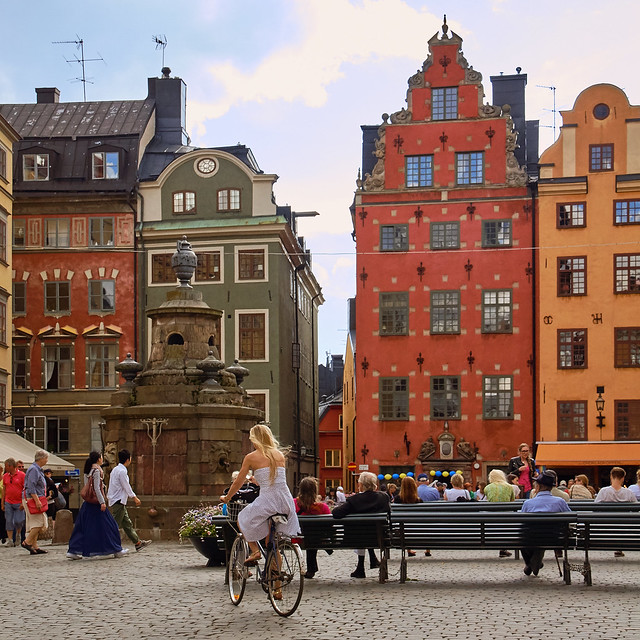

Stockholm

More papers about urban travel behavior:

USING STRUCTURAL EQUATIONS MODELLING TO UNRAVEL THE INFLUENCE OF LAND USE PATTERNS ON TRAVEL BEHAVIOR OF URBAN ADULT WORKERS OF PUGET SOUND REGION


Wednesday, December 24, 2014

A REGIONAL ANALYSIS OF URBAN POPULATION AND TRANSPORT ENERGY CONSUMPTION

By Houshmand E. Masoumi and Hamid Soltanzadeh

The association between urban population density and transport energy consumption is a well-discussed topic in the metropolitan level. However it is less studied in the regional scale. This paper demonstrates the results of an observation about transport energy use in 174 regions of Iran. Logarithmic regression analysis shows very weak associations between urban population density and transport fuel use in the regional level. However statistical analysis of population size and the area of the regions by means of Kruskal-Wallis test indicates that regions with medium populations of between 100000 and 500000 inhabitants and areas of between 2000 and 5000 square kilometers enjoy more energy-efficient consumption than regions with more than 500000 people and 15000 square kilometers area and small regions of less than 100000 residents and 2000 square kilometers. This observation raises the question about higher energy efficiency of mid-sized cities and regions. Also more specialized studies about urban sprawl and its impacts on transport energy consumption in small towns and rural places seem desirable.


more about energy consumption:

MITIGATING URBAN HEAT ISLAND EFFECT BY URBAN DESIGN: FORMS AND MATERIALS

A new approach to the Iranian urban planning, using neo-traditional development

Energy Access in Urban Slums: A Case of Khon Kaen, Thailand

A Methodology for Incorporating Fuel Price Impacts into Short-term Transit Ridership Forecasts

Reduction of CO2 emissions of transport by reorganisation of urban activities

Modeling Energy Consumption and CO2 Emissions at the Urban Scale: Methodological Challenges and Insights from the United States

Sustainability on the Urban Scale: ‘Green Urbanism’

Urban Resilience: Research Prospectus, A Resilience Alliance Initiative for Transitioning Urban Systems towards Sustainable Futures

Thursday, January 2, 2014

MITIGATING URBAN HEAT ISLAND EFFECT BY URBAN DESIGN: FORMS AND MATERIALS

by Julien Bouyer, Marjorie Musy, Yuan Huang, and Khaled Athamena

This paper gives a synthesis of four complementary research works that are contributing to the same objective: proposing solutions to reduce the buildings’ energy consumption by the way of modifying the local climate. The first one focuses on one parameter of direct relevance to urban heat island phenomenon: the surface albedo. The albedo of a city or a district depends on surfaces’ arrangement, materials used for roofs, paving, coatings, etc., and solar position. The second one proposes a simulation tool that permits to evaluate the impact outdoor urban environment on buildings’ energy consumption. The third work explores urban forms: it proposes methods to describe them and analyze the climatic performances of classified urban forms. This analyze permits us to propose morphology indicators that permits to compare the relative efficiencies of different typologies. The last work concludes about the relevance of using indicators (based on physics or morphology, related to site or to built form) in urban design process and proposes a methodology to produce indicators.


papers about climate change:

Sustainable Transport and Climate Change: Environmentally Experiences and lessons from community initiatives

Asian cities at highest risk to climate change, study says

Tackling Urban Sprawl: New Urbanism and Eco-Towns

Urbanization and Natural Disasters in the Mediterranean Population Growth and Climate Change in the 21st Century Case Studies on Izmit, Algiers and Alexandria

Studying the effects of urban sprawl of metropolis on tourism - climate index oscillation: A case study of Tehran city

Research on Factors Relating to Density and Climate Change

Monday, November 19, 2012

A new approach to the Iranian urban planning, using neo-traditional development

By Houshmand E. Masoumi

PhD dissertation, Technical University of Dortmund, Germany, 2011.

In order to find the possible uses of the traditional urbanism in solving the modern urban problems, some of the contemporary urban problems that were likely to be partly or completely solved were targeted in chapter 1. The two research questions that were going to be answered were 1) which characteristics of the traditional Iranian urbanism can we use to solve some of the modern urban problems of the country? and 2) How can the effective traditional city characteristics be applied to ease some of the modern problems? Before studying the Iranian cities, the similar experiences in other countries and cultures were considered. The neo-traditional trends, practices, and built communities were discussed so that the nature of the research is determined. For example it was explained how the compact and traditional urban form was used to control urban sprawl in North America. Apart from the practical background, the theoretical aspects were reviewed. These theoretical bases were the interactions of built environment with urban transportation and environment. Before starting the main body of the research, the previous researches on the traditional urbanism including urban form, the main elements of the Iranian city, and the historical views of the urban growth were discussed. Also some of the neighbourhood infrastructures were described to make the foreign reader familiar with the Middle Eastern urban architecture. The main research methods that were used were direct observation, literature review, and Space Syntax theory. The theoretical bases and applications of SS were explained in chapter 6. Two case study cities were selected to be studied; Yazd and Kashan that both are located in the center of Iran. The studied cities contain a population of 400000 and 270000 so the results are generalized for the cities with the same range of population in similar climates and geographical conditions. Such cities are mostly mid-sized cities or small large cities in the south, east, and center of the country and also some parts of the western provinces. The historical urban growth, population growth, the typology of the constructions in the historical core and the new developments, mobility flows in the new and old textures, neighborhood organization, Neighborhood unit centers, and the hierarchy of the street networks of the two cities were studied. The first research question was answered by defining the main characteristics of the traditional Iranian city. To answer the second question, solutions in form of general strategies were discussed. Each of the suggested strategies can be implemented via some practical ideas. The study was started by the following hypothesis: “There are tips in the traditional Iranian city that have the capability to be used in contemporary Iranian cities to improve the related conditions of urban transportation, environment, energy use, and land consumption”. At the final stage of the work, it became apparent that the hypothesis is true because the possibilities and circumstances of using the traditional specifications and values became clear.

read more  
 
Yazd, panoràmica (2)

Unbenannt

more about Iranian cities:

URBAN SPRAWL IN IRANIAN CITIES AND ITS DIFFERENCES WITH THE WESTERN SPRAWL

Impact Assessment of Sustainable Public Transportation System on Quality of Life in Tehran

Socio-spatial Obstacles of Urban Sustainability in Historic Center of Cities in Iran

THE ROLE OF PHYSICAL IDENTITY OF CITY IN URBAN SUSTAINABILITY (THE CASE STUDY: YAZD,IRAN)

The Mechanism of Transformation of Shiraz City from Past to Present

Strategy for Sustainable Urban Development: A Case Study of Urmia City, Iran

Urban Ecological landscape of Tehran

Tehran and the challenges of a metropolis in the millennium

Urban Planning for Tehran, By Using Environmental Modeling and GIS/RS

A GIS-based Traffic Control Strategy Planning at Urban Intersections

Thursday, June 21, 2012

Energy Access in Urban Slums: A Case of Khon Kaen, Thailand

Asian Institute of Technology PO Box 4, Klong Luang, Pathumthani 12120, Thailand

The study provides a general background of energy accessibility in poor urban areas of Thailand particularly slum areas of municipalities. According to the Thailand Municipality Act, (1953), a minimum population density of 3000 per square kilometer is considered municipality areas and until the date of 2006, there are 1,161 settlement areas are recognized as municipality in Thailand. The initial assessment study was focused mainly in Bangkok but this study focuses on Khon Kaen and some part of Bangkok as suggested in initial assessment report. Khon Kaen is a city located towards the North of Thailand. In Bangkok and its suburbs electricity is distributed by a single utility, the Metropolitan Electricity Authority (MEA) and in the rest of the country, electricity is distributed by the Provincial Electricity Authority (PEA).
...
Bangkok is the capital city of Thailand where 32 percent of urban populations of Thailand are populated (UNDP, 2005). As of March 2005, Bangkok Metropolis has 5,641,915 populations living in 50 districts on an area covering more than 1,500 km2 2. The Bangkok Metropolitan Region (BMR), often referred to as Greater Bangkok, comprises of Bangkok and the five adjacent provinces of Nonthaburi, Pathum Thani, Samut Prakan, Samut Sakhon and Nakhon Pathom. The total population of Bangkok Metropolitan Region (BMR) is 9.4 millions in the year 2000 and annual growth rate is 1.62 % during 1990-2000 (Pornchokchai, 2003).
Bangkok Municipality Area (BMA) has 35 times larger population than the second largest city in the country, Chang Mai. Bangkok urban areas account for 85% of economic output with 15.2% poverty incidence rate (World Bank, 2002). Urban areas of the Thailand have been the center of attraction for local labor migration because of comparatively better facilities such as transportation, public health and other infrastructure. People from the rural areas migrate to urban areas in search of better employment opportunities and higher income and start to live surrounding highways, rivers, and rail lines, and/or proximate to industrial employment areas (World Bank, 2002). A study shows that 81% of the dwellers in Bangkok region are migrated from other regions or slums and 78% are permanently settled in the region anticipating the higher prospect of employment and better chance of rented housing availability (Guerra, 2004).

read more

img_0779  

more about urban Thailand:

URBAN TRANSPORT AND LOCAL GOVERNANCE IN ASIAN DEVELOPING COUNTRIES

Research on Internal Migration in Thailand: The State of Knowledge

Urban Ecology in Bangkok, Thailand: Community Participation, Urban Agriculture and Forestry

Urbanization and Urbanism in Thailand

Despite planning MRT, BRT and SRT lines, Bangkok still suffers from traffic congestion

Great distance between Bangkok and Thailand's second largest city, Nonthaburi

Wednesday, April 25, 2012

TOWARDS A SUSTAINABLE URBAN TRANSPORT SYSTEM: PLANNING FOR NON-MOTORIZED VEHICLES IN CITIES

by Geetam Tiwari

A sustainable transport system must meet the mobility and accessibility needs of people by providing safe and environmentally friendly modes of transportation. This is a complex and difficult task in the mega-cities of developing countries because the needs of people belonging to various income groups are not only different, but also often conflicting in nature. For example, if a large section of the population cannot afford to use motorized transport – private vehicles or public buses – they have to either walk to their place of work or use bicycles. Providing a safe infrastructure for cyclists and pedestrians means either physically segregating road space for cyclists and pedestrians from motorized traffic, or, if that is not possible, reducing the speed of motorized traffic. Both measures imply restricting the mobility of car users to ensure the mobility of bicycle users.
In this paper we show that pedestrians, cyclists and non-motorized rickshaws are the most critical elements in mixed traffic. If infrastructure design does not meet the requirements of these three all modes of transport operate in sub-optimal conditions. It is possible to redesign existing roads to provide a safe and convenient environment for non-motorized modes of transport. This also results in the improved efficiency of public transport vehicles and an enhanced capacity of the transport corridor when measured in number of passengers per hour per lane.


Jayuro highway, Seoul part
An intercity highway in South Korea, connecting Seoul and Ilsan
read more about sustainable transportation:

Thursday, April 19, 2012

Sustainable Urban Transportation A Winning Strategy for Canada

by Anne Golden and Natalie Brender

As The Conference Board of Canada noted in Mission Possible: Successful Canadian Cities, the fate of Canada’s cities is intimately bound up with the long-term prosperity and sustainability of the country as a whole. Among the core elements that make cities successful, efficient urban transportation networks are pivotal on several fronts. They are key to business investment and growth, since companies depend on the efficient movement of workers and goods around urban areas to maintain their competitiveness. And from a social and environmental perspective, the construction of integrated mass transit systems across urban regions provides an eco-friendly way for workers to commute to jobs in a reasonable length of time. This is particularly important as job locations shift from the downtown core (which is comparatively well served by existing mass transit systems) to dispersed suburban centres scattered throughout urban regions (which are extremely difficult or too distant to access by public transit, especially for workers commuting from one suburban region to another).
Opting for public transit is a winning strategy that increases the appeal and competitiveness of metropolitan regions. Public transit also has several positive spin-offs in terms of reducing traffic and improving the quality of life and health of citizens. Finally, public transit plays an important social role and for many households it represents an affordable and accessible means to get around the city.
The beginning of 2007 has seen a reinvigorated debate about public transit and its funding, stemming from several important developments. The 2006 census confirms an ever-increasing number of Canadians living in urban areas—and a large proportion of that growth is located in suburbs and so-called “edge cities” rather than city cores. With these areas growing by 11 per cent between 2001 and 2006 (a rate twice the national average), worries about suburban sprawl and commuters’ quality of life have been underscored. In March, the Federation of Canadian Municipalities (FCM) and its Big City Mayors’ Caucus urged the federal government to create a national transit strategy that would boost federal transit funding to meet both environmental and competitiveness goals. March also saw the unveiling of the Toronto Transit Commission’s plan for a $2.4-billion light rail system that would comprehensively service the entire urban region—funding that has yet to be secured.


similar posts about public transportation:

Increasing the Quality of Public Transport in Prague

Dortmund Light Rail Developments, Germany

Sydney: monorail soon to be scrap metal?

Back to Basics for Detroit Light Rail

Tehran and the challenges of a metropolis in the millennium

Monday, April 16, 2012

A Methodology for Incorporating Fuel Price Impacts into Short-term Transit Ridership Forecasts

by Ashley Raye Haire

Anticipating changes to public transportation ridership demand is important to planning for and meeting service goals and maintaining system viability. These changes may occur in the short- or long-term; extensive academic work has focused on bettering long-term forecasting procedures while improvements to short-term forecasting techniques have not received significant academic attention. This dissertation combines traditional forecasting approaches with multivariate regression to develop a transferable short-term public transportation ridership forecasting model that incorporates fuel price as a prediction parameter. The research herein addresses 254 US transit systems from bus, light rail, heavy rail, and commuter rail modes, and uses complementary methods to account for seasonal and non-seasonal ridership fluctuations. Models were built and calibrated using monthly data from 2002 to 2007 and validated using a six-month dataset from early 2008. Using variable transformations, classical data decomposition techniques, multivariate regression, and a variety of forecasting model validation measures, this work establishes a benchmark for future research into transferable transit ridership forecasting model improvements that may aid public transportation system planners in an era when, due to fuel price concerns, global warming and green initiatives, and other impetuses, transit use is seeing a resurgence in popularity.


more about urban transportation:

Modelling Perceived Accessibility to Urban Amenities Using Fuzzy Logic, Transportation GIS and Origin-Destination Surveys

Grid Unlocked: How Street Networks Evolve as Cities Grow

The Management of Intermodality in Urban Transportation

Reduction of CO2 emissions of transport by reorganisation of urban activities

Research on Factors Relating to Density and Climate Change

Re-evaluating the impact of urban form on travel patterns in Europe and North-America

Tuesday, April 10, 2012

German Village Becomes Model for Renewable Energy

By Renuka Rayasam

Werner Frohwitter drives his white Prius into Feldheim, parking halfway down the village's one street in front of what looks like a shipping container. Behind the street is a field where 43 giant wind turbines loom over the village's 37 houses. Frohwitter works for Energiequelle Gmbh, which owns the wind park. He greets a Russian camera crew and ushers them into the chilly container, which has become Feldheim's impromptu visitor's center. It's the only sign of life in this otherwise quiet village. Inside, he uses posters on the wall to explain the town's energy transformation for the Russian crew's renewable energy documentary.
This town of 150 inhabitants, tucked away in the Brandenburg countryside some 60 kilometers (37.2 miles) southwest of Berlin seems like an unlikely tourist hotspot. It has no bars, museums or restaurants. But since the Fukushima nuclear disaster one year ago, Feldheim has become a beacon for cities across the world that want to shift their energy mix toward renewables.
Feldheim is the only town in Germany that started its own energy grid and gets all of its electricity and heating through local renewable sources, primarily wind and biogas. This mix of energy self-sufficiency and reliance on renewables attracted 3,000 visitors in 2011. Visitors came from North and South Korea, South America, Canada, Iran, Iraq and Australia. About half of the visitors are from Japan.
Eri Otsu served as a translator for a group of Japanese energy analysts and politicians who came to Germany to see Feldheim. "Feldheim is not a charming Bavarian village; it is gray and they have little," says Otsu, an organic farmer in southern Japan. Still, the group found Feldheim the most impressive of the three German villages they visited because it is energy independent and uses renewables. "They were amazed and said they had never seen anything like that," Otsu says. 

read more
Wind Tower, by mendhak

more about energy consumption:

Reduction of CO2 emissions of transport by reorganisation of urban activities

Modeling Energy Consumption and CO2 Emissions at the Urban Scale: Methodological Challenges and Insights from the United States

The Human Benefits of Green Building

Integrated Systems Planning for Energy Efficiency and Conservation

A Spatial Analysis of Future Macro-Urban Form, Greenhouse Gas Emissions and Transport Energy Outcomes for Melbourne

Monday, March 19, 2012

Reduction of CO2 emissions of transport by reorganisation of urban activities

by Michael Wegener

It is generally believed that the private automobile has been the primary cause of the expansion of cities over wider and wider areas. However suburbanisation was not caused by the car but has been the consequence of the same changes in the socio-economic context of urban life that were also responsible for the growth in car ownership: increase in income, more working women, smaller households, shorter work hours and a consequential change in lifestyles and housing preferences towards quality of life, leisure and recreation. Under these conditions, the car and low fuel prices brought low-density suburban living within the reach of not only the rich, with the result that for the last thirty years the growth of cities has occurred primarily in the suburbs. Offices, light industry, services and retail started to decentralise later following either their employees or their markets or both taking advantage of attractive suburban locations with good accessibility, ample parking and lower land prices.
However, while this deconcentration process clearly reflects the preferences of the majority of the population, its negative side effects are more and more becoming apparent: longer work and shopping trips, increasing rush-hour congestion and less and less acceptable levels of noise, air pollution and traffic accidents. In particular the high energy consumption of transport in lowdensity cities has become an issue of growing concern. The fear of diminishing fossil fuels and the threat of long-term climate changes due to greenhouse gases have sharpened the awareness that present energy prices do not nearly cover the environmental and social costs of energy use and that the level of energy consumption in affluent countries represents a gross unfairness against developing countries which can never be allowed to rise to the same standards. At the United Nations conference on the global environment in Rio de Janeiro in 1992 many governments pledged to substantially reduce their use of fossil energy and emissions of carbon dioxide (CO2). The German government promised to reduce CO2 emissions from all sources by 30 percent compared with 1987 by 2005. As transport represents a major share of primary energy consumption, serious attempts to lower the energy use of urban transport are necessary to achieve this goal.

Major subsystems of the Dortmund model. Taken from the above paper: Paper presented at the seminar of the Special Interest Group Transport and Spatial Development of the World Conference on Transport Research (WCTRS) in Blackheath, Australia, in December 1993. Published in: Hayashi, Y., Roy, J., eds. (1996): Transport, Land-Use and the Environment, Dordrecht: Kluwer Academic Publishers, 103-124.

similar posts:

Modeling the environmental impacts of urban land use and land cover change—a study in Merseyside, UK

Low Carbon City Development Guidance [Outline]

Healthy Urban Planning The Concept, Tools, and Application

UNDERSTANDING URBAN GROWTH PATTERNS: A LANDSCAPE ECOLOGY POINT OF VIEW

Applying principles of Landscape Ecology to Green Infrastructure planning

Modeling Energy Consumption and CO2 Emissions at the Urban Scale: Methodological Challenges and Insights from the United States

by Lily Parshall, Kevin Gurney, Stephen A. Hammer, Daniel Mendoza, Yuyu Zhou, and Sarath Geethakumar

Local policy makers could benefit from a national, high-resolution inventory of energy consumption and related carbon dioxide (CO2) emissions based on the Vulcan data product, which plots emissions on a 100-km2 grid. We evaluate the ability of Vulcan to measure energy consumption in urban areas, a scale of analysis required to support goals established as part of local energy, climate or sustainability initiatives. We highlight the methodological challenges of this type of analytical exercise and review alternative approaches. We find that between 37% and 86% of direct fuel consumption in buildings and industry and between 37% and 77% of on-road gasoline and diesel consumption occurs in urban areas, depending on how these areas are defined. We suggest that a county-based definition of urban is preferable to other common definitions since counties are the smallest political unit for which energy data are collected. Urban counties, as defined by Isserman (2005), account for 37% of direct energy consumption, or 50% if mixed urban counties are included. A county-based definition can also improve estimates of per-capita consumption and the carbon intensity of energy use.


more about energy consumption:

Urban form and the ecological footprint of commuting. The case of Barcelona

TRANSPORT MANAGEMENT IN IRAN: TRAFFIC SAFETY AND CLEANER CARS

Germany Sets Aside $130 Billion for Renewable Energy

Urbanization and Environmental Sustainability

THE FUTURE OF MOBILITY IN CITIES: CHALLENGES FOR URBAN MODELLING

The Human Benefits of Green Building

Integrated Systems Planning for Energy Efficiency and Conservation

Urban form and the ecological footprint of commuting. The case of Barcelona

by Ivan Mun˜iz and Anna Galindo

One of the most controversial ideas in the debate on urban sustainability is that urban sprawl causes problems of ecological stress. This widespread assumption has been tested by measuring the ecological footprint left by commuters in the 163 municipalities of the Barcelona Metropolitan Region (BMR). This paper explores the determinants of the ecological footprint of commuting municipal variability by using the following regressors: population density, accessibility, average household income, and job ratio. The results confirm that urban form appears as the main determinant of ecological footprint variation among the municipalities of BMR.


more about urban Spain:

Street Centrality and the Location of Economic Activities in Barcelona

Montjuic Communications Tower built for the 1992 Olympics in Barcelona

skyline photos of Madrid 1

Toward Low Carbon Cities: Madrid and London

Routes of Gothic

THE URBAN SPRAWL: A PLANETARY GROWTH PROCESS? AN OVERVIEW OF USA, MEXICO AND SPAIN

INTEGRATING PLACE IDENTITY, URBAN SUSTAINABILITY AND GLOBALIZATION: A GREAT CHALLENGE FOR THE CITY OF THE FUTURE

The Public transport and priority to pedestrians and bicycles as a basis for the quality of life in capital cities

Monday, February 6, 2012

TRANSPORT MANAGEMENT IN IRAN: TRAFFIC SAFETY AND CLEANER CARS

by Farhad Nadim, Amvrossios C. Bagtzoglou, Ali Afshar, Jamshid Iranmahboob, Mohammad Reza Monazzam, and Masoud Yunesian

Numerous studies in Iran have proven that air pollution is directly associated with acute and chronic cardiopulmonary diseases in large urban areas. Oxides of nitrogen (NOx), CO, emitted mainly by vehicles; soot and suspended particulate matter resulting form burning of fossil fuels; and secondary pollutant O3 are the main pollutants in Iran’s urban atmospheric environments. While Iran’s large cities suffer from atmospheric pollution and its associated health impacts, the often ignored road traffic accidents that take the lives of more than 30,000 individuals each year pose a real and serious challenge for policy makers and transport authorities. In this paper, air pollution and its impacts on public health in Iran’s large urban areas are discussed and measures taken by government authorities to curb sources of air pollution are described. Traffic-related accidents and their social and economical impacts are introduced with the aid of basic statistics. It is argued that transport management in Iran can not be confined to policy initiatives aimed at reducing pollution emissions from motor vehicles; rather a dual approach, curtailing air pollution and traffic accidents concurrently seems to be the only sustainable strategy for the transport sector in Iran.


mroe about Iran:

Interconnections of Urban Green Spaces and Environmental Quality of Tehran

Art in the Tehran Metro

Tehran and the challenges of a metropolis in the millennium

Urban Ecological landscape of Tehran

Earthquake Management in Iran A compilation of literature on earthquake Management

An Analysis to Challenges of Urban Management in Historic Center of Cities in Iran

COMPARATIVE SUSTAINABILITY OF BAZAAR IN IRANIAN TRADITIONAL CITIES: CASE STUDIES IN ISFAHAN AND TABRIZ

Friday, February 3, 2012

Civil society leaders call for a new energy future


Justin Woolford of The Change Co., on behalf of The Co-operative, introduces the inaugural meeting of a new group of civil society champions who today launch their vision for community energy in the UK with Chris Huhne, the Secretary of State for Energy and Climate Change. The group has been brought together by The Co-operative, Forum for the Future and Carbon Leapfrog and coincides with The Co-operative's launch of their new Community Energy Challenge. 
It's the UN Year of Co-operatives and in the UK, things are starting to happen. The week before last, the Prime Minister announced the Government's intention to simplify the law around co-operatives. Today, a coalition of civil society leaders representing over 12 million members launch a vision for community energy in the UK. The first, intended to make it as easy to set up shop as a co-operative as it is to start any other form of business, is about community empowerment. The second, designed to help kick-start a clean energy revolution across the UK, is about community power. 
Whether we realise it or not, our communities are at an energy crossroads. And if we don't step up now and grasp the opportunity to shape our own energy futures in a turbine-hugging embrace, someone else (big oil and big gas) will do it for us. The choice is clear. Either we allow out-of-town prospectors to 'frack' around with our landscape and drill for shale gas, or we join our friends in Sussex saying we won't be druv - and maybe, just maybe, build a frack free future.
But make no mistake, this is about much more than just a green climate-friendly future - it's about 'energy democracy': a changed relationship between people and energy, from one where we are at the mercy of large profit-making energy providers and the vagaries of the market, to one where we control, generate and benefit from our own energy supply.


photo by KaiChanVong
read more about energy:

Germany Sets Aside $130 Billion for Renewable Energy

Changing Mindsets on Sustainable Transportation

Climate, Energy and Urbanization A Guide on Strategies, Materials and Technologies for Sustainable Development in the Desert

TOWARDS A SUSTAINABLE URBAN TRANSPORT SYSTEM: PLANNING FOR NON-MOTORIZED VEHICLES IN CITIES

Sunday, January 22, 2012

Germany Sets Aside $130 Billion for Renewable Energy

By John C.K. Daly

Germany is already the world's strongest photovoltaic market and also accounts for Europe's largest share of installed wind capacity. Moving resolutely into the field of renewable energy, by 2020, renewable energy sources are expected to account for 35 percent of Germany's energy output, soaring to 80 percent by 2050. Germany now produces 20 percent of its electricity from renewable energy sources, now, up from just 6 percent in 2000. The effort is in turn creating thousands of jobs and new industries.
Industry expert Tobias Homann observed, "With the decision to abandon nuclear power earlier this year, it was clear that the road ahead would be challenging. But Germany is in a very promising position to be the first industrialized country to rely entirely on renewable energy."
One of the current major shortfalls of the renewable energy market is its inability to store generated energy but Germany is working on this dilemma, focusing on the development of battery and smart grid technology.
According to Germany Trade & Invest CEO Jurgen Friedrich, "Germany has established the ideal prerequisites for the rapid development of the energy storage industry. The unique combination of renewable energy generation, innovation and implementation through such projects makes Germany an optimal location for companies looking to enter this budding industry."
Germany is also assiduously pursuing improving solar technology. Germany's photovoltaic installations and solar facilities recently surpassed hydropower in Germany's total energy generation matrix.
In the area of offshore wind power generation, Germany projects 4,000 turbines off its Baltic coast producing electricity by 2030. Germany's northeastern Mecklenburg-Vorpommern state on the Baltic will produce 100 percent of its electricity from renewables by 2015-2017, and then export the excess to other German states. Mecklenburg-Vorpommern premier Erwin Selling told reporters, "Renewable energy has become extremely valuable for our state. It's just a great opportunity - producing renewable energy and creating manufacturing jobs.
 
A wind tower near Dortmund, Germany

more about energy:

Monday, January 16, 2012

Changing Mindsets on Sustainable Transportation


.....
In some countries, such as the Netherlands, the price of a gallon of gas is around $8, this is one way the government is trying to change behavior. However, drivers still behave as if accelerating doesn’t cause higher fuel consumption and the Netherlands can afford to push drivers away from cars; there are bike paths everywhere. In most major cities it is easier to get from place to place on bicycle than by car. A country like the United States does not have that option. Additionally, a developing country has even less of an option of using bicycles.
For bikes to be an efficient alternative there needs to be large flat areas that are easy to traverse using a bicycle. Hilly areas are extremely difficult to travel if bikes are used to carry goods as well as people. In the Netherlands it’s possible to carry a case of beer on the back of the bike because there are so few hills to climb. However, in a hilly country like Afghanistan or India it’d be extremely difficult to do the same on anything other than a motorize bike.
In the upcoming decades we will be seeing a huge increase in the number of people with vehicles. Tata is now producing a $2000 car, which is just above the GDP per capita of India. The GDP per capita of India is likely to continue to increase. If India moves in a direction of the United States, which has roughly 250 million passenger vehicles (roughly 3 cars for every 4 people), this will lead to roughly 900 million passenger vehicles on the road.

Amsterdam biker, by hiro_putra

similar posts:

What's In A Name: Branding Rail Travel

Smart Transportation Planning in Freiburg, Germany

Pedestrian (and stroller) priority in Vancouver

The streets of downtown Amsterdam


Monday, December 26, 2011

A house with no furnace? You betcha


Sometime in the next few weeks, Paul Brazelton will move his family into a 1935 Tudor in south Minneapolis that has no furnace. He's just finished a massive renovation of the family home and even though winter's bearing down, he removed the boiler and plans to use that basement space for his daughters' home-school classroom.
He also took out the fireplace.
If this sounds like the most uninviting house (and classroom) in Minneapolis, there's something else to know: Brazelton, a software engineer and passionate environmentalist, has nearly finished a retrofit of his house to the stringent engineering standards of the Passivhaus model, a German system of homebuilding that uses insulation and highly efficient doors and windows to save energy.
The finished 2,000-square-foot home could be warmed even in the dead of winter with a pair of small space heaters, Brazelton said, though the family plans to piggyback on their hot water heater and use an in-floor heating system in the basement.
"We're really nervous," said Brazelton, half-joking, "because when it's 20 degrees below and you can feel your house contracting and cracking like it's just trying to resist the cold, it's hard to believe that two space heaters from Target will do the trick for us."
The finished project is on track to be certified by the Passivhaus institute of Darmstadt, Germany, as the first "EnerPHit" home in North America, according to their architect Tim Eian of TE Studio in Minneapolis.
The EnerPHit standard, designed for existing homes, has been used thousands of times in Europe, said Eian, a German native. Such homes see their energy use fall from 75 to 90 percent.

more about energy comsuption:

Sustainability on the Urban Scale: ‘Green Urbanism’

Mexico’s Proposed 2012 Budget Fails to Allocate Adequate Funding for Climate Change

Could Transit Help Fuel A Recovery?

London Invests on Energy Saving Technologies

Sunday, December 11, 2011

Sustainability on the Urban Scale: ‘Green Urbanism’

by Steffen Lehmann

Among the most significant environmental challenges of our time are global climate change, excessive fossil fuel dependency and the growing demand for energy – all likely to be major challenges of the 21st century and one of the greatest problems facing humanity. In this context, urban design and the fundamental principles of how to shape our cities has barely featured in the greenhouse debate. Much of the debate in related areas has so far circled around ideas about active technology for ‘eco-buildings’. This is surprising, since almost half the energy consumed is used in cities and urban built-up areas, and given that avoiding mistakes in urban design at early stages could genuinely lead to more sustainable cities and less greenhouse gas emission. This paper reflects upon practical strategies focused on increasing sustainability beyond and within the scope of individual buildings. The paper deals with cross-cutting issues in architecture and urban design and addresses the question of how we can best cohesively integrate all aspects of energy systems, transport systems, waste and water management, passive and active strategies, climatisation and so on, into contemporary urban design and improved environmental performance of our cities. It provides a context for a general debate about the regeneration of the city centre, and discusses how urbanism is affected (and can be expected to be even more affected in future) by the paradigms of ecology. The significance of the research is found in the pressing need for an integration of sustainability principles in the urban design process of cities in South East Asia and the general need for a sustainable city development. It will be of particular relevance to the rapid urban growth of developing cities that have, in the past, frequently been poorly managed. Research in sustainable urban design recommends increased harnessing of the energies manifested in the existing fabrics – for instance, through the adaptive re-use of former industrial (brownfield) sites and the upgrade and extension of existing building structures. It is less environmentally damaging to stimulate growth within the established city centre rather than sprawling into new, formerly unbuilt areas. Two recent examples for the application of such urban design principles are the author’s proposals for the Australian city of Newcastle: the ‘City Campus’ and ‘Port City’ projects.


Similar posts:

The eco-city: ten key transport and planning dimensions for sustainable city development

BENEFITING FROM GLOBALISATION: TRANSPORT SECTOR CONTRIBUTION AND POLICY CHALLENGES

Sustainable Urban Planning

Strategic Urban Planning and Design Tools for Inner City Regeneration: Towards a Strategic Approach of Sustainable Urban Form Future The Case of Bandung City, Indonesia

How the Imagery of "Urbanized" Motivates Better Places

Sunday, December 4, 2011

Mexico’s Proposed 2012 Budget Fails to Allocate Adequate Funding for Climate Change


According to a new study by the Mexican Finance Group – 16 NGOs, including CEMDA, that work on environmental, budget, gender equity, and human rights issues – the funding currently allocated in Mexico’s budget for climate change mitigation and adaptation is insufficient for meeting the goals the country has established for 2012. The group, created in 2010, agrees that international finance is necessary to complement domestic investment in order to achieve Mexico’s emissions targets, but they affirm that first and foremost it is necessary improve the national budget allocation to begin the transition towards a low carbon development path.

Mexico’s Mitigation Goals and the National Budget

In accordance with the goals established in the Special Program on Climate Change (PECC, per its acronym in Spanish), Mexico will reduce its GHG emissions by 51 million megatons CO2-equivalent from 2000 levels by 2012. Of that amount, 36% of the reduction is expected to come from the energy sector; 30% from agriculture, forests, and other land uses; and 23% from the transport sector. The Secretary of Environment and Natural Resources (SEMARNAT) has recognized that Mexico is behind in meeting these reduction targets. To reverse this, budgetary funds must be redirected in a transparent and equitable manner that allows Mexico to move towards a truly low-carbon economy.
To arrange such reallocations of funds, and at the request of several concerned members of Mexico’s Congress, CEMDA and our partners conducted an analysis of budget allocations in Mexico’s four major carbon-emitting sectors (transportation, energy, agriculture, and forestry). We found a disturbing decline in resources allocated to mitigation and adaptation in the 2012 budget proposal: These resources dropped from 584.2 million pesos in 2011 to 221.1 million pesos in the 2012 budget, a 62% reduction.

Energy

Mexico’s energy sector contributes 21% of the country’s GHG emissions. Investment in renewables and energy efficiency is fundamental to reducing those emissions. However, our analysis found that the government continues to prioritize fossil fuels and to promote the research and expansion of nuclear energy. It also found that energy sector subsidies – which primarily target fossil fuels – are rising; they will reach almost 84 billion pesos by 2012.

read more

Air pollution in Mexico City, photo by Malingering

more about climate change:

Cycling in Mexico City, Aggressive Driving, Integrated Mobility Sharing

Becoming Greenest: Recommendations for a More Sustainable Washington, D.C.

Urban Sprawl Could Make Cities Hotter

SUSTAINABLE URBAN ENERGY PLANNING: A STRATEGIC APPROACH TO MEETING CLIMATE AND ENERGY GOALS

Wednesday, November 16, 2011

PhD in Design program in North Carolina State University

Buildings account for 40-50% of our national energy consumption and cause 40-50% of the carbon dioxide emissions. Improving the energy performance of buildings through better design represents one of the most promising opportunities to make radical near-term reductions in consumption and emissions.
The PhD in Design interest in sustainability includes research collaborations with the College of Engineering in advanced modeling systems for simulating the performance of built environments and in sustainable energy and material exchanges, ranging in scale from building components and subsystems to strategies for cities.

Special research interest in natural learning
 
Increasing numbers of children are losing contact with the natural world through childcare that does not support children’s development needs; rapid growth of domestic air-conditioning; apprehensive parents who keep children close to home; state-mandated curricula that do not allow time for study outdoors; and the overly structured, harried lifestyle of today’s children.
The PhD in Design interest in natural learning focuses on research that informs the design of stimulating places for play, learning, and environmental education.


more urban PhD programs:

Ph.D. Program in Planning, Policy, and Design, University of California, Irvine

PhD in Urban and Public Affairs, University of Louisville

PhD Program in Spatial Planning & Urban Development, Milan Polytechnic


Ph.D. program in Land-Use Planning, Management, and Design (LPMD), Texas Tech University