Like Urban Research on Facebook

Showing posts with label Pakistan. Show all posts

Saturday, January 1, 2022

Logit and probit models explaining perceived cycling motives, barriers, and biking trip generation in Lahore, Pakistan

 By Izza Anwer, Houshmand Masoumi, Atif Bilal Aslamd, and Muhammad Asim


Cycling as an attractive mode of transport is a challenge, especially in developing countries like Pakistan. Previous research on cycling in developing countries is insufficient to answer that how people can be encouraged to bike in different regions and cultures. This research, therefore, directs two research questions based on the perceptions of the people of Lahore. The first research question addresses the perceived motives of every-day biking trip generation and the second question addresses the perceived barriers in biking in the city of Lahore. The data sample of 379 subjects was collected through self-reported questionnaire across different socioeconomic groups. The questionnaire was designed to discuss the motives for biking such as affordability, reliability, and accessibility as well as to identify the barriers such as cultural issues, gender problems and non-availability of infrastructure for biking. Along with descriptive statistics, Multinomial Logistic was used to analyze perceived motives, Binary Logistic for perceived barriers and Ordinal Probit for biking trip generation. The obtained results are very interesting and provide various insights about the perceptions of people regarding biking trip generation, motives, and barriers with various factors involved. The results are beneficial to urban developers, city planners, transport planners, policymakers and other stakeholders.


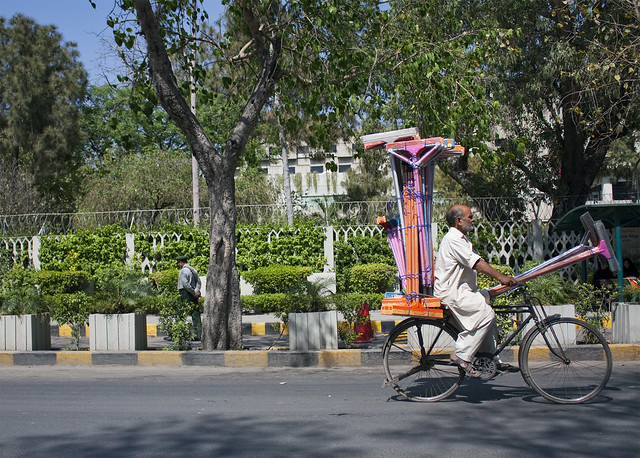
Man Pushing Bicycle in Dark Alley, Lahore Pakistan

More about urban issues in Pakistan:

Wednesday, November 17, 2021

The Neighborhood Effect on Keeping Non-Commuting Journeys within Compact and Sprawled Districts

 by Melika Mehriar,

k a r a c h i  |  کراتشی 

Similar papers:

Logistic models explaining the determinants of biking for commute and non-commute trips in Lahore, Pakistan

Urban travel characteristics in relation with jobs-housing balance and accessibility: results of a survey in Lahore, Pakistan

Cyclability in Lahore, Pakistan: Looking into Potential for Greener Urban Traveling

Saturday, January 2, 2021

Logistic models explaining the determinants of biking for commute and non-commute trips in Lahore, Pakistan

  • By Houshmand Masoumi, 
  • Muhammad Asim, 
  • Izza Anwer, and 
  • Sheikh Atif Bilal Aslam

  • The determinants of biking behavior are less studied in a wide range of developing countries including South Asia. This study takes Lahore, Pakistan as a case-study city to explore the factors defining commute and non-commute bike trips as well as commuting by bike. These issues were analyzed by collecting data from 379 subjects accommodating in three socio-economic statuses (lower, medium, and higher) in Lahore in spring 2018. The data were analyzed by applying multinomial logistic regression for investigating biking frequency and binomial logistic regression for examining commuting by bike. The results show that gender, age, education, income, purpose of the majority of trips, preferred distance to travel using cycle, preferred time to travel using cycle, and preferred bike trip purpose are significantly correlated with biking frequency. The significant determinants of bicycle commuting included categories of education, the purpose of the majority of trips, using bike in combination with other modes, preferred distance to bike, preferred biking time, and preferred bike trip purpose are associated with bicycle commuting. Commuting by bike is a more popular in socio-economically weaker neighborhoods. The discussion of this study shows that the determinants of biking in the sample in Lahore are different from those that have already been addressed by studies undertaken in high-income countries.


    displaced doors

    More about bicycle planning:

    Monday, September 9, 2019

    Urban travel characteristics in relation with jobs-housing balance and accessibility: results of a survey in Lahore, Pakistan

    By Sheikh Atif Bilal Aslam, Houshmand E. Masoumi, and Syed Arif Hussain

    The circumstances of the relations of jobs-housing balance and urban travel behavior are not clear in emerging and developing countries. There are limited reliable data suitable for testing the hypotheses regarding the associations of the neighborhood-level number of employment opportunities in these countries. This manuscript summarizes the results of an explorative survey undertaken in Lahore, Pakistan to support empirical analyses testing these hypotheses. The survey was undertaken in spring 2018 in six neighborhoods of Lahore and collected the data of 417 respondents. The short questionnaire applied in the survey facilitated generation of 15 individual and household, socioeconomic, and mobility-related variables of different types. Moreover, 9 land use variables as well as jobs-housing ratios were estimated for each respondent within his/her 600-meter street-network pedestrian shed. The produced dataset reveals preliminary descriptive statistics about the relations of employment and travel behavior, particularly commuting, in a less-studied context of Pakistan. It is found that a decent job-housing balance at neighborhood scale alone cannot affect the travel pattern much in the Pakistani context. It needs to be supplemented with other planning interventions, mainly the accessibility to an integrated and efficient mass public transportation system, discouraging private car based policies and promotion of sustainable non-motorized travel modes. In the future, production of disaggregate mobility and land use data will add value to urban transportation research in the Global South.
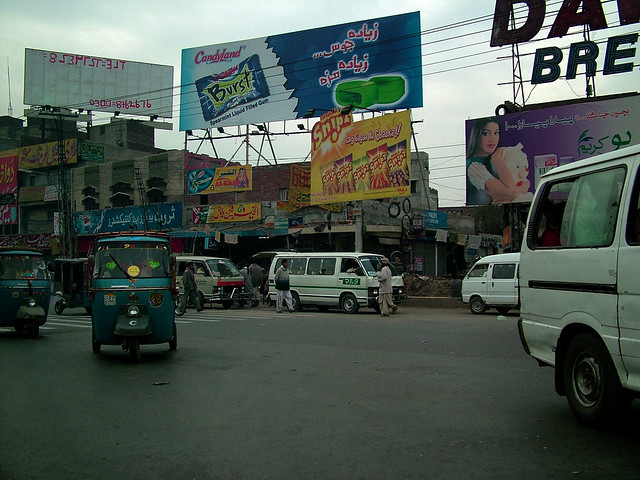
    Street of Lahore
    More papers about urban transportation in Asian cities:

    Wednesday, September 4, 2019

    Cyclability in Lahore, Pakistan: Looking into Potential for Greener Urban Traveling


  • By 
  • Sheikh Atif Bilal Aslam, 
  • Houshmand E. Masoumi, 
  • Muhammad Asim, 
  • Izza Anwer


  • Measuring perceived or objective cyclability or bikeability has drawn less attention compared to walkability, particularly in developing countries like those in South Asia and the Middle East. This paper presents the results of a survey about cyclability in Lahore, Pakistan, focusing on human perceptions rather than the built environment. The overall sample included a total of 379 respondents from three socio-economic classes: those from lower socio-economic backgrounds accessing traditional/older bazaars, respondents from the middle socio-economic class accessing uptown bazaars, and respondents of higher socio-economic status accessing pedestrian shopping malls. The exploratory data collection was conducted in spring 2018 in Lahore by means of a short standard questionnaire with 19 questions, resulting in 17 categorical/dummy variables, two open-ended variables, and two continuous variables targeting socio-economics, bike trip characteristics, biking barriers, and preferred travel specifications. The results showed that the middle socio-economic group was more inclined, flexible, and willing to bike compared to the lower and higher socio-economic-groups. The lower socio-economic group used the bicycle more frequently than the middle socio-economic group. Around half of the middle socio-economic group commutes via bike compared to the lower socio-economic group. There was little to no representation of 55-64 and 65+ age groups in the data. The descriptive findings of this survey indicate some preliminary signs of differences of decisions and perceptions about biking compared to high-income and European countries. These differences need to be tested in future statistical analyses.


  • Squeegies for sale

    More about Asian cities:

    Facilitating Urban Management Through Local SDI Case Study: The Municipality of Tehran