Like Urban Research on Facebook

Showing posts with label The Middle East. Show all posts

Wednesday, July 13, 2022

Relations of Public Transport Use and Car Ownership with Neighbourhood and City-Level Travel Purposes in Kerman, Iran

 By Houshmand Masoumi, Chengete Chakamera , Liberty Mapamba, Noleen Pisa, and Hamid Soltanzadeh

 There are significant deviations in travel mode choice drivers between developed and developing countries. This study investigates the determinants of car ownership and public transit ridership in Iran. Using survey data from 800 respondents, the determinants of travel behaviour of Kerman residents were investigated, based on gender, age, household size, car ownership, frequency of public transport ridership, number of working days per week, number of shopping activities in the neighbourhood per week, number of entertainment activities in the neighbourhood per week, and number of shopping activities in the city. Two multivariate models were estimated using the OLS and WLS methods. Our findings suggested that owning a car tends to increase as age, household size, number of working days and number of shopping days in the city decreases. An increase in the number of entertainment days in the neighbourhood raised the probability of car ownership while shopping in the neighbourhood did not influence car ownership. Public transport use was negatively influenced by gender, increased age and number of working days, but positively influenced by shopping in the city. Our research results have significant implications for transport planning. Firstly, changes in household size may not be a good basis to inform planning as our findings show that in Kerman as household size increases, car ownership decreases, and it does not influence public transport. Secondly, when planning road network connectivity (land use) higher working days are expected to increase both car ownership and public transport use. 

Read more

Kerman Skyline  

Read more about the Middle-Eastern cities:

The Land Use and Individual Correlates of Pedestrian Commuting: Who Walks to Their Work or Place of Study in the Large Cities of the MENA Region?

The Relation Between Residential Self-Selection and Urban Mobility in Middle Eastern Cities: the Case of Alexandria, Egypt

Monday, May 23, 2022

The Land Use and Individual Correlates of Pedestrian Commuting: Who Walks to Their Work or Place of Study in the Large Cities of the MENA Region?

 By Houshmand Masoumi and Grzegorz Sierpiński

 The body of research on the determinants of pedestrian commuting and the characteristics of on-foot commuters at the international level and especially in the Global South is inconsistent; hence, this study focuses on this topic with the case of megacities in the Middle East and North Africa. The study is based on 8284 face-to-face interviews with respondents in the three cities, 4543 of whom worked, and of those 4543, 658 individuals walked to their work or place of study. By using binary logistic regression, the determinants of walking to work were identified. Age, household car ownership, last relocation time, intersection density, number of accessed facilities from home, average walking accessibility to neighborhood amenities, and commuting distance are the significant determinants of on-foot commuting. The study identifies younger commuters with fewer cars or no driving license living in neighborhoods with connected street networks as the walkers. The results of the Mann–Whitney U Test show that there is a significant difference between the values of these determinants for walking commuters and those who commute by other modes. Based on these findings, this paper encourages urban planners and decision-makers of the MENA region to use urban land use, including street networks and access to local facilities, to motivate commuters to commute on foot, especially those who work within a walkable distance to their work or place of study.


Read more

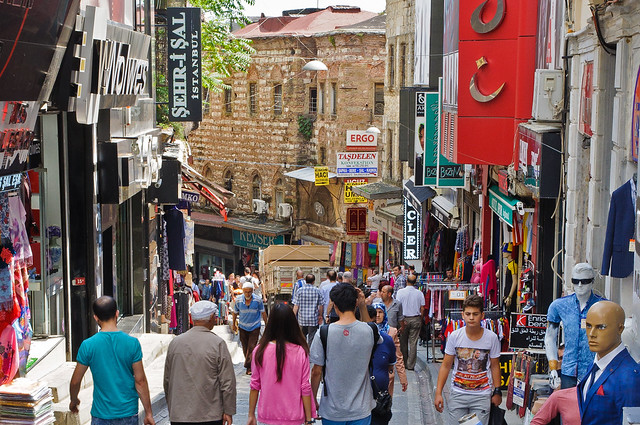
Istanbul ~ Istiklal Caddesi

Urban Sprawl, Socioeconomic Features, and Travel Patterns in Middle East Countries: A Case Study in Iran

The Relationship between Regular Use of Ridesourcing and Frequency of Public Transport Use in the MENA Region (Tehran and Cairo)

Thursday, January 7, 2021

The Relation Between Residential Self-Selection and Urban Mobility in Middle Eastern Cities: the Case of Alexandria, Egypt

The present paper attempts to fill a part of the gap in the studies on residential location choices and their relations to urban mobility, socio-economics, and the built environment by presenting the results of a study on Alexandria, Egypt, by analysing the results of a survey in eight neighbourhoods undertaken in 2015. Four questions were answered in this study: (i) “How are the main drivers behind residential location choices in Alexandria connected to various socio-demographic groups or people with different availability to urban and built environments?”, (ii) “How are the main residential self-selections in Alexandria associated with one another and which are the most important?”, (iii) “How are the housing location-related decisions of Egyptians similar to or different from international decisions?”, and (iv) “How can planners and decision-makers use the knowledge produced by this study for urban planning and housing in Egypt?”. Library work and the results of a Χ2 test of independence show that availability of transportation modes, nice neighbourhoods, and affordability are the strongest motives behind decisions. However, socio-economic factors are generally stronger than urban mobility and spatial issues. These findings are partly different from those of high-income countries.

Read more 


Alessandria d'Egitto / Alexandria


Read more about urban planning and transportation in the Middle East:

Polycentricity in a developing world: A micro-regional analysis for morphological polycentricity in Turkey

Thursday, December 3, 2020

Polycentricity in a developing world: A micro-regional analysis for morphological polycentricity in Turkey

By N. Aydan Sat

Following the publication of ‘European Spatial Development Perspective’ in 1999, a large number of theoretical and empirical studies have been carried out on polycentric spatial development especially in European settlements. The relationship between polycentricity and economic competitiveness, environmental sustainability and social cohesion are some of the main concerns of these studies. This study aims to clarify ‘the meaning of polycentricity’ in the case of Turkey, as a developing country and analyse the relationship between polycentric spatial development and economic competitiveness, environmental sustainability and social cohesion. After calculation of morphological polycentricity of the regions at NUTS-5 level, the propositions on the positive effects of polycentric spatial development on economic competitiveness, environmental sustainability and social cohesion is tested by using Pearson correlation and OLS regression models. The results of the empirical study are mixed for these three subjects. Polycentric spatial development has not positive effects on economic competitiveness and social cohesion in Turkey case. Conversely, a positive effect exists in terms of environmental sustainability. 


istanbul

Read more about urban planning in Turkey:

Monday, November 23, 2020

Urban Sprawl, Socioeconomic Features, and Travel Patterns in Middle East Countries: A Case Study in Iran

 By Melika Mehriar, Houshmand Masoumi, and Inmaculada Mohino


The present study aimed to investigate different socioeconomic factors as well as the perceptions and travel behaviors associated with urban sprawl in two cities of different sizes in Iran, as a developing country in the Middle East. Four Weighted Least Squares (WLS) regression models were developed for Hamedan and Nowshahr, as examples of large and small cities in Iran, respectively. The findings showed different correlations related to urban sprawl between Iranian cities and high-income countries in terms of socioeconomic and travel behavior determinants. Urban sprawl around home in Hamedan was positively correlated with the number of cars and driving licenses in households, the use of a private car for trips, and less use of public transport. Urban sprawl around homes in Nowshahr was related to an increased number of cars, the use of private cars for non-commuting trips, less sense of belonging to the neighborhood, and lower income. Additionally, urban sprawl around workplaces was correlated with main daily activity, number of non-commuting trips, mode of choice for non-commuting, and residential location choice in Hamedan a swell as monthly income, daily shopping area, frequency of public transport use, quality of recreational facilities, length of time for living in the current home, and commuting distance in Nowshahr.

Read more 


Noshahr - IRAN

More about urban planning and transportation in the Middle East:

The Relationship between Regular Use of Ridesourcing and Frequency of Public Transport Use in the MENA Region (Tehran and Cairo)

Sunday, October 4, 2020

The Relationship between Regular Use of Ridesourcing and Frequency of Public Transport Use in the MENA Region (Tehran and Cairo)

By Hamid MostofiHoushmand MasoumiandHans-Liudger Dienel 

Despite the growing share of ridesourcing services in cities, there is limited research about their impacts on other transport mode choices in the large cities of the Middle East and North Africa (MENA). There is a debate about whether ridesourcing affects the frequent use of sustainable modes like public transport. This study uses the results of a large-scale series of face-to-face interviews in Tehran and Cairo to study the relationship between the regular use of ridesourcing and the frequency of public transport use. Descriptive statistics and logit regression are used to analyze this association. The findings indicate contradictory correlations between the regular use of ridesourcing and the frequent use of public transport in Tehran and Cairo. The regular use of ridesourcing has a positive correlation with the probability of frequent public transport use in Cairo. In contrast, this correlation is negative in Tehran, which means that the regular ridesourcing users are less likely than the non-regular users to use frequently public transport. The reasons for these different correlations are studied in terms of socioeconomic variables, accessibility, and the citizens’ perception of public transport in both cities.

Read More

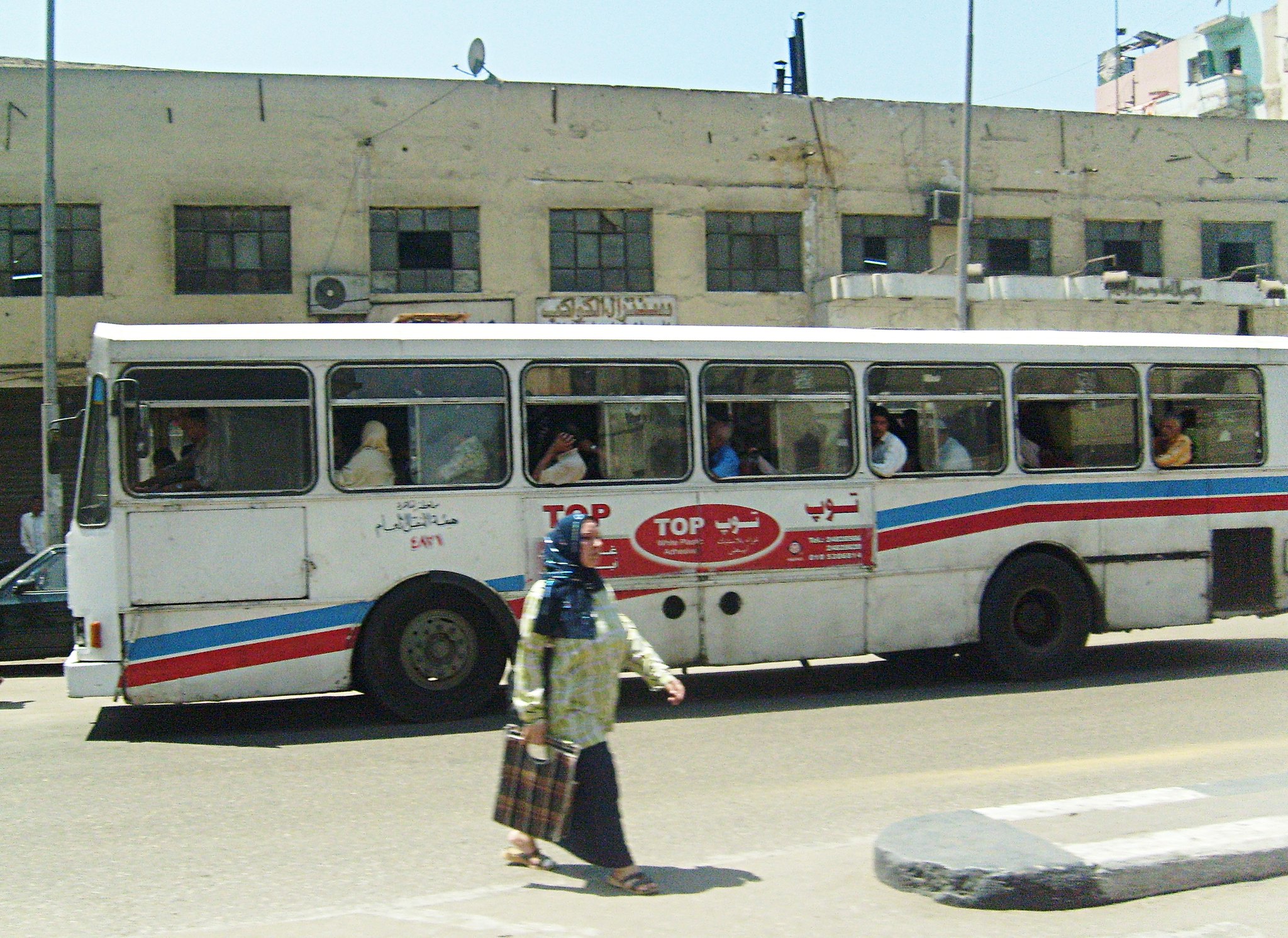
Bus

More about urban transportation in the Middle East:

Thursday, July 16, 2020

The Association between Regular Use of Ridesourcing and Walking Mode Choice in Cairo and Tehran

By Hamid Mostofi, Houshmand Masoumi, and Hans-Liudger Dienel

The rapid adoption of ridesourcing poses challenges for researchers and policymakers in the Middle East and North Africa (MENA), as it is an evolving new transport mode, and there is little research explaining its effects on mobility behaviors in this region. There is a concern that ridesourcing, which offers convenient and relatively cheap door to door services, encourages citizens to replace their sustainable travel modes, like walking, with car use. This effect has been studied relatively well in metropolises of the West, but less in the MENA agglomerations. This paper investigates whether regular use of ridesourcing impacts the walking mode choice in Cairo and Tehran. The analysis uses the results of 4926 face-to-face interviews in these two cities to compare the preference for using a vehicle instead of walking between regular users of ridesourcing and other motorized modes, including public bus, urban transit rails, private car, and traditional taxi. The findings indicate that in Cairo, the regular ridesourcing users are more likely than regular users of public transport to use a vehicle instead of walking inside their neighborhood. However, in both cities, ridesourcing users are less likely than regular private car users to replace walking by using vehicles.

Keywords: ridesourcing in the MENA region; walking mode choice; modal shift; the impact of ridesourcing on the nonmotorized mode


uber

More about urban planning and transportation in the Midde East:

Economic Impacts of Adopting a Sustainable Transport System in Beirut


Monday, November 19, 2018

Economic Impacts of Adopting a Sustainable Transport System in Beirut

By Mazen Omran, Johnny Ojeil, and Youssef Fawaz

The proposed Beirut Master Plan aims to put the city back on the international map as a hub for trade and investment, a place to work, and a destination for leisure. The execution of this plan has started with major construction works taking place in the Beirut Central District (BCD) and its planned natural extension on reclaimed land known as the New Waterfront District (NWD).
However, this proposed Master Plan may not achieve its main economic objectives due to the lack of transport infrastructure and multi-modal systems, i.e. transport is lagging behind. Congestion levels are currently unacceptable and will get worse in the future as a result of these development proposals. The key missing link is that Beirut is lagging on the sustainable public transport front and therefore it will not be able to economically compete in a strong manner with other cities in the region. 
The work carried out in this paper demonstrates the economic benefit of a sustainable transport system. It compared a scenario with and without such system, and calculated loss time as a result of being held up in congestion during key peak hours mainly due to relying entirely on the private car. The work demonstrates that in addition to reducing congestion levels a sustainable transport system will generate benefits related to travel time, accident costs, vehicle operating costs, carbon emissions, environmental impacts, wellbeing of individuals, attraction of international companies to locate in Beirut with reduced congestions levels prevailing, positive effect on business efficiency, and wider labor catchment in terms of penetration of non-car owning communities thus improving labor mobility and accessibility.
Qualitative and quantitative analyses were carried out to determine the impacts of adopting a sustainable transport system on the economy. The results were alarming for the ‘Do Nothing Scenario’, i.e. remaining reliant on the private car as a sole means of transport. The analyses showed that without a road map adopting a sustainable transport system, Beirut will reach an economic standstill. Therefore, Beirut will have to develop a multi-modal transport system to become resilient and to be able to meet the economic growth that is being pursued by stakeholders and interested parties alike.
A broad but critical Action Plan was produced as part of the work that set the key functions required to move transport into a full multi-modal system that will give people a real choice to choose based on policy changes and traffic management initiatives including parking control.


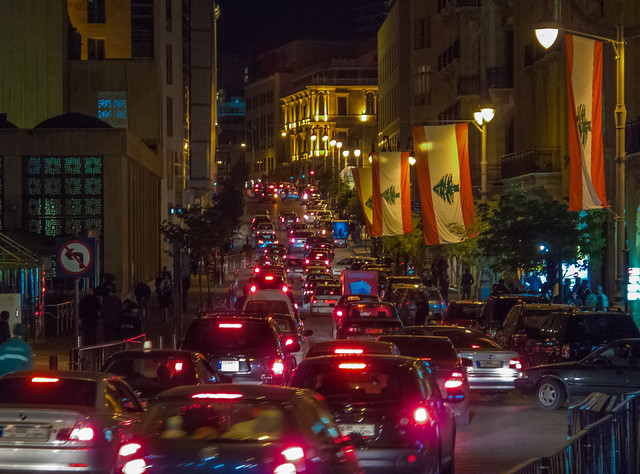
Rue Weygand, Beirut Central District, Lebanon. 20111126

Friday, July 6, 2018

Urban Travel Behavior in Large Cities of MENA Region: Survey Results of Cairo, Istanbul, and Tehran

By Houshmand E. Masoumi, Amr Ah. Gouda, Lucia Layritz, Pia Stendera, Cynthia Matta, Haya Tabbakh, Sima Razavi, Houshiar Masoumi, Betül Mannasoğlu, Özlem Kılınç, Ashraf M. Sharara, Mahmoud Elnably, Ahmad Alhakeem, Sherzad Ismail, Erik Fruth

The present discussion paper summarizes an urban mobility survey as a part of the project “Urban Travel Behavior in Large Cities of MENA Region” (UTB-MENA) funded by the German Research Foundation (DFG) undertaken in summer and autumn 2017 in Tehran, Istanbul, and Cairo. This data collection was conducted in 18 neighborhoods located in different urban forms related to three different eras: traditional urban form, in-between (transitional) urban form, and new developments. The survey instrument included 31 questions organized in six different sections. As a result of face-to-face interviews with residents as well as quantification of several land use indicators, a database of 8284 validated subjects (Cairo: 2786 , Istanbul: 2781 , Tehran: 2717) was created by the research team based in Berlin, Tehran, Istanbul, and Cairo. The results of 46 variables (24 continuous and 22 categorical) are presented in this paper. The neighborhood-level precision of the findings is 4.5% to 4.7% for individual variables and 1.8% to 2.4% for household variables. These findings make the data representative for the case-study neighborhoods. These data are expected to provide a reliable sample for researchers of the region for the purpose of strengthening human-oriented urban transportation planning and research against the mainstream of transportation engineering by bringing in disaggregate individual urban mobility data into urban transport research of the Middle East and North Africa (MENA) region.
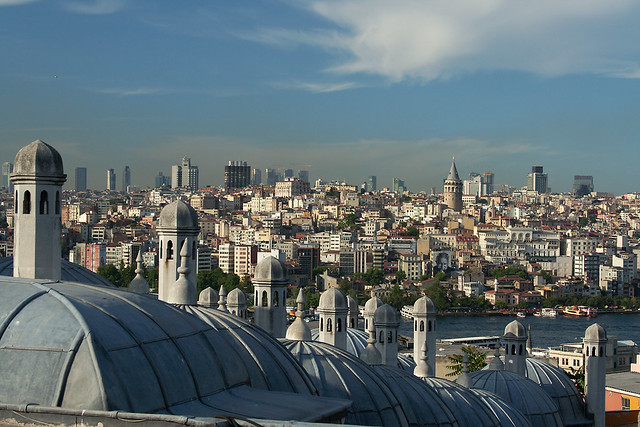
Istanbul rooftops

More about urban transport and urban planning in the Middle East:

Drivers of urban sprawl in two large Middle-eastern countries: literature on Iran and Egypt

A LONGITUDINAL ANALYSIS OF DENSITIES WITHIN THE PEDESTRIAN SHEDS AROUND METRO STATIONS: THE CASE OF TEHRAN

URBANIZATION TRENDS AND URBAN PLANNING STRATEGIES IN THREE MAJOR MIDDLE EASTERN COUNTRIES: IRAN, EGYPT, AND TURKEY

Wednesday, June 13, 2018

Drivers of urban sprawl in two large Middle-eastern countries: literature on Iran and Egypt

By Houshmand E. Masoumi, Maryamsadat Hosseini, and Amr Ah. Gouda

This paper reviews the relevant literature of Iran and Egypt as two large countries of the region and concludes that four phenomena are common between the two countries and are accountable for sprawling, namely (1) wholesale land selling to the lower economic class, (2) defciencies of planning systems in controlling development plans, (3) fast and uncontrolled increase in urban population, and (4) rural-urban migration. These drivers are categorized in two classes of demographic and planning-related trends. Besides, there is a number of peculiar trends that have nationwide causes but are uncommon in Iran and Egypt. The authors of this paper consider that the demographic drivers or sprawl addressed by the Middle Eastern scholars are not actual causes but only consequences, or there is a correlation between the demographic factors and sprawl. More in-depth historical and socioeconomic studies are needed to fnd the associations between sprawl and unstudied phenomena like change in technologies, culture, and lifestyle.

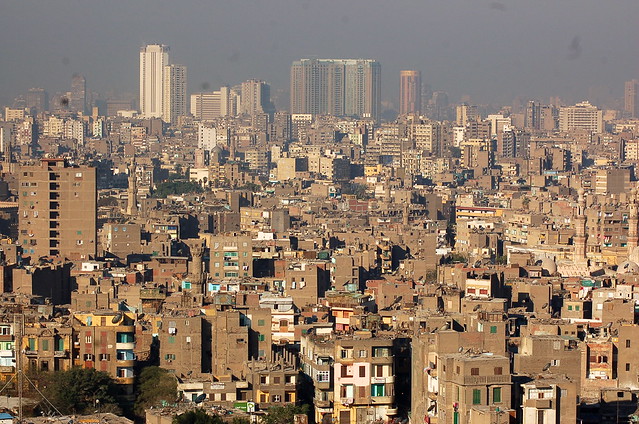
View of Cairo (القاهرة) from the Saladin Citadel (قلعة صلاح الدين)

More about urban sprawl in developing countries:

URBANIZATION TRENDS AND URBAN PLANNING STRATEGIES IN THREE MAJOR MIDDLE EASTERN COUNTRIES: IRAN, EGYPT, AND TURKEY

Urban Sprawl: A view from developing and developed Countries

The Status of Urban and Suburban Sprawl in Egypt and Iran

Evaluation of Urban Sprawl Speed and Intensity Based on International Urbanization. Example from a Mexican City

URBAN SPRAWL AND CLIMATIC CHANGES IN TEHRAN

Monitoring and modeling the urban growth of mid-size cities in Iran by Markov model: the case study of Zanjan City

Thursday, March 30, 2017

A LONGITUDINAL ANALYSIS OF DENSITIES WITHIN THE PEDESTRIAN SHEDS AROUND METRO STATIONS: THE CASE OF TEHRAN

By HOUSHMAND E. MASOUMI and MARYAM SHAYGAN

Evaluation of spatial accessibility to public transportation has a weak background in many emerging countries, including Iran. Transit-Oriented Development is of great interest among Iranian planners and academics, but little is known about transit orientation provided by major public transport systems exemplified by the Tehran Metro. Statistical difference tests and polynomial regression done in this study show how residential densities within walking distances of metro stations established at different times after 1998 are significantly different. Both population and employment densities have decreased in more recent stations compared to those opened between 2005 and 2010. Moreover, one-way T-Tests comparing the population and densities of older lines with those of newer lines reveal that, in most cases, densities within walking distances of stations of older lines are higher. The paper concludes that lack of proper site selection and failing to locate new stations near job centers and highly populated areas threatens the transit-friendliness that emerged in the early years after establishing the first metro station in 1998.


Tehran Underground (2)

More about urban planning and mobility in the Middle East:

URBANIZATION TRENDS AND URBAN PLANNING STRATEGIES IN THREE MAJOR MIDDLE EASTERN COUNTRIES: IRAN, EGYPT, AND TURKEY

TENSIONS AND TRANSFORMATIONS IN THE MASTER PLANNING PROCESS OF ISTANBUL

Upgrading informal settlements in Egypt towards a sustainable urban development

Facilitating Urban Management Through Local SDI Case Study: The Municipality of Tehran 

THE IDENTITY OF OPEN SPACE: ADAPTING FROM THE MODEL OF TRADITIONAL NEIGHBORHOOD CENTER

Impact Assessment of Sustainable Public Transportation System on Quality of Life in Tehran

Changes in population settlement pattern in urban system of Tehran province (1966 to 2006)

Studying the effects of urban sprawl of metropolis on tourism - climate index oscillation: A case study of Tehran city

Friday, December 23, 2016

URBANIZATION TRENDS AND URBAN PLANNING STRATEGIES IN THREE MAJOR MIDDLE EASTERN COUNTRIES: IRAN, EGYPT, AND TURKEY

By MARYAMSADAT HOSSEINI, AMR AH. GOUDA, HOUSHMAND E. MASOUMI


Rapid urbanization has turned into a problematic phenomenon laying negative effects on the Middle Eastern cities and their peripheries. Although fast increase in urban population of the countries of the region has been well-researched, the connections to urban development strategies and patterns are being neglected. This paper examines the time coincidence of some of the dominant planning trends of the past decades that are considered to be associated with the intensive urban population changes. The paper attempts to discuss over the points in which the three countries witnessed significant increase and decrease in fertility rates. For that, the data of the World Bank have been applied. The graphs seen in this paper have been produced by the Google public data from the World Bank website, which provides the possibility of separating urban and rural populations. The descriptive analysis of this study shows that these vigorous changes of population growth rates have been more powerful in Iran and Turkey and steadier in Egypt. Examples of weak planning in the three target countries of this study, Iran, Egypt, and Turkey, such as failure in new city planning in Egypt, extensive sprawl in Turkish cities, rural-urban migration in Iran and Turkey, and the policy of wholesale land selling in Iran depict uncontrolled and vis-à-vis urban planning taking the wrong route. It is concluded that controlling urbanization trends in emerging countries, like the Middle Eastern states, requires a strong and strict urban planning system that avoids trial and error.


Peripheral Shoppers  

More about cities and urban planning in the Middle East:

Urban Transformations of the Mediterranean Cities in Light of Developments in the Modern Era

TENSIONS AND TRANSFORMATIONS IN THE MASTER PLANNING PROCESS OF ISTANBUL

Upgrading informal settlements in Egypt towards a sustainable urban development

The Status of Urban and Suburban Sprawl in Egypt and Iran

A REGIONAL ANALYSIS OF URBAN POPULATION AND TRANSPORT ENERGY CONSUMPTION

Urban Sprawl Pattern Recognition Using Remote Sensing and GIS – Case Study Shiraz City, Iran

A THEORETICAL APPROACH TO CAPABILITIES OF THE TRADITIONAL URBAN FORM IN PROMOTING SUSTAINABLE TRANSPORTATION

The Study of Land Use Changes in the Tehran Metropolitan Area by Using MOLAND Model

Wednesday, December 7, 2016

Urban Transformations of the Mediterranean Cities in Light of Developments in the Modern Era

By Bakr Hashem Paumey Ahmed Alashwal

The urban transformation processes in its framework and its general significance became a fundamental and vital subject of consideration for both the developed and the developing societies. It has become important to regulate the architectural systems adopted by the city, to sustain the present development on one hand, and on the other hand, to facilitate its future growth.
Thus, the study dealt with the phenomenon of urban transformation of the Mediterranean cities, and the city of Alexandria in particular, because of its significant historical and cultural legacy, its historical architecture and its contemporary urbanization.
This article investigates the entirety of cities in the Mediterranean region through the analysis of the relationship between inflation and growth of these cities and the extent of the complexity of the city barriers. We hope to analyze not only the internal transformations, but the external relationships (both imperial and post-colonial) that have shaped Alexandria city growth from the nineteenth century until today.

20111111_Egypt_0201 Alexandria 

More about urban cities of the Middle East:

Upgrading informal settlements in Egypt towards a sustainable urban development

The Status of Urban and Suburban Sprawl in Egypt and Iran

A REGIONAL ANALYSIS OF URBAN POPULATION AND TRANSPORT ENERGY CONSUMPTION

Urban Sprawl Pattern Recognition Using Remote Sensing and GIS – Case Study Shiraz City, Iran

URBAN SPRAWL IN MID-SIZED CITIES OF MENA, EVIDENCE FROM YAZD AND KASHAN IN CENTRAL IRAN

A THEORETICAL APPROACH TO CAPABILITIES OF THE TRADITIONAL URBAN FORM IN PROMOTING SUSTAINABLE TRANSPORTATION

TENSIONS AND TRANSFORMATIONS IN THE MASTER PLANNING PROCESS OF ISTANBUL

 By James STEELE and Rania SHAFIK,

Istanbul has been described as a city on the edge, of Europe, of modernization, of fundamentalism, of the future. But it would be more accurate to describe it as a city in between: split between Europe and Asia, modernization and tradition, poverty and wealth, an industrial and post-industrial ethos and financial system, secularism and spirituality, past, present and future. It also spans one of the largest and most active tectonic plates on earth, between the Eurasian and Anatolian plates. This interstitial condition is most legible in the physical layers of city growth, clearly documented, in the modern period, in an incremental series of urban plans that convey the social, cultural and religious values of its inhabitants. Istanbul has a unique Eurasian character due its location on two continents; the western side of Istanbul is in Europe, while the eastern side is in Asia. However, there are lots of arguments regarding the western influence in architecture, the consumption based projects around the city and the increase of gated communities in the European side, which have been invading the socio economic and the ethnic character in the city fabric. Today, Istanbul faces many challenges in its development process where global and regional influences compete with the needs and demands of diverse local groups (IMM, 2009).


To return to old

More about Istanbul:

Modeling street connectivity, pedestrian movement and land-use according to standard GIS street network representations: A Comparative Study

TRADITIONAL SHOPPING: A Syntactic Comparison of Commercial Spaces in Iran and Turkey

De-spatialized Space as Neoliberal Utopia: Gentrified İstiklal Street and Commercialized Urban Spaces

Globalisation, Cleaner Energy and Mega-Cities: Options and Messages for Turkey/Istanbul

THE EFFECTS OF PROPOSED BRIDGES ON URBAN MACROFORM OF ISTANBUL: a syntactic evaluation

Implications of an Urban Renewal Based State-Led Gentrification Process in a Roma Neighborhood in Istanbul

Friday, October 7, 2016

Upgrading informal settlements in Egypt towards a sustainable urban development

By Prof. Khaled Dewidar, Dr Ayman Hassan, Inji Kenawy, Nourhan Magdy

Sustainable development is development that meets the needs of the present without compromising the ability of future generations to meet their own needs. It is about ensuring a better quality of life for everyone,  now and for generations to come. This requires meeting four key objectives that are the social progress which recognize the need of everyone; the effective protection of the environment; the prudent use of the natural resources and the maintenance of high and stable levels of economic growth and employments. Informal settlements are areas where groups of housing units have been constructed on land that the occupants have no legal claim to, or occupy illegally; an unplanned settlements and areas where housing is not in compliance with current planning and building regulations (unauthorized housing). In developing countries, cities are experiencing a real demographic explosion. This paper will deal with the problem of the informal settlement phenomenon in Egypt and the means of its upgrading by adopting the concept of sustainable urban development. It applies SWOT-AHP method to analyze stakeholders’ perception of quality of life and their relationship to sustainable development. Results revealed significant agreement between stakeholers’ groups of perception of strengths, threats and opportunities.


Backstreets of Islamic Cairo

More articles about Egypt: 

The Status of Urban and Suburban Sprawl in Egypt and Iran

Cairo’s Informal Areas Between Urban Challenges and Hidden Potentials

Revolutionary graffitis in the streets of Cairo, Egypt

Urbanization and Natural Disasters in the Mediterranean Population Growth and Climate Change in the 21st Century Case Studies on Izmit, Algiers and Alexandria

Thursday, June 30, 2016

The Status of Urban and Suburban Sprawl in Egypt and Iran

By Amr Ah. Gouda, Maryamsadat Hosseini, and Houshmand E. Masoumi

The circumstances of urban sprawl in the Middle Eastern cities have been basically examined; now we are aware of the existence of a crawling sprawl in the growth pattern of the region’s cities. Nevertheless, the extent and the causes of this phenomenon have not yet been clearly explained. Thus, two questions are still unanswered: (1) to what extent are the Middle Eastern cities sprawled?, (2) what are the main drivers of sprawl in the Middle East? This paper brings together several evidences from international and the national languages to provide explanation to the above. The findings show that urban and suburban sprawl is an inclusive pattern seen in a wide variety of city sizes, planning concepts, times, etc. Sprawl is not limited to large metropolitan areas; mid-sized and small cities of the region are also sprawling. Furthermore, administrative and planning reasons are the strongest causes of urban sprawl in the region.


More about urban planning in the Middle East:

A REGIONAL ANALYSIS OF URBAN POPULATION AND TRANSPORT ENERGY CONSUMPTION

Urban Sprawl Pattern Recognition Using Remote Sensing and GIS – Case Study Shiraz City, Iran

TRADITIONAL SHOPPING: A Syntactic Comparison of Commercial Spaces in Iran and Turkey

URBAN SPRAWL IN MID-SIZED CITIES OF MENA, EVIDENCE FROM YAZD AND KASHAN IN CENTRAL IRAN

A THEORETICAL APPROACH TO CAPABILITIES OF THE TRADITIONAL URBAN FORM IN PROMOTING SUSTAINABLE TRANSPORTATION

Residential Self-Selection and Its Effects on Urban Commute Travels in Iranian Cities Compared to US, UK, and Germany

MODELING THE TRAVEL BEHAVIOR IMPACTS OF MICRO-SCALE LAND USE AND SOCIO-ECONOMIC FACTORS