Like Urban Research on Facebook

Showing posts with label Latin America. Show all posts

Monday, April 6, 2026

Santiago's Urban Development Evolution: From Colonial Roots to Modern Metropolis

Introduction

Welcome to our comprehensive exploration of Santiago, Chile's capital. In this video, I'll delve into the city's transformation from its colonial origins to its current status as a sprawling metropolis. We'll examine the historical milestones, urban development phases, and the socio-economic factors that have shaped Santiago's urban landscape.​


Colonial Foundations and Early Growth

Santiago was founded on February 12, 1541, by Spanish conquistador Pedro de Valdivia. Strategically located in the central valley, the city was established following the Spanish grid plan, featuring a central plaza surrounded by key institutions. This layout facilitated administrative control and defense. Throughout the colonial period, Santiago remained a modest settlement, serving primarily as an administrative center for the Spanish Crown. The city's growth was gradual, with development concentrated around the central plaza.​

19th-Century Expansion and Industrialization

The 19th century marked a period of significant transformation for Santiago. The establishment of institutions like the University of Chile in 1842 and infrastructural projects such as the canalization of the Mapocho River between 1888 and 1891 spurred urban development. The introduction of railways in the 1850s connected Santiago with other regions, facilitating commerce and migration, which led to the city's expansion beyond its original boundaries. During this period, the population grew substantially, and new neighborhoods emerged to accommodate the influx of residents. Public spaces like the Quinta Normal Park, established in 1841, provided recreational areas for the burgeoning population. Additionally, the late 19th century saw the introduction of horse-drawn trams, improving urban mobility.​

Early 20th Century – Urban Modernization

The early 20th century ushered in a wave of modernization projects in Santiago. The 1910 Chile Centennial celebrations marked the beginning of several urban development initiatives, including the expansion of the railway network and the construction of the Mapocho Station. Public spaces like Parque Forestal were inaugurated in 1905, enhancing the city's green areas. Cultural institutions such as the Chilean National History Museum, founded in 1911, and the Chilean National Zoo, opened in 1925, enriched the city's cultural landscape. These developments reflected Santiago's aspiration to position itself as a modern and cosmopolitan city.​

Mid-20th Century – Population Boom and Urban Challenges

Between 1891 and 1941, Santiago experienced rapid urbanization, industrialization, and administrative expansion, accompanied by massive internal migration. This influx led to significant social and economic consequences, including the proliferation of informal settlements on the city's outskirts. The population surge strained existing infrastructure, leading to challenges in housing, sanitation, and transportation. In response, the government implemented various urban planning initiatives aimed at improving living conditions and managing the city's growth.​

Late 20th Century – Neoliberal Policies and Urban Sprawl

In 1975, Santiago became a focal point for neoliberal economic policies, resulting in significant urban transformations. The implementation of these policies led to deregulation in housing and land markets, contributing to urban sprawl and socio-spatial segregation. The privatization of public services and infrastructure further exacerbated inequalities, as access to quality housing, education, and healthcare became increasingly dependent on individual financial capacity. During this period, the city's expansion continued unabated, with new developments often lacking adequate planning and infrastructure.​

Contemporary Santiago – Urban Redevelopment and Challenges

In recent years, Santiago has undertaken various urban redevelopment projects aimed at revitalizing the city and addressing historical inequalities. The Santiago Development Corporation (SDC), established in 1985, has been instrumental in implementing renovation plans, particularly in the historic center. These efforts have focused on preserving architectural heritage while promoting economic and social revitalization. Despite these initiatives, challenges persist, including issues related to housing affordability, environmental sustainability, and social inclusion. The city's authorities continue to grapple with balancing development with the preservation of Santiago's unique cultural and historical identity.​

Conclusion

Santiago's evolution from a colonial settlement to a modern metropolis reflects a complex interplay of historical events, socio-economic factors, and urban planning decisions. The city's journey underscores the challenges of managing rapid urbanization while striving for sustainable and equitable development. As Santiago continues to grow and evolve, it faces the ongoing task of addressing these challenges to create a livable and inclusive environment for all its residents.​

Call to Action

If you found this exploration of Santiago's urban evolution insightful, please like, share, and subscribe for more content on urban development and city planning. Share your thoughts in the comments below—how do you think cities can effectively manage urban growth and promote sustainable development?


More about Latin America:
Bikes vs. Cars: The Urban Battle

Monday, March 16, 2026

Urban sprawl in Latin American cities: A historical perspective to urbanization and car ridership

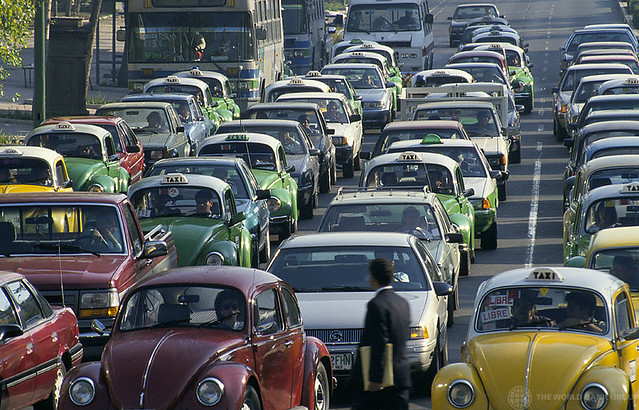
 Latin American cities have experienced significant urban sprawl over the past century, characterized by the uncontrolled expansion of urban areas into peripheral zones. This phenomenon has been closely linked to socio-economic factors, car ownership, and the availability of public transportation. To understand the current landscape, it's essential to delve into the historical trajectory of urbanization in the region.​ In this video, I try to historically explain the relationship between urban sprawl in Latin American cities and socioeconomics as well as car use in 20th and 21st centuries. I will also provide some short inputs about five metropolises in Lartin America: Mexico City, Sao Paolo, Bogota, Buenos Aires, and Lima. 


Current Status of Urban Sprawl

Today, Latin American cities are among the most urbanized globally. As of 2013, approximately 80% of the region's population resided in urban areas, a significant increase from 50% in 1970. This rapid urbanization has often led to sprawling metropolitan areas with inadequate infrastructure and services.​ 

Historical Urbanization Trends in the 20th Century

Early 20th Century

In the early 1900s, Latin America was predominantly rural, with a majority engaged in agriculture. Cities like Buenos Aires, Mexico City, and São Paulo were emerging as economic centers, attracting rural migrants seeking better opportunities. However, urban growth was relatively modest during this period.​

Post-World War II Boom

The aftermath of World War II marked a turning point. Industrialization accelerated, leading to a surge in urban migration. Between 1950 and 1980, the urban population in Latin America grew from 50 million to over 200 million. Cities expanded rapidly, often without proper planning, resulting in informal settlements and inadequate infrastructure.​

Socio-Economic Factors and Urban Sprawl

Economic growth in the mid-20th century led to the expansion of the middle class, increasing demand for housing. However, limited affordable housing in central areas pushed populations toward the peripheries, contributing to sprawl. Additionally, socio-economic disparities meant that while wealthier individuals could afford centralized housing, lower-income groups settled in less accessible outskirts.​

Car Ownership and Its Impact

Rising incomes in the post-1950s made car ownership more attainable. For instance, between 1990 and 2010, per capita car ownership in Mexico more than doubled from about 75 to 175 cars per 1,000 people, and nearly tripled in Brazil from 45 to 125 cars per 1,000 people. This surge facilitated suburban living but also led to increased traffic congestion and pollution.​ 

Public Transportation Challenges

Despite urban expansion, investments in public transportation lagged. Many cities relied on informal transport systems, leading to inefficiencies. For example, in Mexico City, the metro system, inaugurated in 1969, couldn't keep pace with the city's growth, resulting in overcrowded trains and buses. By 2017, longer trips were more likely to be made by private car rather than public transit, exacerbating congestion. ​ 

Case Studies

Mexico City, Mexico

As one of the world's largest metropolises, Mexico City exemplifies urban sprawl. The city's area expanded from 1,500 km² in 1950 to over 7,800 km² by 2000. Car ownership surged, with the vehicle fleet growing by 30% between 2010 and 2018. Despite an extensive metro system, the city's public transportation has struggled to keep up with demand, leading to increased reliance on private vehicles.​ 

São Paulo, Brazil

São Paulo experienced rapid urbanization post-World War II, with its population swelling from 2.2 million in 1950 to over 12 million today. The city's car fleet grew by 22% between 2010 and 2018. Efforts to implement bus rapid transit (BRT) systems have been made, but challenges remain in reducing traffic congestion and promoting public transit use.​ 

Bogotá, Colombia

Bogotá has faced significant urban sprawl, with its population increasing from 700,000 in 1951 to over 7 million by the early 21st century. The city introduced the TransMilenio BRT system in 2000, aiming to improve public transportation. While initially successful, the system has faced challenges due to increased demand and insufficient capacity. ​ 

Buenos Aires, Argentina

Buenos Aires saw its car fleet grow from 2.4 million in 2010 to 4.2 million in 2018, a 75% increase. The city's public transportation includes buses, trains, and the Subte (subway), but the rise in car ownership has led to increased congestion and longer commute times. 

Lima, Peru

Lima's car fleet doubled from 0.9 million in 2010 to 1.8 million in 2018. The city has implemented the Metropolitano BRT system to address transportation needs, but urban sprawl continues to pose challenges for infrastructure development. 

Conclusion

The historical trajectory of urban sprawl in Latin American cities is deeply intertwined with socio-economic factors, car ownership, and public transportation development. Addressing the challenges of sprawl requires integrated urban planning, investment in efficient public transit, and policies that promote sustainable urban growth.


More about Latin America:

Bikes vs. Cars: The Urban Battle

Sunday, November 24, 2024

Bikes vs. Cars: The Urban Battle

 Cities around the world have long been defined by how we choose to get around. For decades, cars have been the dominant force shaping urban landscapes, with highways, wide roads, and sprawling parking lots. But as we face growing concerns about climate change, pollution, and traffic congestion, there's been a push to rethink our reliance on cars. This has led to a battle between bikes and cars for the future of our cities. Let’s explore how two iconic cities, Amsterdam and Los Angeles, represent opposite sides of this urban struggle.


The Rise of Bike Culture: Amsterdam’s Success Story

Amsterdam is often seen as the gold standard for bike-friendly cities. But it wasn’t always this way. In the 1950s and 60s, Amsterdam, like many other cities, was moving towards a car-centric future. Cars flooded the streets, and cycling was in decline. However, a dramatic shift happened in the 1970s.

  • The Turning Point: The 1970s Oil Crisis and Protests
    By the early 1970s, the number of cars in the Netherlands had skyrocketed, and road safety was a major issue. In 1971 alone, over 3,000 people died in traffic accidents, including 400 children. This sparked widespread protests, with groups like “Stop de Kindermoord” (Stop the Child Murder) leading the charge for safer streets. The oil crisis of 1973 further fueled the shift, as fuel prices surged, prompting the government to promote cycling as a cost-effective alternative.
  • Biking Takes Over
    Thanks to grassroots activism and government support, Amsterdam invested heavily in cycling infrastructure. Today, 38% of all trips in Amsterdam are made by bike, and there are over 515 kilometers (320 miles) of bike lanes throughout the city. The city also boasts 881,000 bicycles, outnumbering its 821,000 residents. Cyclists are given priority on many roads, and car traffic is often restricted or slowed to accommodate them.
  • Economic and Environmental Impact
    Cycling in Amsterdam saves the city €19 million annually in health costs, thanks to reduced pollution and increased physical activity. Additionally, cycling has significantly lowered the city’s carbon footprint. In 2019, cycling in the Netherlands was estimated to prevent the emission of around 1.41 million tons of CO2 each year.
    That's the equivalent of taking 250,000 cars off the road.

Los Angeles: A Car-Dependent City’s Struggle to Embrace Bikes

While Amsterdam is a success story, Los Angeles represents the other side of the spectrum. Built with the car in mind, LA is known for its sprawling freeways and car culture. But as traffic congestion worsens and environmental concerns rise, the city is trying to make room for bikes.

  • A City Built for Cars
    Los Angeles has the highest car ownership rate in the U.S., with nearly 2.5 million cars registered in the city. The average Angeleno spends around 119 hours per year stuck in traffic, costing the city $9.3 billion in lost productivity annually. This car-centric infrastructure leaves little room for bikes, and as of 2023, only 1% of all trips in Los Angeles are made by bicycle.
  • Attempts at Change: The LA Bike Plan
    In recent years, Los Angeles has tried to reverse its dependence on cars. The 2010 LA Bike Plan aimed to add 1,684 miles of bikeways by 2035. However, progress has been slow. As of 2023, the city had built only 700 miles of bike lanes, often facing resistance from drivers and local businesses. For example, when the city installed bike lanes on Westwood Boulevard, it faced backlash from motorists concerned about losing parking spaces.
  • Mixed Results
    The push for more bike-friendly infrastructure in Los Angeles has led to some successes, such as the Expo Line Bike Path, which spans 12 miles and connects key neighborhoods. However, the city still struggles to match the bike infrastructure of cities like Amsterdam or even Portland, where 7% of all trips are made by bike.
  • Health and Environmental Benefits
    Despite the challenges, increasing bike use in LA could have huge benefits. If just 5% of all car trips were replaced with bike trips, the city could reduce CO2 emissions by over 2,000 tons annually. It would also help improve air quality in a city that often ranks among the worst in the U.S. for pollution.

Bikes vs. Cars: The Global Perspective

The battle between bikes and cars isn’t just limited to Amsterdam and Los Angeles. Cities around the world are grappling with this challenge.

  • Copenhagen, Denmark
    Often cited alongside Amsterdam as one of the world’s most bike-friendly cities, Copenhagen aims to be carbon-neutral by 2025. Currently, 62% of residents commute by bike daily, and the city has invested over €200 million in cycling infrastructure since 2005. The “Cycle Superhighways” project connects the city center with the suburbs, encouraging even more residents to cycle instead of drive.
  • Bogotá, Colombia
    Bogotá has implemented Ciclovía, where 120 kilometers of streets are closed to cars every Sunday, allowing cyclists, pedestrians, and skaters to take over. This initiative has inspired cities like New York and Mexico City to adopt similar programs. Bogotá also boasts over 550 kilometers of dedicated bike lanes, showing that bike culture can thrive even in car-dominated regions.
  • China
    In China, bike-sharing programs have exploded in popularity. Companies like Mobike and Ofo flooded cities with millions of bikes, resulting in 70 million daily bike trips at the peak of the trend. While the bike-sharing boom has since cooled, cities like Beijing and Shanghai are investing heavily in dedicated bike lanes to reduce car congestion.

Conclusion: The Road Ahead

The battle between bikes and cars is far from over. Cities around the world are recognizing the need to shift away from car dependency to more sustainable, healthier modes of transportation. Amsterdam shows us that with the right policies and infrastructure, a city can transform itself into a bike paradise. Meanwhile, Los Angeles demonstrates the challenges of retrofitting a car-centric city for bikes.

As we face the pressing issues of climate change, pollution, and urban congestion, the choice between bikes and cars becomes more than just a matter of preference—it’s a question of survival for our cities. The future of urban transportation may well depend on finding the right balance between these two modes, prioritizing sustainability, and designing cities that are not only efficient but also livable.

More about biking:

Logit and probit models explaining perceived cycling motives, barriers, and biking trip generation in Lahore, Pakistan

Wednesday, January 20, 2016

An Analysis of Car Ownership in Latin American Cities: a Perspective for Future Research

By Daniela Roque and Houshmand E. Masoumi


Car dependence must be avoided to achieve sustainable transportation; the diversity of studies available give a better perspective of the situation and how to tackle it. The reasons behind the increasing car use are still unknown in some regions such as Latin America. The gaps in the current literature are not just for location; some topics and methods are also unnecessarily predominant in the related studies. This research does a review of current literature for mobility in Latin America region with a special focus on car dependence. The aim is to detect gaps on the knowledge to further give recommendations on what should be studied. The results show the lack of numerical approaches to solidly taken case studies, especially in some countries of the region such as Central America and some of the states of South America. Disaggregate car ownership models are highly necessary for clarification of the region’s behavioral aspects of car ownership such as personal and household preferences and lifestyles. 
Read more
Traffic congestion

More papers about urban transportation planning:

Friday, July 5, 2013

URBAN PATTERNS FOR A GREEN ECONOMY: LEVERAGING DENSITY

by UN HABITAT

The city is one of the highest pinnacles of human creation. Concentrating so many people in dense, interactive, shared spaces has historically provided distinct advantages, that is, agglomeration advantages. Through agglomeration, cities have the power to innovate, generate wealth, enhance quality of life and accommodate more people within a smaller footprint at lower percapita resource use and emissions than any other settlement pattern.
Or so they could. Increasingly, cities are forfeiting many of the benefits that agglomeration has to offer. Two metastudies of urban land expansion have shown that over the last two decades most cities in the world have become less dense rather than more,1,2 and are wasting their potential in ways that generate sprawl, congestion and segregation. These patterns are making cities less pleasant and equitable places in which to live. They are also threatening the earth’s carrying capacity. And they are most acute in fast-growing cities, particularly those with the lowest institutional capacities, weakest environmental protections and longest infrastructure backlogs.
Increasingly, city managers wish to learn by example. Rather than more theory and principles, they want to know what has worked, what has not, and which lessons are transferrable to their own contexts. There is much information available, but little time. UN-Habitat has developed these “quick guides” for urban practitioners who need condensed resources at their fingertips. The aim is to suggest patterns that can help cities and city-regions regain these inherent advantages in a time of increased uncertainty and unprecedented demographic expansion.
More than half the global population now lives in towns and cities. By the year 2050, UN-Habitat research projects that that figure will rise to two-thirds. This rapid, large-scale concentration of humanity in the world’s cities represents new challenges for ingenuity, and numerous opportunities to improve the way in which human habitats are shaped. Most of this population growth will be in the cities of developing countries, which are expected to grow by an additional 1.3 billion people by 2030, compared to 100 million in the cities of the developed world over the same period. While urban population growth rates are stabilizing in regions which are already predominantly urban (such as Europe, North, South and Central America and Oceania), regions with a higher proportion of rural population (such as Asia and Africa) are likely to see exponential rates of urban population growth in the coming years. Most urbanization is likely to occur in cities relatively unprepared to accommodate these numbers, with potential negative repercussions for quality of life, economic development and the natural environment.

read more 

sprawl + everglades


more about urban density:

Correlating Densities of Centrality and Activities in Cities: the Cases of Bologna (IT) and Barcelona (ES)

Street Centrality and Densities of Retails and Services in Bologna, Italy

The characteristics, causes and costs of urban sprawl: a lecture by Reid Ewing

Journey-to-Work Patterns in the Age of Sprawl: Evidence from Two Midsize Southern Metropolitan Areas

Municipal Finance and the Pattern of Urban Growth

Research on Factors Relating to Density and Climate Change

Urban shrinkage in Leipzig and Halle, the Leipzig-Halle urban region, Germany

Challenges of urban transport in developing countries- a summary

by Manfred Breithaupt, Armin Wagner, and Carlos F. Pardo

As the world changes and governments increasingly become decentralised, cities are becoming more assertive hubs for development driven by knowledge, diversity and curiosity. Cities are becoming distinctive brands trying to attract the brightest brains and investments. By transforming into places of higher lifestyles, cities are offering high quality living areas, excellent education facilities, green areas and ever-changing cultural attractions. Complementing these features with innovative, efficient and sustainable mobility solutions is the aspiration of mayors and city dwellers. However, presently many cities are plagued by seemingly endless congestion, grave air pollution, alarming accident rates and lengthy travel times to work. As if these weren‘t enough, other recent challenges have been given great attention in media and policy: climate change and energy consumption.
Urban transport is interlinked with most (if not all) sectors of the urban setting. As such, it poses one of the most complex conundrums, when trying to improve it or solve its problems. Strategies have been sought as early as the beginning of the twentieth century. However, some strategies have been more harmful than business-as-usual scenarios: great investments on infrastructure (i.e. roads), high dependency on technological ―fast‖ fixes and ―magical solutions‖ have proven their ineffectiveness in the long term. Lessons from the oil crisis 2007/2008 have again shown that quick fixes are not available, but sustainable approaches are needed.
The good news is that smart solutions are available: During the past few years a wealth of best practices and easy-to-implement solutions for urban mobility have been developed with positive impacts in both the short and long term. In general, these solutions consist in ―reduction of vehicle energy consumption, strategies of non-transport alternatives, modal shift to more environmentally-friendly modes, and increased use of renewable energies in the sector‖.
How to achieve this change of paradigm in urban mobility? The answer lies in the hands of the policy-makers. Political will, continuity and constant enhancement of projects, creating capacity among government staff and providing them with the appropriate tools have proven effective in changing a city‘s transport situation and in making sustainable urban mobility a driver for overall advancement.


Xiamen BRT
A BRT station in Xiamen, China, photo by Edz'sta
more about sustainable transportation in developing countries:

TOWARDS A SUSTAINABLE URBAN TRANSPORT SYSTEM: PLANNING FOR NON-MOTORIZED VEHICLES IN CITIES

Paratransit for mobility impaired persons in developing regions: Starting up and scaling up

A “STEP” TOWARDS SUSTAINABLE TRANSPORT: A CASE STUDY OF PENANG, MALAYSIA

Impact Assessment of Sustainable Public Transportation System on Quality of Life in Tehran

China’s Hangzhou Public Bicycle: Understanding Early Adoption and Behavioral Response to Bikesharing

The bicycle's long way to China: The appropriation of cycling as a foreign cultural technique (1860-1941)

Public Transport Research Challenges in India

Tuesday, July 17, 2012

Land use pattern and transport in Curitiba

by Harry Smith and Jeremy Raemaekers

This paper examines the degree of success of the city of Curitiba, Brazil, in controlling the energy expended in transport through integrated land use and transport planning. Three key variable settlement shape, density and location of activities---are applied to the investigation of this rare built example of a linear city. Conclusions are drawn which enable us to compare this city's experience favourably with Western cities, in terms of fuel burn, whilst also raising doubts about the validity of this experience as a benchmark in the context of developing countries.


Line of Buildings, Curitiba

more about Latin America:

Skyline photos of Buenos Aires, Argentina (2)

Promoting Sustainable Transport in Latin America through Mass Transit Technologies

Sustainable human settlements development in Latin America and the Caribbean

SUSTAINABLE TRANSPORT PLANNING: A METHODOLOGICAL APPROACH

Brasilia, Brazil: economic and social costs of dispersion

MEXICO: Capital Badly in Need of Urban Regeneration

A Car Becomes a Weapon in Brazil; Pedestrians Shortchanged in Detroit

Inequality and Urban Shrinkage: A Close Relationship in Latin America

Wednesday, June 20, 2012

Skyline photos of Buenos Aires, Argentina (2)

The Up & Coming Skyline Of Buenos Aires Der Hafen von Buenos Aires am Morgen Skyscrapers BsAs The Up & Coming Skyline Of Buenos Aires II Sun and clouds and rays and Buenos Aires skyline Der Hafen von Buenos Aires am Morgen Der Hafen von Buenos Aires am Morgen Der Hafen von Buenos Aires am Morgen  

more skyline photos:

Skyline photos of Mexico City (1)

Skyline photos of Tucson, Arizona

Skyline photos of Sacramento, California

Skyline photos of Philadelphia, Pennsylvania (1)

Skyline photos of Pittsburgh, Pennsylvania (1)

Skyline photos of Prague, Czech Republic (1)

Skyline photos of Montreal 1

Skyline photos of Manchester 1

Promoting Sustainable Transport in Latin America through Mass Transit Technologies

by Jorge ROGAT, Miriam HINOSTROZA and Kamala ERNEST

The decisions made today regarding transport infrastructure and land use will affect long-term travel behaviour and the ability to curb unnecessary emission growth. Transport planning and mobilizing investments towards sustainable transport development should focus on delivering structural changes to transport networks that yield significant long-term benefits and positive impacts. The rapid urbanization and economic growth in Latin American cities beginning in the 70s has led to, among other things, growing mobility and demand for transportation. The lack of efficient, reliable and safe public transport systems has led to the switch away from buses and trains towards private cars. Some of the impacts of a steadily increasing car fleet have been increased congestion, number of accidents and environmental deterioration. Bus rapid transit (BRT) along with complementary policy measures became the answer in a number of Latin American cities. The successful experiences of Curitiba in Brazil and Bogotá in Colombia have served as the source of inspiration for other cities in Latin America, Asia, Europe and the USA. This paper discusses some of the Latin American experiences by analyzing its achievements and drawbacks in an effort to raise awareness on the model approaches to promote sustainable transport.

read more

TransMilenio - Bogotá, Colômbia

TransMilenio - Bogotá, Colômbia, by EMBARQ Brasil

TransMilenio - Bogotá, Colômbia

TransMilenio - Bogotá, Colômbia, by EMBARQ Brasil

TransMilenio - Bogotá, Colômbia

TransMilenio - Bogotá, Colômbia, by EMBARQ Brasil

TransMilenio - Bogotá, Colômbia

TransMilenio - Bogotá, Colômbia, by EMBARQ Brasil


more about urban transportation in Latin America:

Urban Transport Sector in Developing Countries

A Car Becomes a Weapon in Brazil; Pedestrians Shortchanged in Detroit

Evaluated Model of Pedestrian Movement Based on Space Syntax, Performance Measures and Artificial Neural Nets

SÃO PAULO’S URBAN TRANSPORT INFRASTRUCTURE

SUSTAINABLE TRANSPORT PLANNING: A METHODOLOGICAL APPROACH