Like Urban Research on Facebook

Showing posts with label Malaysia. Show all posts

Thursday, May 8, 2025

The WORST urban planning catastrophes of Southeast Asia


Urban planning is the art and science of designing cities to be livable, efficient, and sustainable. It involves everything from transportation systems to zoning laws, green spaces, and housing developments. When done well, it creates harmony between people and their environment. But when it fails? It can plunge cities into chaos, creating problems that linger for decades.

Southeast Asia, home to some of the most vibrant and rapidly growing cities in the world, has seen its fair share of urban planning disasters. Today, we’re peeling back the layers on the most infamous examples: traffic-clogged streets, crumbling infrastructure, and policies that failed to keep pace with urban growth. Get ready for a jaw-dropping journey through the region’s urban planning nightmares.


Growing Cities, Growing Problems
Southeast Asia’s cities are booming, with urban populations growing by more than 70 million people over the last two decades. But rapid growth brings unique challenges. Many cities in this region face unplanned urban sprawl, fueled by high rural-to-urban migration and a lack of coherent planning strategies. This has led to haphazard infrastructure development, chaotic land use, and insufficient public services.

One of the biggest challenges is traffic congestion. Cities like Manila and Jakarta are infamous for their gridlock, where peak-hour traffic feels like a constant state of paralysis. Over-reliance on private vehicles and underinvestment in public transit are common culprits.

Another key issue is environmental vulnerability. Many of these cities are coastal and face rising sea levels, monsoonal floods, and poor waste management. Jakarta’s situation, for example, has become so dire that the government is relocating the capital.

Inequality is another challenge. Poorer neighborhoods often lack access to adequate transportation, clean water, and sanitation. This leaves millions trapped in poverty while wealthier areas thrive, creating stark contrasts within the same city.


Disaster Spotlights: Where It All Went Wrong

Let’s explore some of Southeast Asia’s worst urban planning disasters in detail:

Manila, Philippines
Manila’s traffic congestion is often ranked among the worst in the world. Commuters here lose an average of 257 hours a year stuck in traffic, according to the Asian Development Bank. The root cause lies in a history of car-centric urban planning, where investment in roads vastly outpaced investment in public transit.

The city’s public transportation system is also notoriously unreliable. The Metro Rail Transit (MRT), a key commuter rail line, is plagued by overcrowding, frequent breakdowns, and insufficient capacity. Meanwhile, the jeepneys—once a cultural symbol—are aging and inefficient. Manila’s failure to integrate these systems has only worsened the chaos.

Jakarta, Indonesia
Jakarta’s sinking streets are both a symptom and a symbol of poor urban planning. 40% of the city is below sea level, and it sinks by about 25 cm per year in some areas. The primary culprit? Excessive groundwater extraction, as much of the city lacks piped water infrastructure. This has left Jakarta vulnerable to floods that regularly displace thousands and damage infrastructure.

Despite the introduction of the TransJakarta bus rapid transit system, traffic remains a major issue. With 13 million people commuting daily, the lack of an integrated, multi-modal transport network leaves most residents relying on private vehicles.

Bangkok, Thailand
Bangkok presents a mixed bag of planning successes and failures. The BTS Skytrain and MRT subway are efficient, but they only serve certain parts of the sprawling city. Most Bangkokians still rely on cars, motorcycles, and informal transport modes like tuk-tuks, contributing to gridlock. Pedestrian infrastructure is equally problematic, with narrow sidewalks that are often blocked by vendors or parked motorcycles.

Ho Chi Minh City, Vietnam
Rapid urbanization has transformed Ho Chi Minh City, but poor zoning has resulted in chaotic development. Flooding is a constant issue due to poorly designed drainage systems and widespread paving of natural floodplains. Despite the city’s attempts to modernize, its nascent metro system has faced significant delays and cost overruns.

Kuala Lumpur, Malaysia
Kuala Lumpur’s urban sprawl has created vast, car-dependent suburbs, while the city center struggles with underused public spaces. The Mass Rapid Transit (MRT) system is a step forward, but first- and last-mile connectivity remains a challenge. Meanwhile, poorly maintained drainage systems contribute to frequent flash floods.

The Worst Case: Jakarta’s Sinking Crisis

If there’s one disaster that truly captures the consequences of poor urban planning, it’s Jakarta’s sinking neighborhoods. Imagine waking up to find your street submerged in knee-deep water—not once a year, but multiple times every rainy season. Residents of Pluit, one of Jakarta’s hardest-hit districts, have been forced to build makeshift walls around their homes to hold back floodwaters.

This disaster isn’t just a local issue—it’s a national crisis. The environmental toll includes the destruction of mangrove forests, which once protected Jakarta’s coastline. The economic cost is staggering, with annual flood damages running into billions of dollars. And the social cost? Entire communities are being uprooted, with no clear solution in sight.

Jakarta’s story serves as a cautionary tale for other cities in the region. Without sustainable urban planning, the combination of rapid growth, environmental challenges, and aging infrastructure can create disasters that are almost impossible to reverse.

Lessons from Failure
Urban planning disasters are more than just stories of failure—they’re lessons in what happens when we prioritize short-term gains over long-term sustainability. From Manila’s traffic nightmares to Jakarta’s sinking streets, Southeast Asia’s cities have shown us the cost of ignoring integrated, forward-thinking planning.

But all is not lost. Cities like Singapore and Hanoi are proving that with the right investments and policies, it’s possible to turn things around. Sustainable transport, better zoning laws, and climate-resilient infrastructure can help create urban spaces that work for everyone.

More about Southeast Asia:

The Production of Urban Space in Vietnam’s Metropolis in the course of Transition: Internationalization, Polarization and Newly Emerging Lifestyles in Vietnamese Society

Friday, November 22, 2024

Top 10 Metro and Light Rail Systems in Southeast Asia Ranked

 Southeast Asia is home to some of the world’s fastest-growing cities, each grappling with the challenges of urbanization, congestion, and sustainability. Metro systems have emerged as transformative solutions, reducing traffic, cutting emissions, and making cities more livable. But not all systems are created equal. Today, we’ll rank the top 10 metro systems in Southeast Asia, considering factors like efficiency, technology, coverage, sustainability, and user experience. Each system is scored out of 100, with 100 representing world-class excellence.


1. Singapore MRT (Score: 100)

Singapore’s Mass Rapid Transit (MRT) leads the pack with its unparalleled efficiency, seamless integration, and forward-thinking design. Since its launch in 1987, the MRT has grown to over 200 kilometers of track and more than 130 stations, covering the entire island.

With an average daily ridership of 3.5 million, the MRT is known for punctuality, boasting a reliability rate of 99.8%—one of the highest globally. Its EZ-Link card system simplifies payments across trains, buses, and taxis, reflecting Singapore's emphasis on connectivity.

The MRT’s eco-friendly initiatives, like regenerative braking systems and naturally ventilated stations, save millions of kilowatt-hours annually. The recently added Thomson-East Coast Line reduced commuter times by as much as 50%, underscoring its impact on daily life. Images of ultra-modern stations and green corridors surrounding the tracks showcase the MRT as a model for urban mobility.


2. Bangkok BTS and MRT (Score: 94)

Bangkok’s Skytrain (BTS) and underground MRT form a dynamic duo that revolutionized commuting in Thailand’s capital. The BTS started in 1999 with two lines, now spanning over 70 kilometers, while the MRT began in 2004 and covers an additional 54 kilometers.

Together, they carry 1.3 million passengers daily, significantly alleviating Bangkok’s notorious traffic. The elevated BTS tracks offer breathtaking views of the cityscape, while MRT stations feature contemporary Thai art.

The efficiency of these systems is reflected in their 97% on-time performance and seamless connections to river ferries and airports. Future expansions, like the MRT Orange Line, promise to bring coverage to underserved areas. Bangkok's network balances innovation with cultural identity, making it both functional and iconic.


3. Kuala Lumpur LRT & MRT (Score: 89)

Kuala Lumpur boasts a sophisticated rail system that integrates Light Rail Transit (LRT), Monorail, and MRT lines. Collectively spanning over 170 kilometers, these systems handle 2 million passengers daily across the Klang Valley.

The Kelana Jaya Line stands out as Southeast Asia’s first driverless metro, while the MRT Sungai Buloh-Kajang Line set a benchmark for sustainable construction. Stations like Bukit Bintang showcase a mix of modernity and local culture, creating an inviting environment for commuters.

The system’s cashless ticketing, real-time arrival data, and future-proof expansions, including the MRT Putrajaya Line, elevate Kuala Lumpur’s transit ecosystem. The network’s emphasis on energy efficiency and integration has positioned it as a leader in urban connectivity.


4. Jakarta MRT (Score: 84)

Indonesia’s bustling capital took a major leap forward with the Jakarta MRT, launched in 2019. Initially covering 16 kilometers and serving 200,000 passengers daily, the MRT plans to expand to over 230 kilometers by 2030.

The MRT has reduced travel times between key areas by up to 50%, providing a reliable alternative to Jakarta’s infamous traffic. Energy-efficient trains and green urban spaces around stations reflect its commitment to sustainability.

While still in its early stages, the Jakarta MRT has demonstrated the transformative potential of urban rail. The government’s ambitious vision, combined with positive user feedback, suggests a bright future for the system.


5. Manila Metro (Score: 78)

The Manila MRT, one of Southeast Asia’s oldest, has served the Philippines’ capital since 1984. Despite carrying over 1.3 million passengers daily, the system has faced challenges like aging infrastructure and overcrowding.

Planned upgrades include air-conditioned trains, improved ticketing systems, and extensions to suburban areas. The MRT3 line, running along the bustling EDSA highway, remains a vital artery for Manila’s commuters.

While the system’s reliability has room for improvement, ongoing modernization efforts aim to restore the network’s former glory. Manila’s metro is a testament to resilience and the importance of investing in public transit.


6. Hanoi Metro (Score: 72)

Hanoi’s first metro line, the Cat Linh-Ha Dong Line, opened in 2021, marking a new chapter for Vietnam’s capital. Covering 13 kilometers and serving 12,000 passengers daily, it represents a modest start with ambitious plans for growth.

By 2030, Hanoi aims to build a network of 318 kilometers, reducing congestion and emissions. The line’s sleek trains and vibrant station interiors symbolize the city’s modernization.

While currently limited in scope, Hanoi Metro showcases the potential of public transit to reshape urban mobility in emerging economies.


7. Ho Chi Minh City Metro (Score: 70)

Expected to launch in 2024, Ho Chi Minh City’s first metro line promises to revolutionize commuting in Vietnam’s largest city. The 19.7-kilometer Line 1 will connect downtown with suburban districts, aiming to serve 220,000 passengers daily in its initial phase.

Future expansions include six lines covering 200 kilometers, addressing the city’s growing transportation needs. Early visuals of stations and trains hint at a blend of modernity and functionality.

As the system comes online, it has the potential to become a cornerstone of urban development in Ho Chi Minh City.


8. Singapore LRT (Score: 68)

Singapore’s Light Rail Transit (LRT) system complements the MRT by providing first-mile, last-mile connectivity in suburban areas. Automated and efficient, the LRT handles over 600,000 daily passengers across three lines.

While smaller in scale than the MRT, the LRT plays a critical role in linking residential areas to the main transit network. Its compact design and real-time monitoring ensure reliability and ease of use.

The LRT is a testament to Singapore’s holistic approach to urban mobility, ensuring no commuter is left behind.


9. Bangkok Airport Rail Link (Score: 65)

Connecting Suvarnabhumi Airport to central Bangkok, the Airport Rail Link serves 70,000 passengers daily, offering speeds of up to 160 km/h. While not a full metro system, it enhances the city’s transit landscape.

The link’s efficiency and affordability make it a popular choice for travelers. As expansions tie it more closely to the BTS and MRT networks, its importance will only grow.


10. Phnom Penh Metro Vision (Score: 60)

While Phnom Penh is still in the planning stages of building its first metro, the proposed $1.8 billion project has generated significant excitement. Expected to serve 50,000 passengers daily, the system aims to reduce congestion and pollution in Cambodia’s capital.

Though yet to break ground, the project represents the aspirations of a city on the cusp of transformation. Early renderings suggest a sleek, efficient design that could set a new standard for transit in emerging markets.


Conclusion: Southeast Asia’s Transit Future

Southeast Asia’s metro systems are as diverse as the region itself. From Singapore’s world-class MRT to the emerging networks in Vietnam and Cambodia, these systems showcase the power of transit to shape cities. As urban populations grow, investing in efficient, sustainable metro networks will be essential for the region’s future. Each system on this list has contributed to this vision, proving that public transit is not just about moving people—it’s about connecting lives and building better cities.

More about public transportation:

Relations of Public Transport Use and Car Ownership with Neighbourhood and City-Level Travel Purposes in Kerman, Iran

Thursday, June 27, 2019

Understanding Urban Travel Behaviour by Gender for Efficient and Equitable Transport Policies

By Wei-Shiuen Ng and Ashley Acker

Gender is one of the key socio-demographic variables that can influence travel behaviour, but it is often the least understood. Understanding travel behaviour by gender will help better design transport policies that are efficient and equitable. Due to the gendered division of work in households, women often have multiple tasks and activities. As a result, women are more likely to have shorter commute distances, to chain trips, to have more non-work related trips, to travel at off-peak hours, and to choose more flexible modes. This study examines travel behaviour by gender in eight different cities, across three different continents, focusing on transport mode, trip purpose, travel distance and departure time for Auckland, Dublin, Hanoi, Helsinki, Jakarta, Kuala Lumpur, Lisbon and Manila. The most common trends found in the cities are that women tend to travel shorter distances and prefer public transport and taxi services to cars more than men.


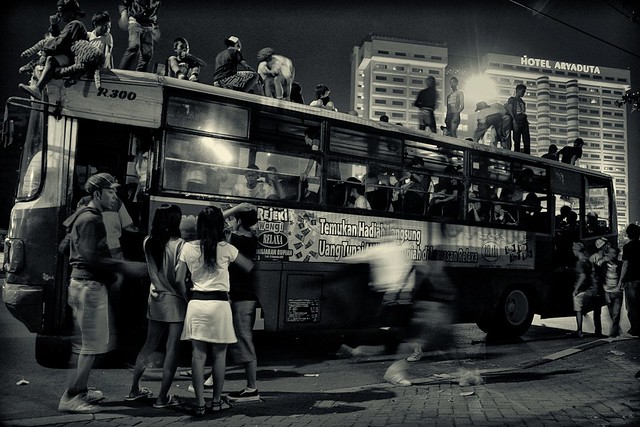
Di atas bus

Read more about urban travel transportation planning:

Economic Impacts of Adopting a Sustainable Transport System in Beirut

A critical review of new mobility services for urban transport

Urban Travel Behavior in Large Cities of MENA Region: Survey Results of Cairo, Istanbul, and Tehran

Longitudinal correlations of car ownership with socio-economics, urban form, and transport infrastructure in Latin America: Example from Ensenada, Mexico

Active Transport to School and Children's Body Weight: A Systematic Reivew

An Analysis of Car Ownership in Latin American Cities: a Perspective for Future Research

A dynamic formulation for car ownership modeling

Potential Impacts of Climate Change on U.S. Transportation

Friday, April 26, 2013

8th International Conference on Urban Regeneration and Sustainability

3 – 5 December 2013, Putrajaya, Malaysia
The Conference aims to address the many inter-related aspects of the urban environment from transport and mobility to social exclusion and crime prevention. The meeting will build on the  contributions made in previous conferences, which successfully managed to provide an  international view of the problems facing modern cities and their solutions.
The Sustainable City 2013 follows seven very successful meetings held in Rio (2000); Segovia (2002); Siena (2004); Tallinn (2006); Skiathos (2008); A Coruña (2010); and Ancona (2012). The Conferences attracted a  large number of contributions from participants from different backgrounds and countries. The variety of  topics and experiences is one of the main reasons behind the success of the series. This series of  conferences addresses the multidisciplinary aspects of urban planning, a result of the increasing size of the cities, the amount of resources and services requested and the complexity of modern society. Urban areas produce a series of environmental challenges arising from the consumption of natural resources and the subsequent generation of waste and pollution, contributing to the development of social and economic imbalances. All these problems, which continue to grow in our society, require the development of new  solutions. The challenge of planning sustainable contemporary cities lies in considering the dynamics of  urban systems, exchange of energy and matter, and the function and maintenance of ordered structures  directly or indirectly supplied and maintained by natural systems. The task of researchers, aware of the complexity of the contemporary city, is to improve the capacity to manage human activities, pursuing  welfare and prosperity in sustainable cities.

more conferences:

Wednesday, October 31, 2012

Paratransit for mobility impaired persons in developing regions: Starting up and scaling up

by Access Exchange International

It is about addressing the need of persons with disabilities and others for paratransit service when accessible “fixed-route” bus or rail service is not available or, if available, cannot be used by persons who need more specialized transportation.
This guide is written for city officials, transit operators, entrepreneurs, non-governmental organizations (NGOs), social service agencies, and others who may wish to start up or expand door-to-door paratransit services to help mobility-impaired persons to get to where they need to go. It is not aimed at countries which already have such services and have the resources and money to support and pay for them, although many of our findings will be relevant to them. Rather, this guide provides information and guidance for cities and towns and villages in less-wealthy regions faced with many barriers to such transportation. These barriers are so great that many cities, to say nothing of the countryside beyond these cities, have not begun to address the task of providing paratransit for those who most need it.
The financial, infrastructure, and operational issues are daunting. In many rural areas, nearly everyone is mobility-impaired because there is very little public transportation. The situation can be equally bad in cities for persons with disabilities who are unable to use bus and rail lines. They remain trapped where they live, unable to get to work, to school, or to medical help and other activities due to the prohibitive cost of hiring a taxi or finding an accessible vehicle.
To provide guidance in these situations, we will be helped by the example of practitioners in cities which have begun to address some of the needs of mobility-impaired citizens. We will look at case studies of paratransit systems in São Paulo, Cape Town, Moscow, New Delhi, Istanbul, and Kuala Lumpur. We will also bring in the hard-won knowledge of paratransit systems in countries with longer histories of paratransit provision, such as the USA and France, or wealthier cities such as Hong Kong or San Francisco.
If the problems are large, so are the opportunities! This guide is about leveraging opportu- nities to overcome problems.


Pierce Transit Vans
more about sustainable transportation:

A “STEP” TOWARDS SUSTAINABLE TRANSPORT: A CASE STUDY OF PENANG, MALAYSIA

Impact Assessment of Sustainable Public Transportation System on Quality of Life in Tehran

China’s Hangzhou Public Bicycle: Understanding Early Adoption and Behavioral Response to Bikesharing

Chinese bike-sharing dwarfs US and European programs

Measuring Perceived Accessibility to Urban Green Space: An Integration of GIS and Participatory Map

The eco-city: ten key transport and planning dimensions for sustainable city development

Monday, October 8, 2012

Transforming the Land Public Transport System in Malaysia

by Azmi Bin ABDUL AZIZ and Nor Fanim MOHD AMIN

The public perception of the existing public transport system in Malaysia has been declining over the years. The challenges in transforming the public transport system into the mode of choice are not limited to increasing infrastructure and capacity. A more integrated and comprehensive approach is required as it is also about improving the regulatory framework, planning structure and level of services delivered. The transformation of the public transport landscape in Malaysia is consistent with principles underlined in the National Physical Plan 2 and guided by the transformation thrusts which form the basis for national policy measures.


Monorail Kuala Lumpur
Monorail in Kuala Lumpur

more about Malaysia:

A “STEP” TOWARDS SUSTAINABLE TRANSPORT: A CASE STUDY OF PENANG, MALAYSIA

Applications of Geographic Information Systems in Urban Land Use Planning in Malaysia

Skyline photos of Kuala Lumpur 1

A STUDY ON URBAN PLANNING /URBAN TRANSPORTATION ISSUES IN SOUTHEAST ASIAN COUNTRIES AND JAPAN’S TECHNICAL CORPORATIONINS

A “STEP” TOWARDS SUSTAINABLE TRANSPORT: A CASE STUDY OF PENANG, MALAYSIA

by Ganesh Rasagam

Ownership of cars and motorcycles in the state of Penang, Malaysia, is increasing at average rates of 9.5 per cent and 7.2 per cent a year, respectively. The total number of private vehicles registered in the state doubled between 1985 and 1995.
This has resulted in urban traffic congestion, with increased delays and travel times, higher rates of injury and death from traffic accidents, as well as environmental degradation.
While the rapid increase in vehicular traffic is usually attributed to economic growth and urbanization, in this case it is because current transportation policy and investment in transportation projects are disproportionately skewed towards meeting unabated demand for road space. The needs and concerns of pedestrians, cyclists and bus users are seldom, if at all, taken into consideration in national and state transportation policies and plans.
The transportation requirements of mobility-impaired and vulnerable groups such as people with disabilities and the elderly, as well as vulnerable groups such as children and the poor, are almost always neglected when transportation planning is undertaken and investments are made.
Sustainable Transport Environment in Penang (STEP) was established in 1998 by a group of concerned citizens and voluntary groups in Penang, with the primary aim of addressing the concerns and advocating the interests of pedestrians, cyclists, public transport users and mobility-impaired groups.
This paper provides a brief discussion of the transportation issues in Penang and highlights concerns such as the environmental impact of road traffic, with emphasis on vehicular traffic-generated noise and air pollution.
The paper then proceeds to describe the formation and the various initiatives of STEP, following its participation in the Sustainable Penang Initiative (SPI). Successful lobbying initiatives, such as improvements to a major bus terminal in Georgetown, Penang, and the efforts of the group known as Sustainability, Independence, Livelihood, Access (SILA) are also mentioned.
The paper also discusses the advocacy experience of STEP and the issues for the future.

This is call traffic congestion. It's the time when everyone go back from school and work. #trafficjam #Malaysia #road #car #Asia #evening #congestion #traffic 

more about urban Malaysia:

Applications of Geographic Information Systems in Urban Land Use Planning in Malaysia

 Skyline photos of Kuala Lumpur, Malaysia (2)

Bachelor of Arts (Hons) in Urban Planning & Design in Limkokwing University, Malaysia

Urbanism, Space and Human Psychology: Value Change and Urbanization in Malaysia

A STUDY ON URBAN PLANNING /URBAN TRANSPORTATION ISSUES IN SOUTHEAST ASIAN COUNTRIES AND JAPAN’S TECHNICAL CORPORATIONINS

Wednesday, February 1, 2012

Applications of Geographic Information Systems in Urban Land Use Planning in Malaysia

by Narimah Samat

Over the past forty years Geographic Infonnation Systems (GIS) have been used in many planning applications ranging from daily administrative operations to strategic planning functions such as evaluating socio-economic data in land use allocation tasks. This technology has various analytical functions that can be used in dealing with spatial problems such as urban planning and management issues. It is useful in assisting planners, decision makers and the community to efficiently respond to challenges, plan successful future and improve service delivery. Although GIS has become a common planning tool in many western developed nations, its application in many developing nations is still limited.
This paper highlights the applications of GIS in urban land use planning in Malaysia. It will focus on GIS applications by local government authorities; evaluate the role of local universities such as Universiti Sains Malaysia in conducting research on GIS applications; and discuss the future direction of GIS applications in land use planning in Malaysia.


more about Malaysia:

Skyline photos of Kuala Lumpur 1

Urban Form and Sustainability of a Hot Humid City of Kuala Lumpur

Bachelor of Arts (Hons) in Urban Planning & Design in Limkokwing University, Malaysia

A STUDY ON URBAN PLANNING /URBAN TRANSPORTATION ISSUES IN SOUTHEAST ASIAN COUNTRIES AND JAPAN’S TECHNICAL CORPORATIONINS

Urbanism, Space and Human Psychology: Value Change and Urbanization in Malaysia

Tuesday, March 29, 2011

Skyline photos of Kuala Lumpur 1

Skyline photo of Kuala Lumpur, by Zimit

Skyline photo of Kuala Lumpur, by adam79

Skyline photo of Kuala Lumpur, by Sean Barnard

Skyline photo of Kuala Lumpur, by Adrian Whelan

Skyline photo of Kuala Lumpur, by catsper

Skyline photo of Kuala Lumpur, by todaysart

Skyline photo of Kuala Lumpur by seafaringwoman

Skyline photo of Kuala Lumpur, by Ariaski

Skyline photo of Kuala Lumpur, by fliko9978
more skyline photos:

Skyline photos of Atlanta 1

Skyline photos of Detroit 1

Skyline photos of Buenos Aires, Argentina 1

Saturday, February 19, 2011

Urban Form and Sustainability of a Hot Humid City of Kuala Lumpur

by Dasimah Bt Omar

This research is to explore the urban form and sustainability of a hot humid city of Kuala Lumpur. Research on urban form and sustainability especially in the context of hot humid tropical cities is still lacking. Measuring the sustainability of development for hot humid tropical cities is crucial to achieving it and is one of the most not being studied. Past research focused on theoretical general elements of sustainable urban form including density, size, configuration, detailed design and quality from macro to micro scale. The analysis focused on major strategies which shape current urban form and impact human activities is more important in identifying key urban form values to facilitate sustainability. Perception survey on residents and visitors of the city was carried out. Expert interviews were also conducted. The research found that the urban form or physical form for Kuala Lumpur is interdependently affected by the economic, social and physical development. Human activities in the city were influenced by physical urban form and vice versa.


Kuala Lumpur, Malaysia, photo by █ Slices of Light █▀ ▀ ▀
Kuala lumpur civic center, photo by WarzauWynn


more about Malaysia:

Bachelor of Arts (Hons) in Urban Planning & Design in Limkokwing University, Malaysia

Urbanism, Space and Human Psychology: Value Change and Urbanization in Malaysia

A STUDY ON URBAN PLANNING /URBAN TRANSPORTATION ISSUES IN SOUTHEAST ASIAN COUNTRIES AND JAPAN’S TECHNICAL CORPORATIONINS

Monday, January 31, 2011

Bachelor of Arts (Hons) in Urban Planning & Design in Limkokwing University, Malaysia

 via Limkokwing University

The student’s journey in this course starts with the fundamentals of Urban Planning as well as fundamentals of design principles followed by a thorough training in every discipline involved in this field. Modules of study are centred on the planning, conservation of heritage, as well as policy, law and landscape planning. Ultimately, the student will be equipped with a holistic understanding of the basic knowledge and operational skills necessary for achieving sustainable urban planning and design, their environments, facilities and support services.

Entry Requirements

  • 2 principals STPM/'A' levels or equivalent or
  • 5 credits SPM/'O' levels or equivalent and
  • Limkokwing's Foundation in Built Environment
Students with a recognised Diploma or Certificate in the relevant field will be given credit exemptions based on past results and a portfolio review (where applicable).

International Students

For non-Malaysian citizens, please refer to the Malaysian Qualification Agency’s (MQA) List of Overseas Qualifications & its equivalency with Malaysian Education System (PDF) to see if you qualify for this course.


Limkokwing University, Malaysia, photo by CLF
more posts about urban planning courses:

GIS in U.S. Urban Studies and Planning Education

Urban and Regional Planning Programs, Courses, Schools and Degrees in Ontario Universities

Friday, January 28, 2011

Urbanism, Space and Human Psychology: Value Change and Urbanization in Malaysia

by Zaid Ahmad, Nobaya Ahmad, and Haslinda Abdullah

Malaysia is among the fast growing developing countries in the East. Since independence 1957, together with nationwide progress and development, the rapid urbanization took place and this led to a massive migration of people from rural villages to urban and newly growth areas. Soon these immigrants became urban dwellers. It is generally recognized that in any urbanization process, one of the most crucial setbacks is space. In fact space gives enormous impact on the values and attitudes of urban dwellers. This paper explores the relations between urbanism and the psychological and the spatial issues in the context of urban themes; urban values and culture, social difference and spatial divisions, community and neighborhood, private and public space, gender and sexuality, experience and everyday practice that give significant psychological impacts on urban folks. Using urbanization in Malaysia as example, this paper draws on a range of debates on the question of physical space and urban life and the psyche of urban dwellers, bringing together academic perspectives with the observation and analysis of contemporary urban problems and issues. The discussion looks at how psychological and spatial relations give certain impacts and shape the value change among Malaysian urban folks.


China Town, Kuala Lumpur, Malaysia, photo by LeeLeFever
more about southeast Asia:

A STUDY ON URBAN PLANNING /URBAN TRANSPORTATION ISSUES IN SOUTHEAST ASIAN COUNTRIES AND JAPAN’S TECHNICAL CORPORATIONINS

Great distance between Bangkok and Thailand's second largest city, Nonthaburi

ECONOMIC DEVELOPMENT, URBANIZATION AND ENVIRONMENTAL CHANGES IN HO CHI MINH CITY, VIETNAM: RELATIONS AND POLICIES

Wednesday, December 29, 2010

A STUDY ON URBAN PLANNING /URBAN TRANSPORTATION ISSUES IN SOUTHEAST ASIAN COUNTRIES AND JAPAN’S TECHNICAL CORPORATIONINS

Tatsumi TOKUNAGA
Yoji TAKAHASHI

Abstract: 

In recent years, with the rapid economic growth and concentration of the population into urban areas, some unregulated developments have been conducted in urban areas in Southeast Asian countries, so that their governments are under the pressure of necessity to develop an adequate operation of urban planning systems. Not all of the Southeast Asian countries, however, always have appropriate technologies for the urban planning project. Therefore, in this context, Japan, with practical experience in urban planning, is expected to transfer its technology and know-how to such a planning. This paper analyzed the backgrounds and urban planning/urban transportation issues in the Southeast Asian countries and proposed a technical cooperation model in response to requests arising from those countries.

1. BACKGROUNDS AND OBJECTIVE OF THE STUDY

In Southeast Asian countries, urban areas have been developed unsystematically in recent years with their rapid economic growth and expansion of urban population, creating seriously aggravated living environments. Figure.1 shows a trend of urbanization process of industrialized countries and that of Southeast Asian countries. A negative impact of motorization, industrialization and economic growth in Southeast Asian countries accelerate urban service deterioration and accordingly generate serious urban issues, such as traffic congestion, Photo 1. Bangkok, the capital city of Thailand traffic accident, air/water pollution, and sprawl phenomenon in the central district of the city. These countries lack a well-established urban planning system and necessary technology and proper experience. To alleviate those of severe condition and improve their environment, Japan has dispatched technical experts (hereinafter referred to as “JICA experts”) to developing countries from the Japan International Cooperation Agency (JICA), of which sole Japanese governmental agency in charge of bilateral technical cooperation and grant aid projects, in the view of a part of international cooperation, widely known as definition of Official Development Assistance (ODA).
JICA conducts an extensive technical cooperation program covering such subjects as the institution of various legal systems, establishment of technical standards, human resources development through technology transfer, and planning of individual projects.


Thailand, image by Gary Wong Photography
Jakarta, image by Aktiv Phil

Manila, image by Andy*Enero

Related posts about urban planning in southeast Asia:

Master Planning Challenges for Ho Chi Minh City

Great distance between Bangkok and Thailand's second largest city, Nonthaburi

ECONOMIC DEVELOPMENT, URBANIZATION AND ENVIRONMENTAL CHANGES IN HO CHI MINH CITY, VIETNAM: RELATIONS AND POLICIES